
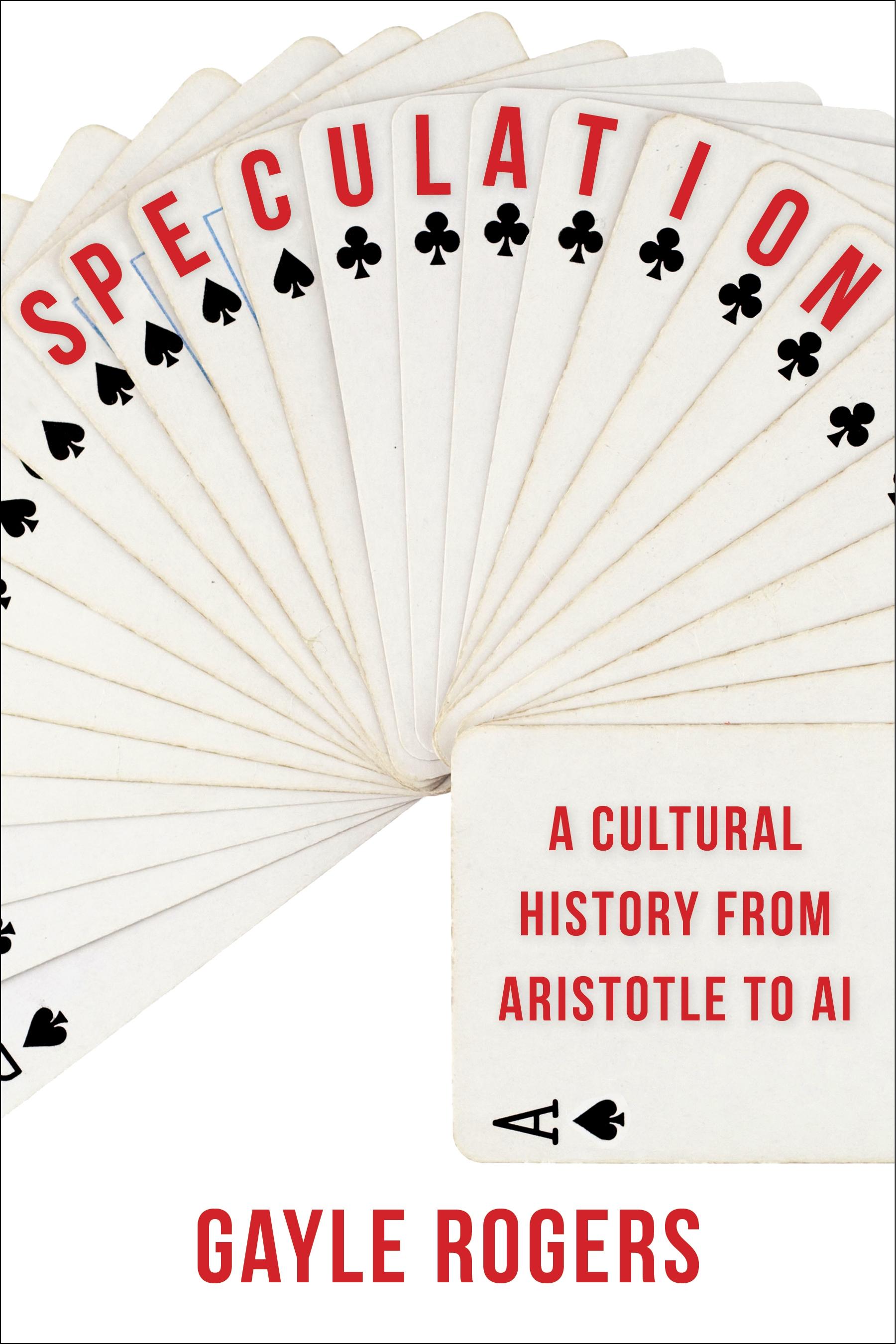
In the modern world, why do we still resort to speculation? Advances in scientific and statistical reasoning are supposed to have provided greater certainty in making claims about the future. Yet we constantly spin out scenarios about tomorrow, for ourselves or for entire societies, with flimsy or no evidence. Insubstantial speculations—from utopian thinking to high-risk stock gambles—often provoke fierce backlash, even when they prove prophetic for the world we come to inhabit. Why does this hypothetical way of thinking generate such controversy?
In this cultural, literary, and intellectual history, Gayle Rogers traces debates over speculation from antiquity to the present. Celebrated by Boethius as the height of humanity’s mental powers but denigrated as sinful by John Calvin, speculation eventually became central to the scientific revolution’s new methods of seeing the natural world. In the nineteenth century, writers such as Jane Austen used the concept to diagnose the marriage market, redefining speculation for the purpose of social critique. Speculation fueled the development of modern capitalism, spurring booms, busts, and bubbles, and recently artificial intelligence has automated the speculation previously done by humans, with uncertain and troubling consequences. Unraveling these histories and many other disputes, Rogers argues that what has always been at stake in arguments over speculation, and why it so often appears so threatening, is the authority to produce and control knowledge about the future.
Recasting centuries of contests over the power to anticipate tomorrow, this book reveals the crucial role speculation has played in how we create—and potentially destroy—the future.
Płać wygodnie kartą, Klarną, Apple Pay lub Google Pay. Nie jesteś zadowolony? Zawsze masz 14-dniową gwarancję zwrotu pieniędzy. Więcej przeczytasz w naszych warunkach. Masz pytania? Napisz do nas na hello@memmo.org.
Memmo ułatwia naukę – gdziekolwiek jesteś na świecie. U nas znajdziesz podręczniki i sprytne narzędzia do nauki w jednym miejscu: streszczenia, quizy, podcasty i fiszki. A do tego Ted, Twój kumpel do nauki, który odpowie na wszystko, co Cię nurtuje. Ponad 50 000 studentów już tu się uczy – stworzone, byś uczył się szybciej i mniej stresował.