
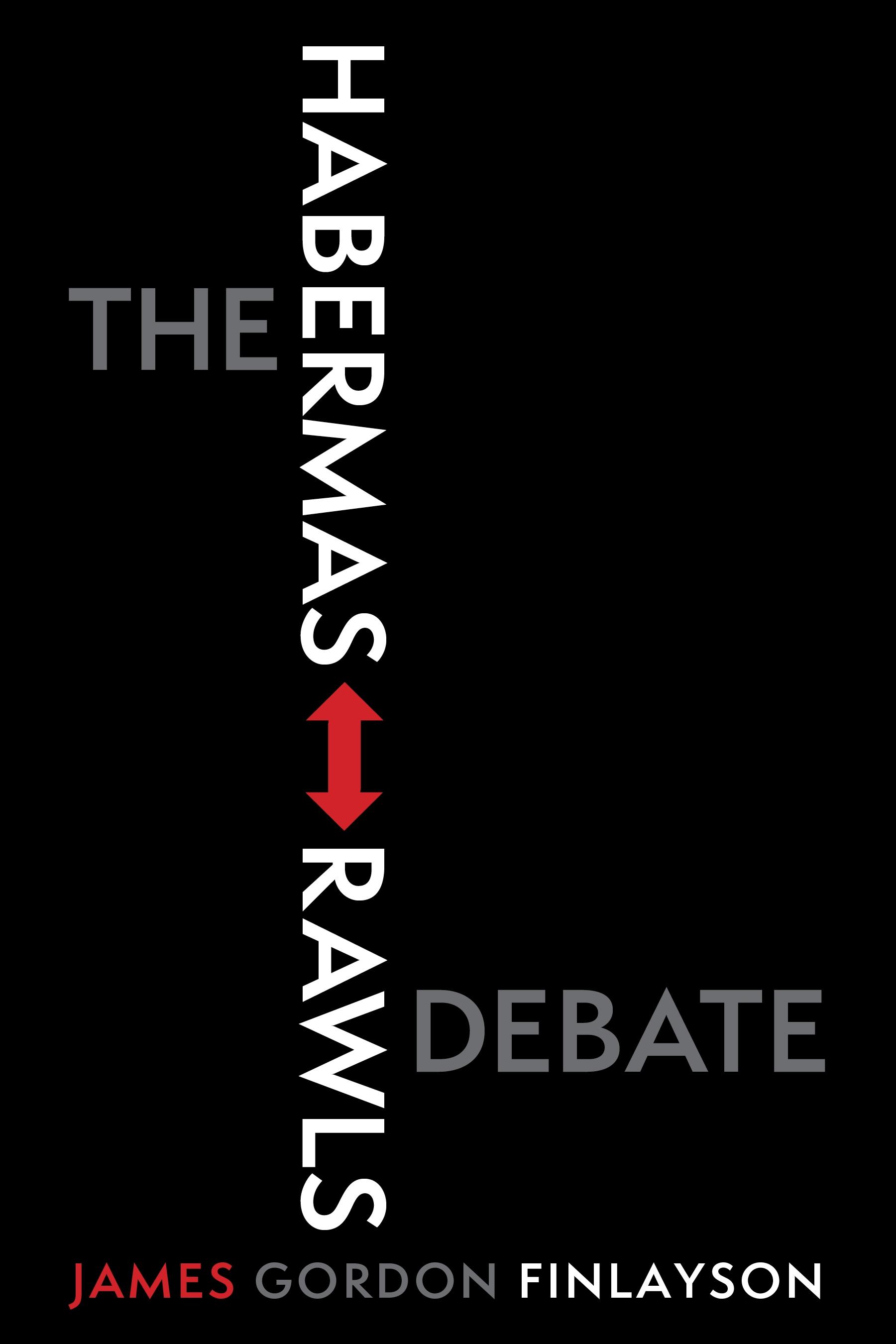
Jürgen Habermas and John Rawls are perhaps the two most renowned and influential figures in social and political philosophy of the second half of the twentieth century. In the 1990s, they had a famous exchange in the Journal of Philosophy. Quarreling over the merits of each other’s accounts of the shape and meaning of democracy and legitimacy in a contemporary society, they also revealed how great thinkers working in different traditions read—and misread—one another’s work.
In this book, James Gordon Finlayson examines the Habermas-Rawls debate in context and considers its wider implications. He traces their dispute from its inception in their earliest works to the 1995 exchange and its aftermath, as well as its legacy in contemporary debates. Finlayson discusses Rawls’s Political Liberalism and Habermas’s Between Facts and Norms, considering them as the essential background to the dispute and using them to lay out their different conceptions of justice, politics, democratic legitimacy, individual rights, and the normative authority of law. He gives a detailed analysis and assessment of their contributions, assessing the strengths and weaknesses of their different approaches to political theory, conceptions of democracy, and accounts of religion and public reason, and he reflects on the ongoing significance of the debate. The Habermas-Rawls Debate is an authoritative account of the crucial intersection of two major political theorists and an explication of why their dispute continues to matter.
Płać wygodnie kartą, Klarną, Apple Pay lub Google Pay. Nie jesteś zadowolony? Zawsze masz 14-dniową gwarancję zwrotu pieniędzy. Więcej przeczytasz w naszych warunkach. Masz pytania? Napisz do nas na hello@memmo.org.
Memmo ułatwia naukę – gdziekolwiek jesteś na świecie. U nas znajdziesz podręczniki i sprytne narzędzia do nauki w jednym miejscu: streszczenia, quizy, podcasty i fiszki. A do tego Ted, Twój kumpel do nauki, który odpowie na wszystko, co Cię nurtuje. Ponad 50 000 studentów już tu się uczy – stworzone, byś uczył się szybciej i mniej stresował.