
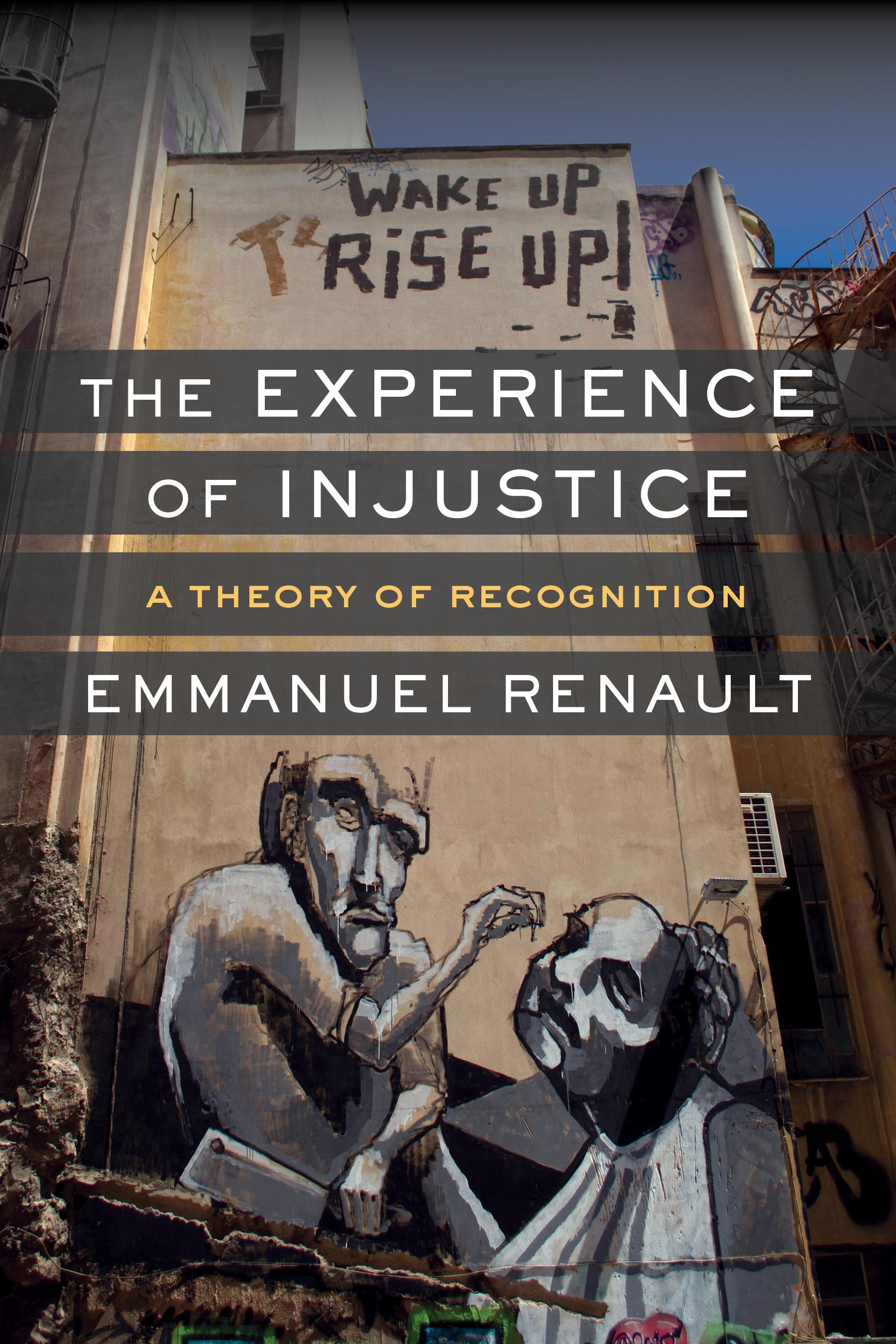
In The Experience of Injustice, the French philosopher Emmanuel Renault opens an important new chapter in critical theory. He brings together political theory, critical social science, and a keen sense of the power of popular movements to offer a forceful vision of social justice. Questioning normative political philosophy’s conception of justice, Renault gives an account of injustice as the denial of recognition, placing the experience of social suffering at the heart of contemporary critical theory.
Inspired by Axel Honneth, Renault argues that a radicalized version of Honneth’s ethics of recognition can provide a systematic alternative to the liberal-democratic projects of such thinkers as Rawls and Habermas. Renault reformulates Honneth’s theory as a framework founded on experiences of injustice. He develops a complex, psychoanalytically rich account of suffering, disaffiliation, and identity loss to explain these experiences as denials of recognition, linking everyday injustice to a robust defense of the politicization of identity in social struggles. Engaging contemporary French and German critical theory alongside interdisciplinary tools from sociology, psychoanalysis, socialist political theory, social-movement theory, and philosophy, Renault articulates the importance of a theory of recognition for the resurgence of social critique.
Płać wygodnie kartą, Klarną, Apple Pay lub Google Pay. Nie jesteś zadowolony? Zawsze masz 14-dniową gwarancję zwrotu pieniędzy. Więcej przeczytasz w naszych warunkach. Masz pytania? Napisz do nas na hello@memmo.org.
Memmo ułatwia naukę – gdziekolwiek jesteś na świecie. U nas znajdziesz podręczniki i sprytne narzędzia do nauki w jednym miejscu: streszczenia, quizy, podcasty i fiszki. A do tego Ted, Twój kumpel do nauki, który odpowie na wszystko, co Cię nurtuje. Ponad 50 000 studentów już tu się uczy – stworzone, byś uczył się szybciej i mniej stresował.