
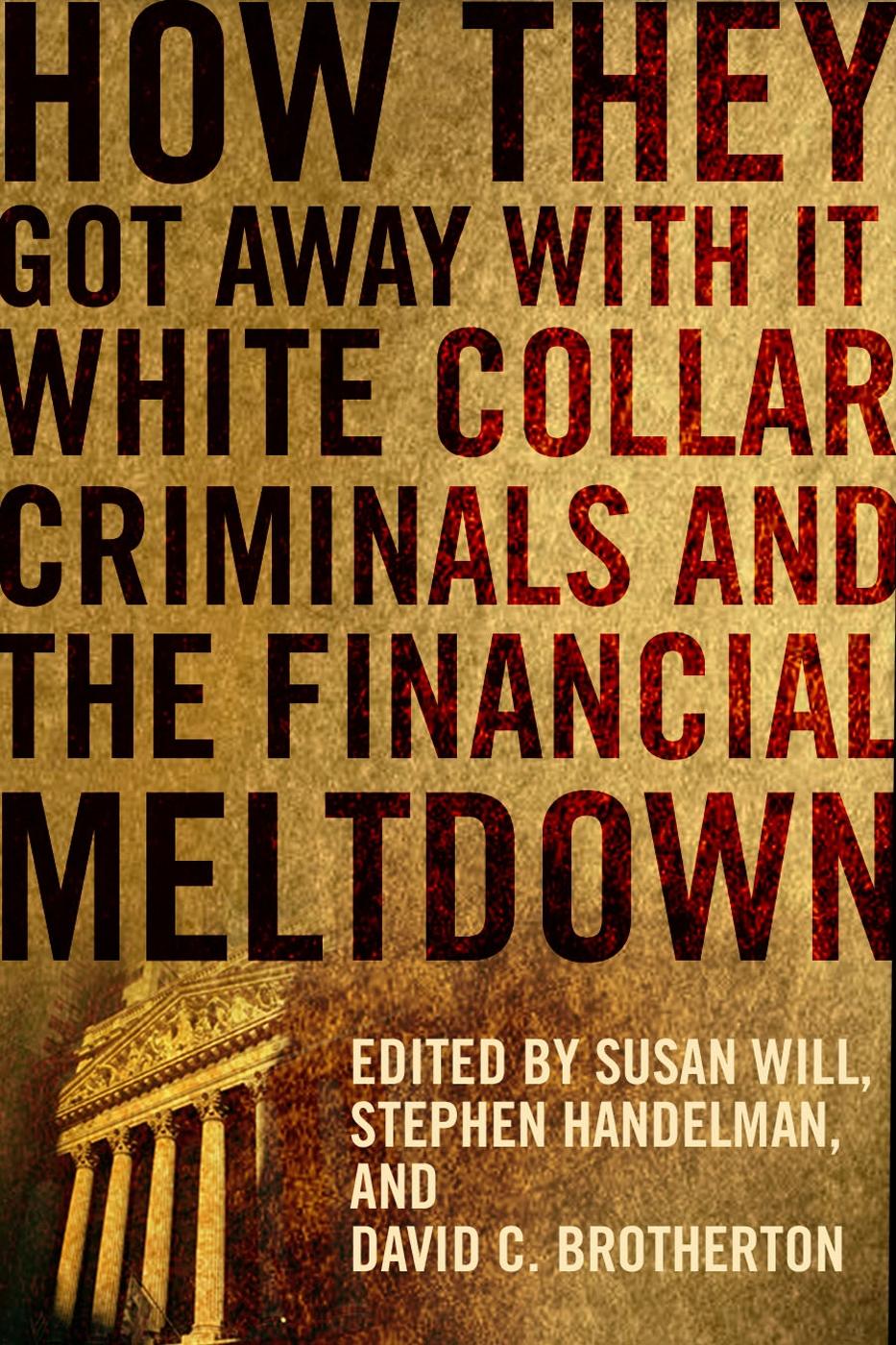
A team of scholars with backgrounds in criminology, sociology, economics, business, government regulation, and law examine the historical, social, and cultural causes of the 2008 economic crisis. Essays probe the workings of the toxic subprime loan industry, the role of external auditors, the consequences of Wall Street deregulation, the manipulations of alpha hedge fund managers, and the "Ponzi-like" culture of contemporary capitalism. They unravel modern finance's complex schematics and highlight their susceptibility to corruption, fraud, and outright racketeering. They examine the involvement of enablers, including accountants, lawyers, credit rating agencies, and regulatory workers, who failed to protect the public interest and enforce existing checks and balances. While the United States was "ground zero" of the meltdown, the financial crimes of other countries intensified the disaster. Internationally-focused essays consider bad practices in China and the European property markets and draw attention to the far-reaching consequences of transnational money laundering and tax evasion schemes. By approaching the 2008 crisis from the perspective of white collar criminology, contributors build a more general understanding of the collapse and crystallize the multiple human and institutional factors preventing capture of even the worst offenders.
Płać wygodnie kartą, Klarną, Apple Pay lub Google Pay. Nie jesteś zadowolony? Zawsze masz 14-dniową gwarancję zwrotu pieniędzy. Więcej przeczytasz w naszych warunkach. Masz pytania? Napisz do nas na hello@memmo.org.
Memmo ułatwia naukę – gdziekolwiek jesteś na świecie. U nas znajdziesz podręczniki i sprytne narzędzia do nauki w jednym miejscu: streszczenia, quizy, podcasty i fiszki. A do tego Ted, Twój kumpel do nauki, który odpowie na wszystko, co Cię nurtuje. Ponad 50 000 studentów już tu się uczy – stworzone, byś uczył się szybciej i mniej stresował.
Może Ci się spodobać
Kup książkę0