
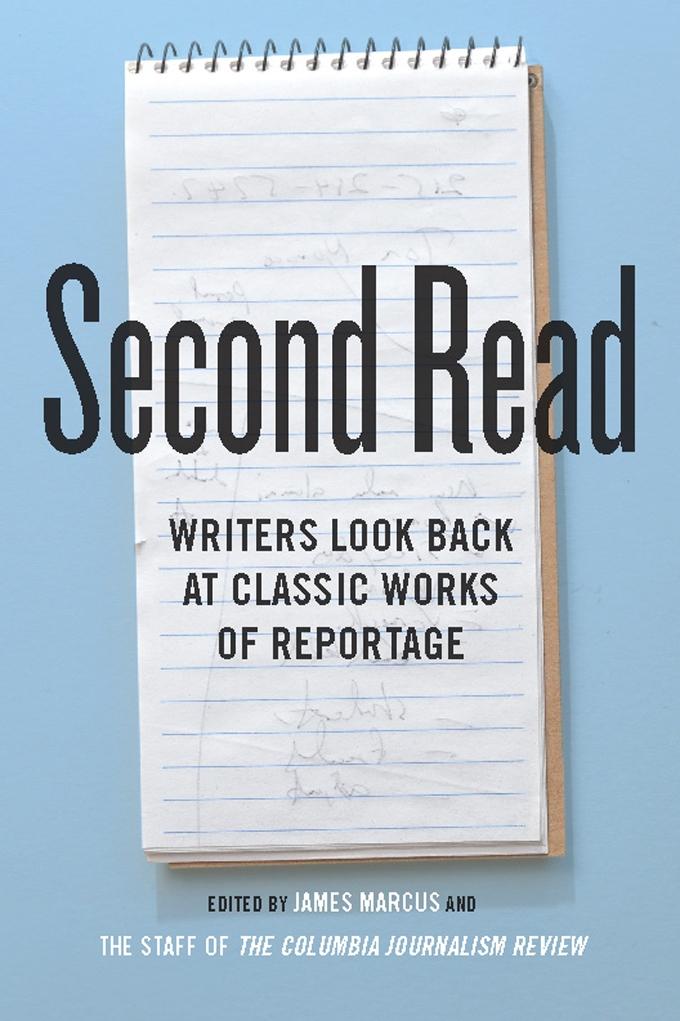
The Columbia Journalism Review's Second Read series features distinguished journalists revisiting key works of reportage. Launched in 2004 by John Palattella, who was then editor of the magazine's book section, the series also allows authors address such ongoing concerns as the conflict between narrative flair and accurate reporting, the legacy of New Journalism, the need for reporters to question their political assumptions, the limitations of participatory journalism, and the temptation to substitute "truthiness" for hard, challenging fact. Representing a wide range of views, Second Read embodies the diversity and dynamism of contemporary nonfiction while offering fresh perspectives on works by Norman Mailer, Tom Wolfe, Rachel Carson, and Gabriel García Márquez, among others. It also highlights pivotal moments and movements in journalism as well as the innovations of award-winning writers.
Essays include Rick Perlstein on Paul Cowan's The Tribes of America; Nicholson Baker on Daniel Defoe's A Journal of the Plague Year; Dale Maharidge on James Agee's Let Us Now Praise Famous Men; Marla Cone on Rachel Carson's Silent Spring; Ben Yagoda on Walter Bernstein's Keep Your Head Down; Ted Conover on Stanley Booth's The True Adventures of the Rolling Stones; Jack Shafer on Tom Wolfe's The Electric Kool-Aid Acid Test; Connie Schultz on Michael Herr's Dispatches; Michael Shapiro on Cornelius Ryan's The Longest Day; Douglas McCollam on John McPhee's Annals of the Former World; Tom Piazza on Norman Mailer's Armies of the Night; Thomas Mallon on William Manchester's The Death of a President; Miles Corwin on Gabriel García Márquez's The Story of a Shipwrecked Sailor; David Ulin on Joan Didion's Slouching Toward Bethlehem; and Claire Dederer on Betty MacDonald's Anybody Can Do Anything.
Płać wygodnie kartą, Klarną, Apple Pay lub Google Pay. Nie jesteś zadowolony? Zawsze masz 14-dniową gwarancję zwrotu pieniędzy. Więcej przeczytasz w naszych warunkach. Masz pytania? Napisz do nas na hello@memmo.org.
Memmo ułatwia naukę – gdziekolwiek jesteś na świecie. U nas znajdziesz podręczniki i sprytne narzędzia do nauki w jednym miejscu: streszczenia, quizy, podcasty i fiszki. A do tego Ted, Twój kumpel do nauki, który odpowie na wszystko, co Cię nurtuje. Ponad 50 000 studentów już tu się uczy – stworzone, byś uczył się szybciej i mniej stresował.