
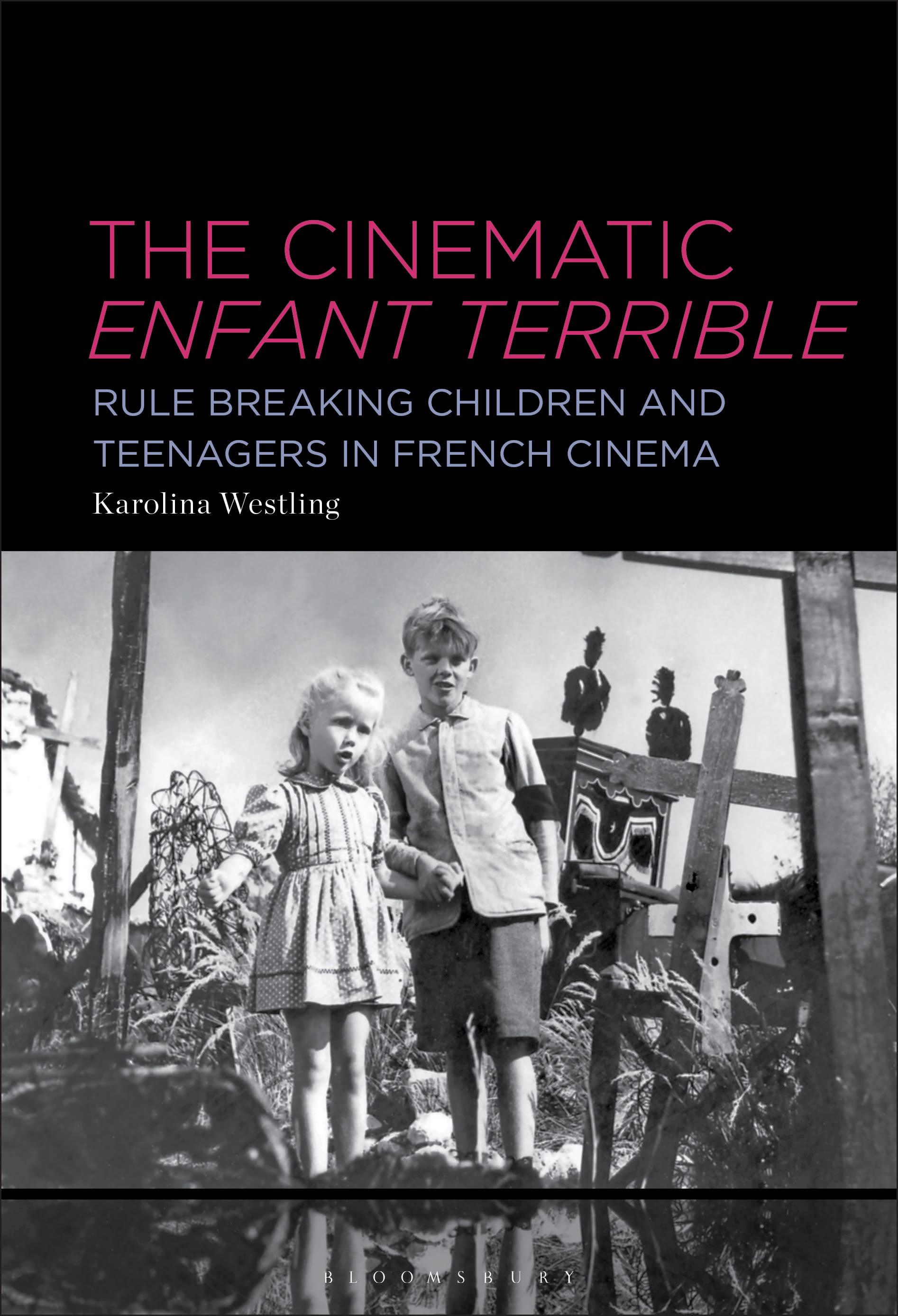
The Cinematic Enfant Terrible is a groundbreaking study of rule breakers in French cinema.
The book approaches the concept of the enfant terrible in the literal sense of the term – young people labelled 'terrible' (awful) by the adult generation. It explores a rich cinematic tradition from Jean Vigo's Zéro de conduite (1933) and François Truffaut's Les Quatre cents coups (1959), to Catherine Breillat's 36 fillette (1988) and Ladj Ly's Les Misérables (2019). The book encompasses the cinematic enfants terribles across age groups and genders, addressing the differences between unruly boys and rebellious teenage girls. The early post-war focus on juvenile delinquency and sexual provocations diversifies into filles fatales and angry girls, but also precarious boys and parents terribles.
The book charts the evolution of the enfant terrible concept from a negative label to a sympathetically-viewed figure of anti-authoritarian resistance, reflecting the changing position of children within the family in post-war France. The films address the ethical paradox of democratic upbringing – the dilemma of raising children to become obedient individuals with a mind of their own. The asymmetrical relationship between children and parents is seen as a tacit family contract that highlights the importance of an intergenerational perspective for the understanding of generational conflicts.
Rebellious children and teenagers on screen are seen in the light of wider social transformations. The book clarifies the interplay between individual protests and cultural currents such as existentialism, feminism and ethnic conflicts. This book will be of interest to scholars and students of French culture and cinema, childhood and youth studies, gender studies and cultural studies.
The book approaches the concept of the enfant terrible in the literal sense of the term – young people labelled 'terrible' (awful) by the adult generation. It explores a rich cinematic tradition from Jean Vigo's Zéro de conduite (1933) and François Truffaut's Les Quatre cents coups (1959), to Catherine Breillat's 36 fillette (1988) and Ladj Ly's Les Misérables (2019). The book encompasses the cinematic enfants terribles across age groups and genders, addressing the differences between unruly boys and rebellious teenage girls. The early post-war focus on juvenile delinquency and sexual provocations diversifies into filles fatales and angry girls, but also precarious boys and parents terribles.
The book charts the evolution of the enfant terrible concept from a negative label to a sympathetically-viewed figure of anti-authoritarian resistance, reflecting the changing position of children within the family in post-war France. The films address the ethical paradox of democratic upbringing – the dilemma of raising children to become obedient individuals with a mind of their own. The asymmetrical relationship between children and parents is seen as a tacit family contract that highlights the importance of an intergenerational perspective for the understanding of generational conflicts.
Rebellious children and teenagers on screen are seen in the light of wider social transformations. The book clarifies the interplay between individual protests and cultural currents such as existentialism, feminism and ethnic conflicts. This book will be of interest to scholars and students of French culture and cinema, childhood and youth studies, gender studies and cultural studies.
Sider: 288
Kategori: Film- & Medievetenskap
e-ISBN: 9798765105443
Fraktvekt: 1.2 kg
Sendes innen: 1-2 dager
Betal enkelt med kort, Klarna, Apple Pay eller Google Pay. Ikke fornøyd? Du har alltid 14 dagers angrerett. Les mer i våre vilkår. Har du spørsmål, send oss en e-post på hello@memmo.org.
Memmo gjør det enklere å studere – uansett hvor du er i verden. Hos oss samler du pensumbøker og smarte studieverktøy på ett og samme sted: sammendrag, quizer, podkaster og flashcards. Og så Ted, din studiekompis som svarer på alt du lurer på. Over 50 000 studenter studerer allerede her – bygget for at du skal lære raskere og stresse mindre.