
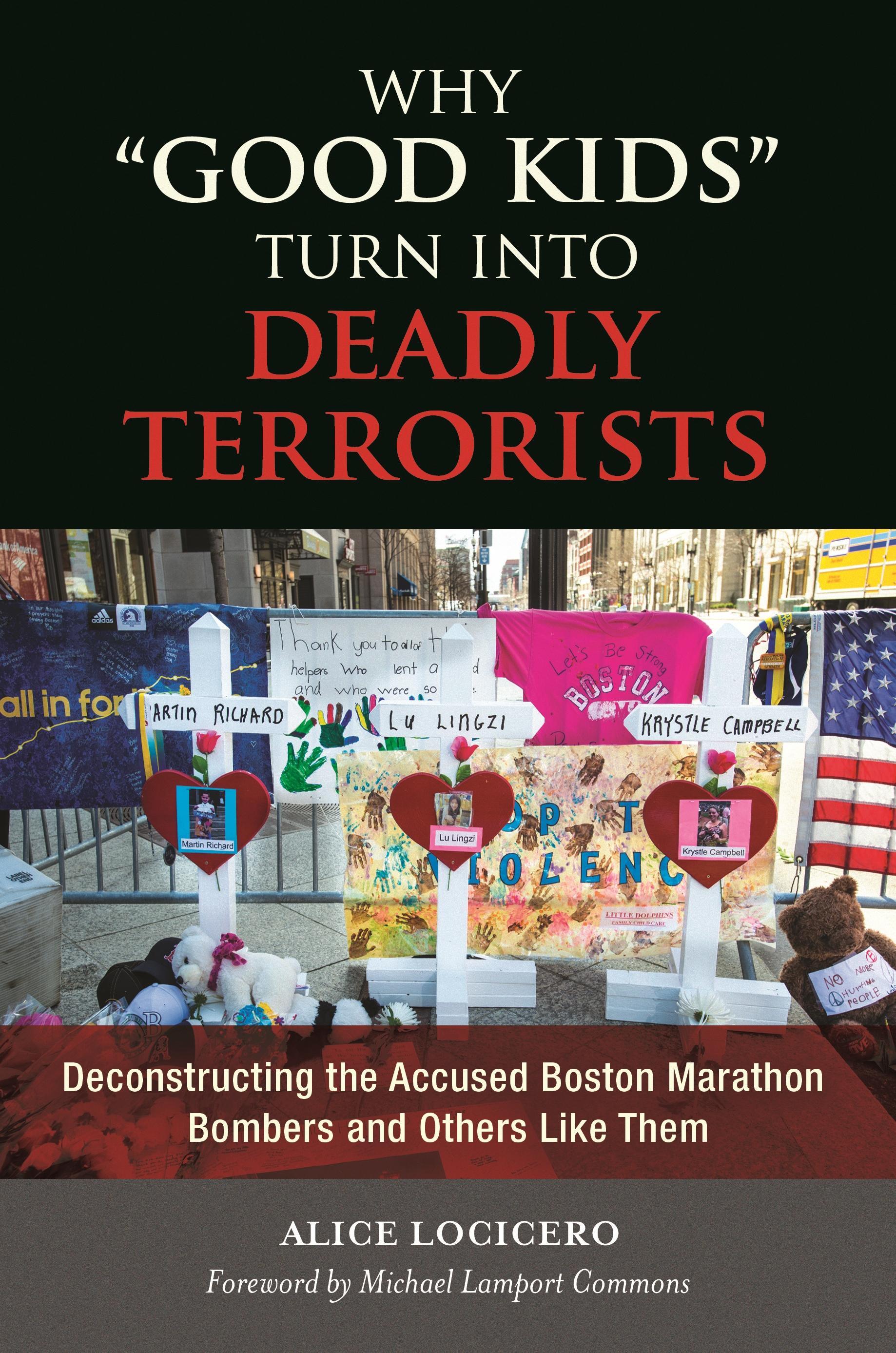
Using psychological theory and the author's direct experience working with at-risk youth, this book answers the questions on the minds of anyone shocked and appalled by the events of the Boston Marathon bombings.
The shock of the 2013 Boston Marathon bombings was soon followed by a revelation initially disturbing and mystifying: two apparently unremarkable brothers—one a teenager, the other a young adult; both well-liked immigrants and longtime U.S. residents—had allegedly triggered the bombs. Why were these two seemingly "normal" individuals driven to commit such acts of coldblooded violence? This book examines not only the lives, motivations, and key influences of these infamous brothers, but those of other young, unexpected terrorists worldwide, comparing factors that contributed to their decisions to become terrorists and identifying methods used to recruit them into that deadly fold.
The chapters teach readers warning signs that youths are being drawn in to terrorism and serve to spur meaningful conversations among citizens, politicians, and policymakers about what we can do to prevent such recruitment of youths and young adults, including other U.S. residents who might consider emulating the Tsarnaev brothers. The book also addresses larger, related questions, such as whether humans are naturally violent, who benefits when young individuals engage in terrorism, and why minors are recruited to become killers.
The shock of the 2013 Boston Marathon bombings was soon followed by a revelation initially disturbing and mystifying: two apparently unremarkable brothers—one a teenager, the other a young adult; both well-liked immigrants and longtime U.S. residents—had allegedly triggered the bombs. Why were these two seemingly "normal" individuals driven to commit such acts of coldblooded violence? This book examines not only the lives, motivations, and key influences of these infamous brothers, but those of other young, unexpected terrorists worldwide, comparing factors that contributed to their decisions to become terrorists and identifying methods used to recruit them into that deadly fold.
The chapters teach readers warning signs that youths are being drawn in to terrorism and serve to spur meaningful conversations among citizens, politicians, and policymakers about what we can do to prevent such recruitment of youths and young adults, including other U.S. residents who might consider emulating the Tsarnaev brothers. The book also addresses larger, related questions, such as whether humans are naturally violent, who benefits when young individuals engage in terrorism, and why minors are recruited to become killers.
Betal enkelt med kort, Klarna, Apple Pay eller Google Pay. Ikke fornøyd? Du har alltid 14 dagers angrerett. Les mer i våre vilkår. Har du spørsmål, send oss en e-post på hello@memmo.org.
Memmo gjør det enklere å studere – uansett hvor du er i verden. Hos oss samler du pensumbøker og smarte studieverktøy på ett og samme sted: sammendrag, quizer, podkaster og flashcards. Og så Ted, din studiekompis som svarer på alt du lurer på. Over 50 000 studenter studerer allerede her – bygget for at du skal lære raskere og stresse mindre.