
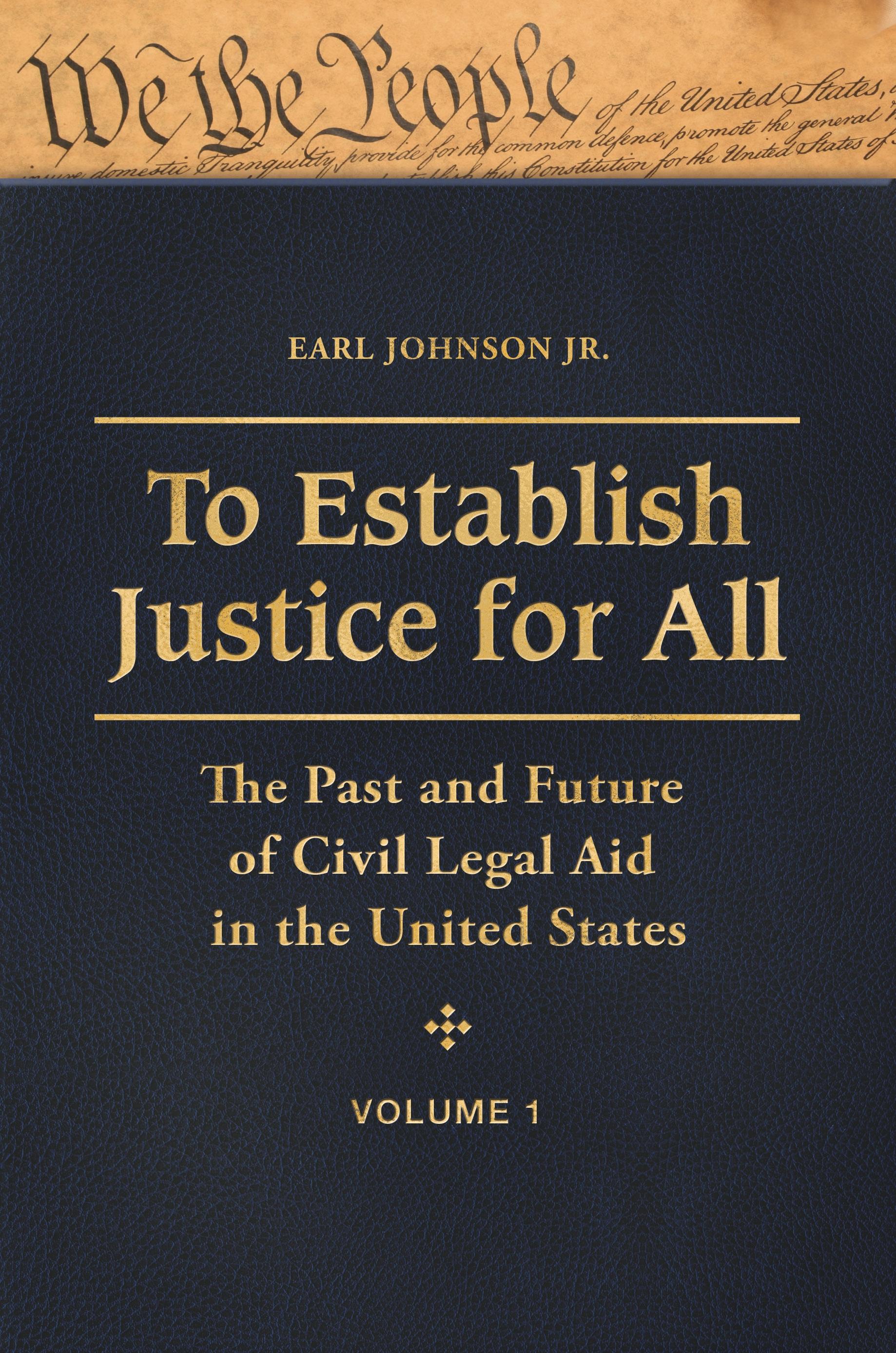
For over a century, many have struggled to turn the Constitution's prime goal "to establish Justice" into reality for Americans who cannot afford lawyers through civil legal aid. This book explains how and why.
American statesman Sargent Shriver called the Legal Services Program the "most important" of all the War on Poverty programs he started; American Bar Association president Edward Kuhn said its creation was the most important development in the history of the legal profession. Earl Johnson Jr., a former director of the War on Poverty's Legal Services Program, provides a vivid account of the entire history of civil legal aid from its inception in 1876 to the current day. The first to capture the full story of the dramatic, ongoing struggle to bring equal justice to those unable to afford a lawyer, this monumental three-volume work covers the personalities and events leading to a national legal aid movement—and decades later, the federal government's entry into the field, and its creation of a unique institution, an independent Legal Services Corporation, to run the program. The narrative also covers the landmark court victories the attorneys won and the political controversies those cases generated, along with the heated congressional battles over the shape and survival of the Legal Services Corporation. In the final chapters, the author assesses the current state of civil legal aid and its future prospects in the United States.
American statesman Sargent Shriver called the Legal Services Program the "most important" of all the War on Poverty programs he started; American Bar Association president Edward Kuhn said its creation was the most important development in the history of the legal profession. Earl Johnson Jr., a former director of the War on Poverty's Legal Services Program, provides a vivid account of the entire history of civil legal aid from its inception in 1876 to the current day. The first to capture the full story of the dramatic, ongoing struggle to bring equal justice to those unable to afford a lawyer, this monumental three-volume work covers the personalities and events leading to a national legal aid movement—and decades later, the federal government's entry into the field, and its creation of a unique institution, an independent Legal Services Corporation, to run the program. The narrative also covers the landmark court victories the attorneys won and the political controversies those cases generated, along with the heated congressional battles over the shape and survival of the Legal Services Corporation. In the final chapters, the author assesses the current state of civil legal aid and its future prospects in the United States.
Betal enkelt med kort, Klarna, Apple Pay eller Google Pay. Ikke fornøyd? Du har alltid 14 dagers angrerett. Les mer i våre vilkår. Har du spørsmål, send oss en e-post på hello@memmo.org.
Memmo gjør det enklere å studere – uansett hvor du er i verden. Hos oss samler du pensumbøker og smarte studieverktøy på ett og samme sted: sammendrag, quizer, podkaster og flashcards. Og så Ted, din studiekompis som svarer på alt du lurer på. Over 50 000 studenter studerer allerede her – bygget for at du skal lære raskere og stresse mindre.