
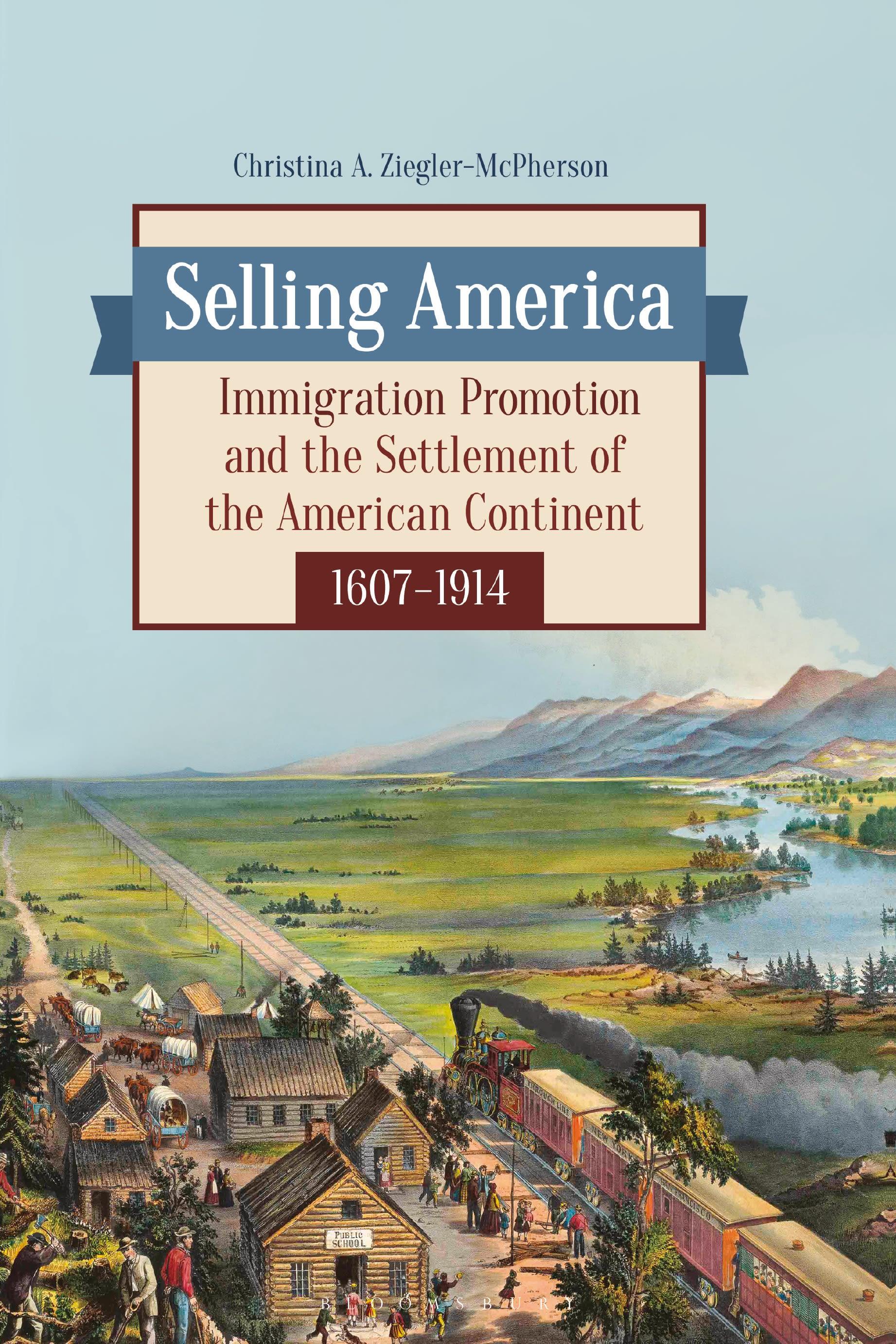
An in-depth look at the motivations behind immigration to America from 1607 to 1914, including what attracted people to America, who was trying to attract them, and why.
Between 1820 and 1920, more than 33 million Europeans immigrated to the United States seeking the "American Dream"-an image of America as a land of opportunity and upward mobility sold to them by state governments, railroads, religious and philanthropic groups, and other boosters. But Christina A. Ziegler-McPherson shows that the desire to make and keep America a "white man's country" meant that only Northern Europeans would be recruited as settlers and future citizens while Africans, Asians, and other non-whites would either be grudgingly tolerated as slaves or guest workers or be excluded entirely.
This book reframes immigration policy as an extension of American labor policy and connects the removal of American Indians from their lands to the settlement of European immigrants across the North American continent. Ziegler-McPherson contends that western and midwestern states with large American Indian, Asian, or Mexican populations developed aggressive policies to promote immigration from Europe to help displace those peoples, while Southern states sought to reduce their dependency upon Black labor by doing the same. Chapters highlight the promotional policies and migration demographics for each region of the United States.
Between 1820 and 1920, more than 33 million Europeans immigrated to the United States seeking the "American Dream"-an image of America as a land of opportunity and upward mobility sold to them by state governments, railroads, religious and philanthropic groups, and other boosters. But Christina A. Ziegler-McPherson shows that the desire to make and keep America a "white man's country" meant that only Northern Europeans would be recruited as settlers and future citizens while Africans, Asians, and other non-whites would either be grudgingly tolerated as slaves or guest workers or be excluded entirely.
This book reframes immigration policy as an extension of American labor policy and connects the removal of American Indians from their lands to the settlement of European immigrants across the North American continent. Ziegler-McPherson contends that western and midwestern states with large American Indian, Asian, or Mexican populations developed aggressive policies to promote immigration from Europe to help displace those peoples, while Southern states sought to reduce their dependency upon Black labor by doing the same. Chapters highlight the promotional policies and migration demographics for each region of the United States.
Betal enkelt med kort, Klarna, Apple Pay eller Google Pay. Ikke fornøyd? Du har alltid 14 dagers angrerett. Les mer i våre vilkår. Har du spørsmål, send oss en e-post på hello@memmo.org.
Memmo gjør det enklere å studere – uansett hvor du er i verden. Hos oss samler du pensumbøker og smarte studieverktøy på ett og samme sted: sammendrag, quizer, podkaster og flashcards. Og så Ted, din studiekompis som svarer på alt du lurer på. Over 50 000 studenter studerer allerede her – bygget for at du skal lære raskere og stresse mindre.