
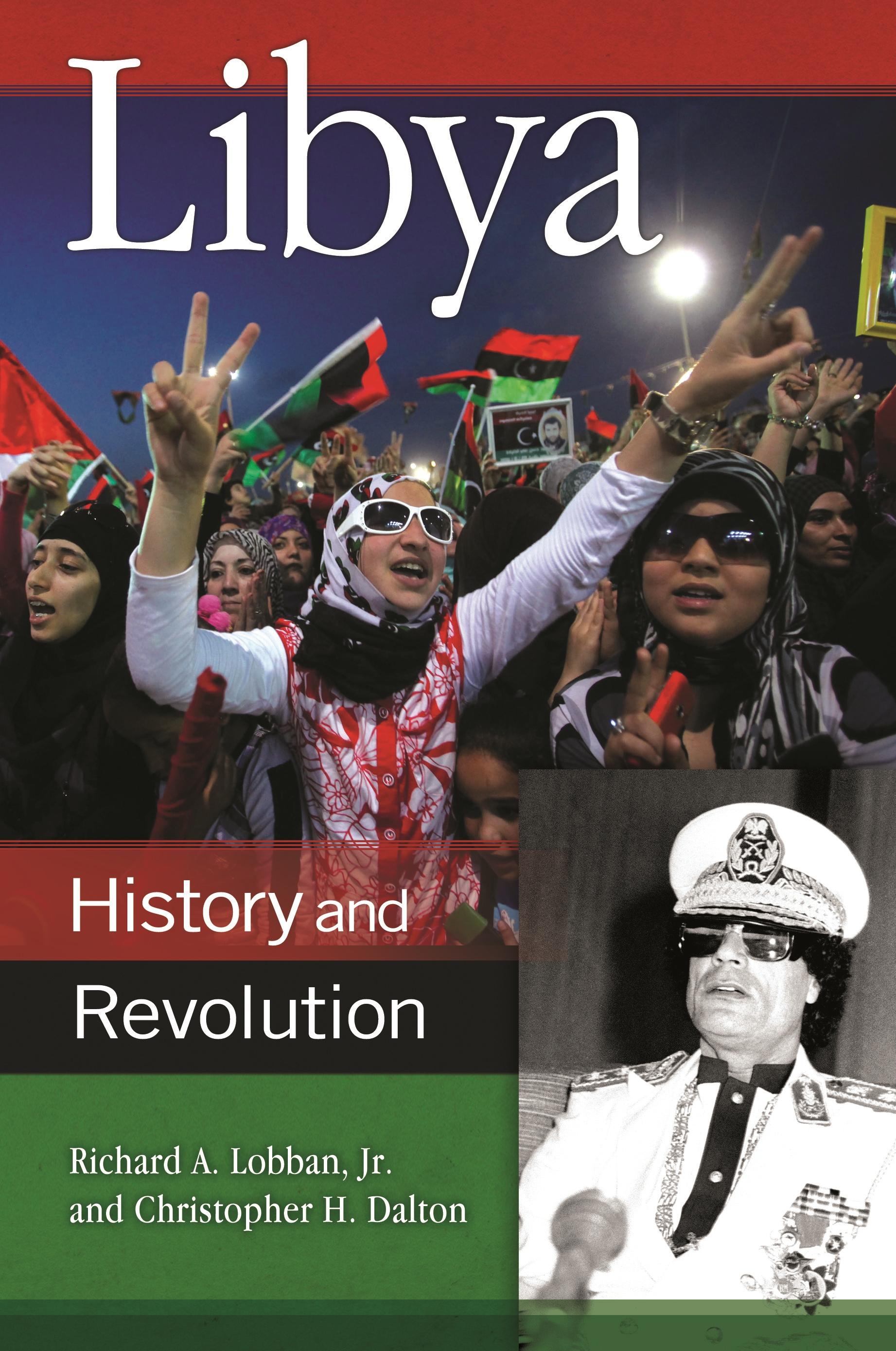
This narrative chronicles Libya's, and to a vast extent Muammar Gaddafi's, remarkable past, meteoric rise to prominence, and convoluted reign, and introduces potential scenarios that may play out in the near term.
After four decades of tyrannical, erratic—and pioneering—changes fueled by oil wealth, Muammar Gaddafi's government fell in 2011, and Libya embarked on a new course without known charts. Libya: History and Revolution covers the nation from its origins as independent land masses and kingdoms to its present as a consolidated nation. The work does not focus on the "old" Libya, but aims to bridge yesterday's Libya with tomorrow's, looking at the nation as a regional economic power and military player in North Africa and the Middle East. The result is a comprehensive yet easy-to-understand introduction to the political, economic, and military history and events that led to Gaddafi's downfall, coupled with a consideration of Libya's past and present.
Opening with historical underpinnings, the book focuses on the conflict and revolution in Libya during the Arab Spring that brought Gaddafi down, a change that opened a new future for the oil-rich nation. The book closes with a thoughtful discussion of what may be next for Libya and of possible perils for the nation, the region, and the world, as Libya matures as an independent, representatively governed country.
After four decades of tyrannical, erratic—and pioneering—changes fueled by oil wealth, Muammar Gaddafi's government fell in 2011, and Libya embarked on a new course without known charts. Libya: History and Revolution covers the nation from its origins as independent land masses and kingdoms to its present as a consolidated nation. The work does not focus on the "old" Libya, but aims to bridge yesterday's Libya with tomorrow's, looking at the nation as a regional economic power and military player in North Africa and the Middle East. The result is a comprehensive yet easy-to-understand introduction to the political, economic, and military history and events that led to Gaddafi's downfall, coupled with a consideration of Libya's past and present.
Opening with historical underpinnings, the book focuses on the conflict and revolution in Libya during the Arab Spring that brought Gaddafi down, a change that opened a new future for the oil-rich nation. The book closes with a thoughtful discussion of what may be next for Libya and of possible perils for the nation, the region, and the world, as Libya matures as an independent, representatively governed country.
Betal enkelt med kort, Klarna, Apple Pay eller Google Pay. Ikke fornøyd? Du har alltid 14 dagers angrerett. Les mer i våre vilkår. Har du spørsmål, send oss en e-post på hello@memmo.org.
Memmo gjør det enklere å studere – uansett hvor du er i verden. Hos oss samler du pensumbøker og smarte studieverktøy på ett og samme sted: sammendrag, quizer, podkaster og flashcards. Og så Ted, din studiekompis som svarer på alt du lurer på. Over 50 000 studenter studerer allerede her – bygget for at du skal lære raskere og stresse mindre.