
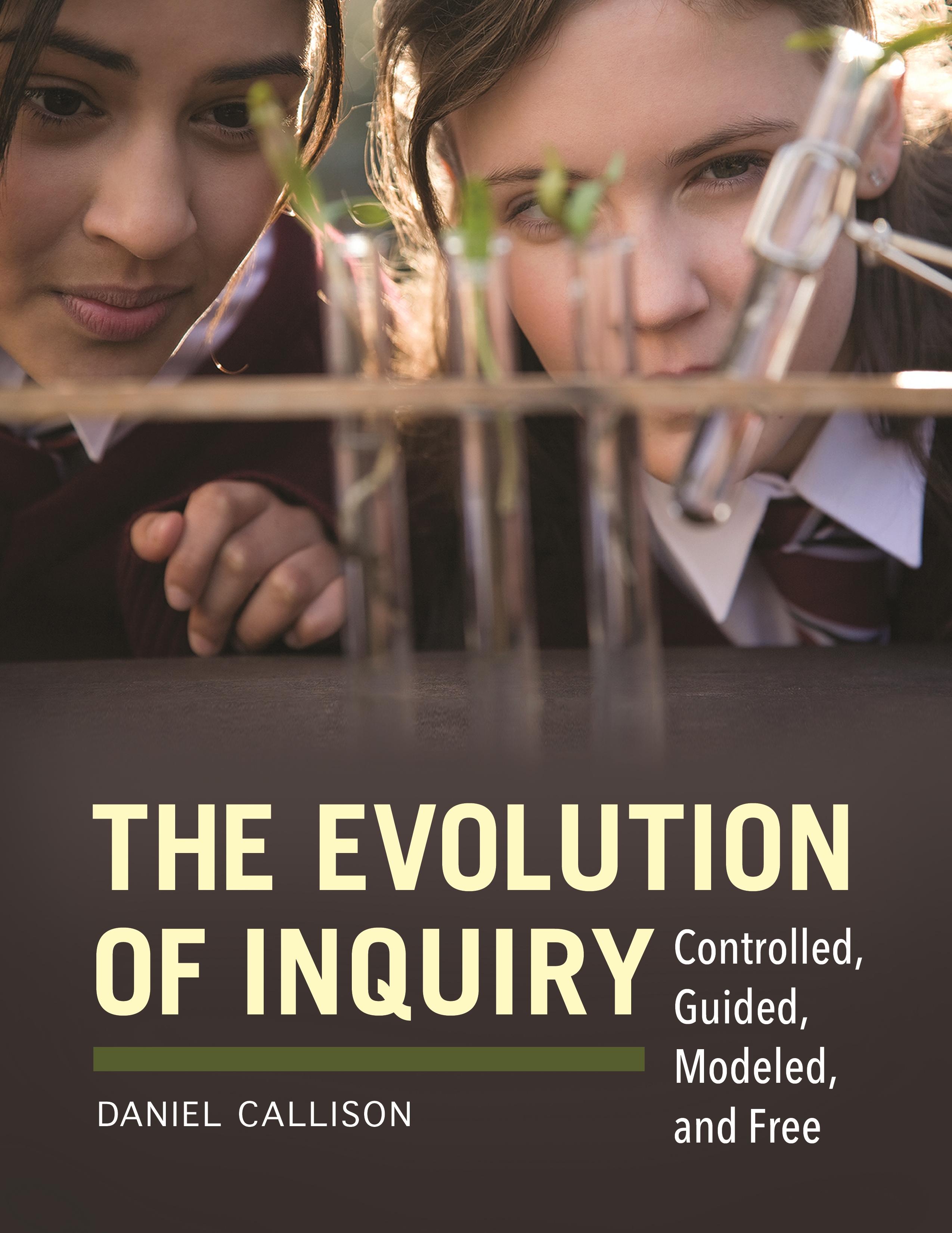
Defining the progression toward inquiry learning, this book provides an extensive overview of the past five decades and the evolution of inquiry in science, history, language arts, and information literacy studies.
Information inquiry is a basic skill for those who examine information as a science, and its principles can be applied across the K-12 curriculum. Built around reflective reviews of more than two dozen articles from School Library (Media Activities) Monthly, this helpful book shows the evolution, adoption, and application of the inquiry learning process to the school library teaching/learning environment. Four levels of inquiry—controlled, guided, open, and free—are explored in association with the emerging national Common Core curriculum and the Standards for the 21st-Century Learner from the American Association of School Librarians.
With the growing interest in the concept of inquiry and inquiry learning, you may find yourself needing to distinguish between the existing models and their applications. To help you do that, the book provides you with rich, historical context that clarifies the models, and it also projects future applications of inquiry and learner-centered teaching through school information literacy programs. These new applications, such as graphic inquiry, argumentation for inquiry, and the student as information scientist, offer tangible examples you can use to enrich the expanding information literacy curriculum.
Information inquiry is a basic skill for those who examine information as a science, and its principles can be applied across the K-12 curriculum. Built around reflective reviews of more than two dozen articles from School Library (Media Activities) Monthly, this helpful book shows the evolution, adoption, and application of the inquiry learning process to the school library teaching/learning environment. Four levels of inquiry—controlled, guided, open, and free—are explored in association with the emerging national Common Core curriculum and the Standards for the 21st-Century Learner from the American Association of School Librarians.
With the growing interest in the concept of inquiry and inquiry learning, you may find yourself needing to distinguish between the existing models and their applications. To help you do that, the book provides you with rich, historical context that clarifies the models, and it also projects future applications of inquiry and learner-centered teaching through school information literacy programs. These new applications, such as graphic inquiry, argumentation for inquiry, and the student as information scientist, offer tangible examples you can use to enrich the expanding information literacy curriculum.
Betal enkelt med kort, Klarna, Apple Pay eller Google Pay. Ikke fornøyd? Du har alltid 14 dagers angrerett. Les mer i våre vilkår. Har du spørsmål, send oss en e-post på hello@memmo.org.
Memmo gjør det enklere å studere – uansett hvor du er i verden. Hos oss samler du pensumbøker og smarte studieverktøy på ett og samme sted: sammendrag, quizer, podkaster og flashcards. Og så Ted, din studiekompis som svarer på alt du lurer på. Over 50 000 studenter studerer allerede her – bygget for at du skal lære raskere og stresse mindre.