
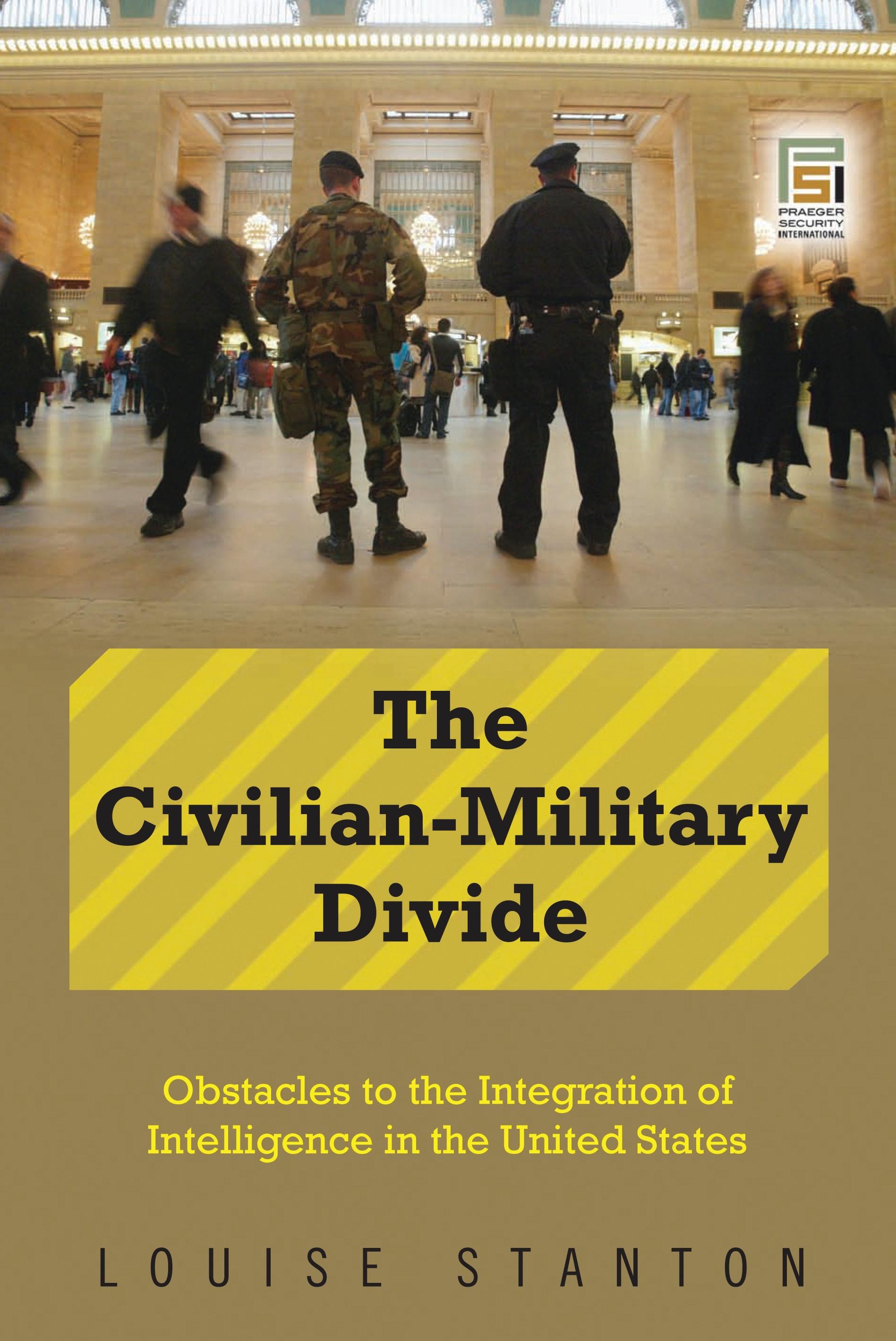
This book examines how U.S. domestic institutions stand up to global threats and whether intelligence sharing across military and civilian law enforcement barriers is legal.
The U.S. Constitution is designed to distribute power in order to prevent its concentration, and in particular, it draws clear lines between the responsibilities of the military and those of civilian law enforcement. But the new global threat paradigm, requiring responses both abroad and at home, calls out for military and civilian intelligence gathering to work in tandem. The Civil-Military Divide: Obstacles to the Integration of Intelligence in the United States looks at historic and legal ramifications of such efforts.
Louise Stanton's thought-provoking work sums up the current state of U.S. intelligence gathering at all levels of government. It then looks at the range of recommendations for overhauling our intelligence efforts in the context of the U.S. Constitution to assess what may or may not be constitutionally supportable. At issue are three long-established, often reaffirmed principles: the separation of powers, the federalist system that gives the U.S. government precedence over states, and the separation of the civilian and military sectors.
The U.S. Constitution is designed to distribute power in order to prevent its concentration, and in particular, it draws clear lines between the responsibilities of the military and those of civilian law enforcement. But the new global threat paradigm, requiring responses both abroad and at home, calls out for military and civilian intelligence gathering to work in tandem. The Civil-Military Divide: Obstacles to the Integration of Intelligence in the United States looks at historic and legal ramifications of such efforts.
Louise Stanton's thought-provoking work sums up the current state of U.S. intelligence gathering at all levels of government. It then looks at the range of recommendations for overhauling our intelligence efforts in the context of the U.S. Constitution to assess what may or may not be constitutionally supportable. At issue are three long-established, often reaffirmed principles: the separation of powers, the federalist system that gives the U.S. government precedence over states, and the separation of the civilian and military sectors.
Betal enkelt med kort, Klarna, Apple Pay eller Google Pay. Ikke fornøyd? Du har alltid 14 dagers angrerett. Les mer i våre vilkår. Har du spørsmål, send oss en e-post på hello@memmo.org.
Memmo gjør det enklere å studere – uansett hvor du er i verden. Hos oss samler du pensumbøker og smarte studieverktøy på ett og samme sted: sammendrag, quizer, podkaster og flashcards. Og så Ted, din studiekompis som svarer på alt du lurer på. Over 50 000 studenter studerer allerede her – bygget for at du skal lære raskere og stresse mindre.