
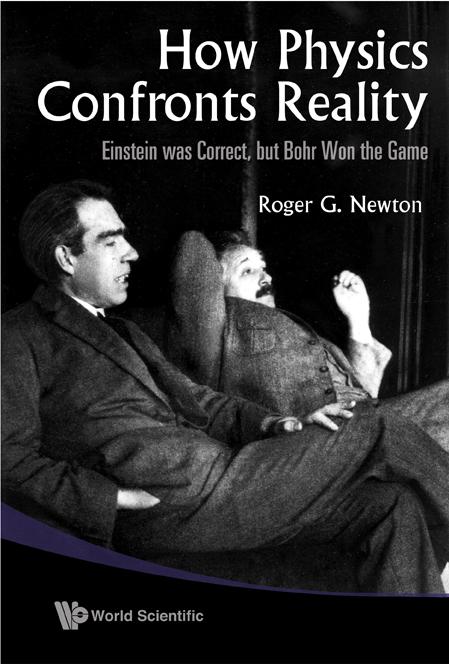
This book recalls, for nonscientific readers, the history of quantum mechanics, the main points of its interpretation, and Einstein's objections to it, together with the responses engendered by his arguments. Most popular discussions on the strange aspects of quantum mechanics ignore the fundamental fact that Einstein was correct in his insistence that the theory does not directly describe reality. While that fact does not remove the theory's counterintuitive features, it casts them in a different light.Context is provided by following the history of two central aspects of physics: the elucidation of the basic structure of the world made up of particles, and the explanation, as well as the prediction, of how objects move. This history, prior to quantum mechanics, reveals that whereas theories and discoveries concerning the structure of nature became increasingly realistic, the laws of motion, even as they became more powerful, became more and more abstract and remote from intuitive notions of reality. Newton's laws of motion gained their abstract power by sacrificing direct and intuitive contact with real experience. Arriving 250 years after Newton, the break with a direct description of reality embodied in quantum mechanics was nevertheless profound.
Betal enkelt med kort, Klarna, Apple Pay eller Google Pay. Ikke fornøyd? Du har alltid 14 dagers angrerett. Les mer i våre vilkår. Har du spørsmål, send oss en e-post på hello@memmo.org.
Memmo gjør det enklere å studere – uansett hvor du er i verden. Hos oss samler du pensumbøker og smarte studieverktøy på ett og samme sted: sammendrag, quizer, podkaster og flashcards. Og så Ted, din studiekompis som svarer på alt du lurer på. Over 50 000 studenter studerer allerede her – bygget for at du skal lære raskere og stresse mindre.
Du vil kanskje også like
Kjøp boken0