
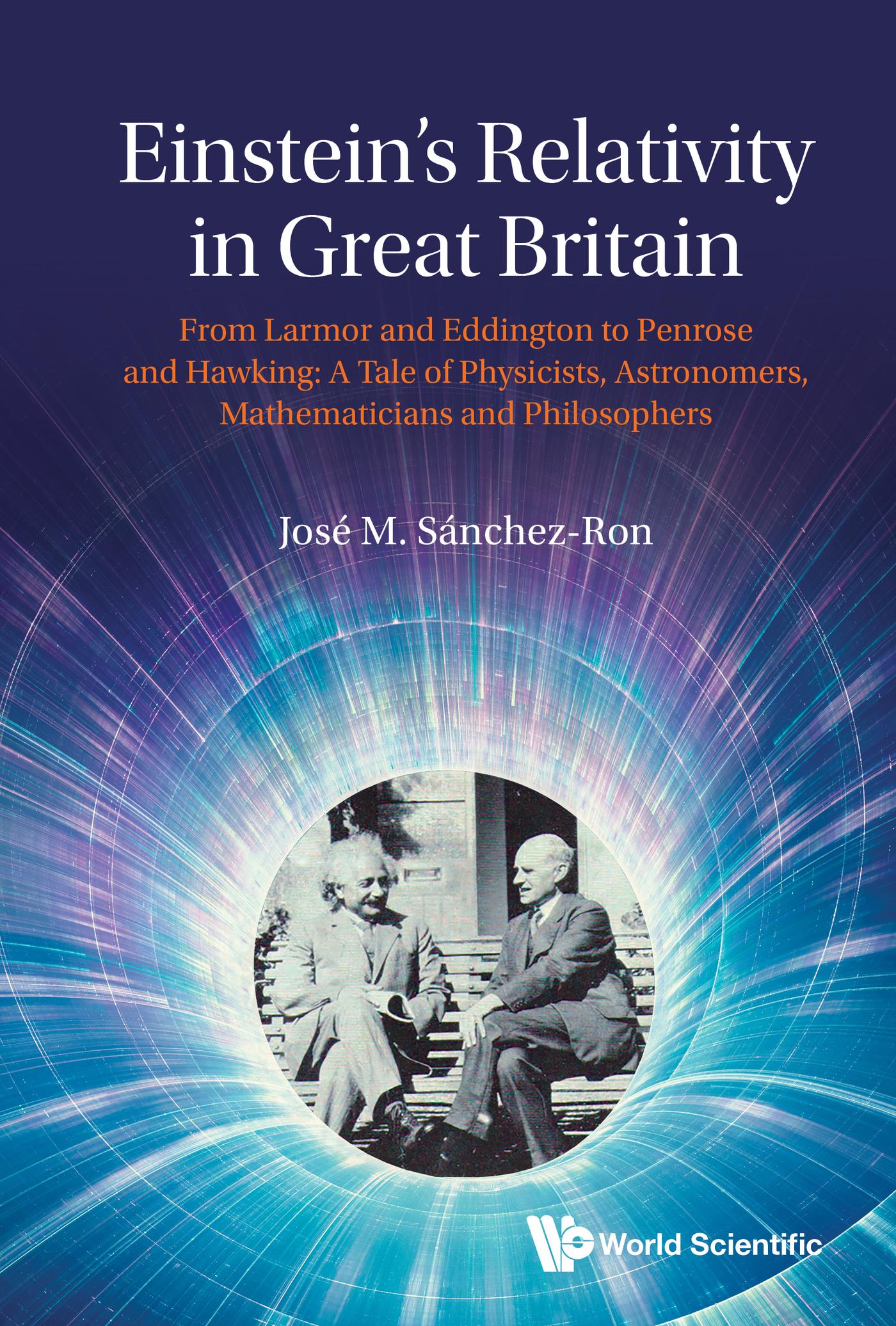
Soon after their publication (1905, 1915), Einstein's special and general theories of relativity received attention by a wide variety of British scholars (astronomers, physicists, mathematicians and philosophers). That reaction varied from deep acceptance (as was the case of Arthur Eddington) to straightforward opposition. This book analyzes those reactions, which involved a large number of important scientists as well as philosophers, like Bertrand Russell or Alfred N. Whitehead. The study will cover from the 1910s till the 1960s, when the work of a group of relativists centered in London and Oxford (Penrose), Cambridge (Sciama and Hawking) as well as the Bondi's group at King's College London, who finally introduced a new, global approach to general relativity.
Contents:
- Preface
- The Reception of Special Relativity in Great Britain
- The Reception of General Relativity Among British Physicists and Mathematicians (1915–1930)
- Larmor, Lodge and General Relativity: The 'Old Guard' Reaction to Einstein's Relativity
- The Early Reaction of Relativity Among British Philosophers, or the Ductility of Philosophy
- A New Generation: George McVittie, 'The Uncompromising Empiricist'
- The Renaissance of Relativity in Great Britain: From Coordinates to Global Space-Time and Black Holes
- References
Readership: Historians of science, physicists, mathematicians, philosophers. General public. Science and philosophy university students.
Betal enkelt med kort, Klarna, Apple Pay eller Google Pay. Ikke fornøyd? Du har alltid 14 dagers angrerett. Les mer i våre vilkår. Har du spørsmål, send oss en e-post på hello@memmo.org.
Memmo gjør det enklere å studere – uansett hvor du er i verden. Hos oss samler du pensumbøker og smarte studieverktøy på ett og samme sted: sammendrag, quizer, podkaster og flashcards. Og så Ted, din studiekompis som svarer på alt du lurer på. Over 50 000 studenter studerer allerede her – bygget for at du skal lære raskere og stresse mindre.