
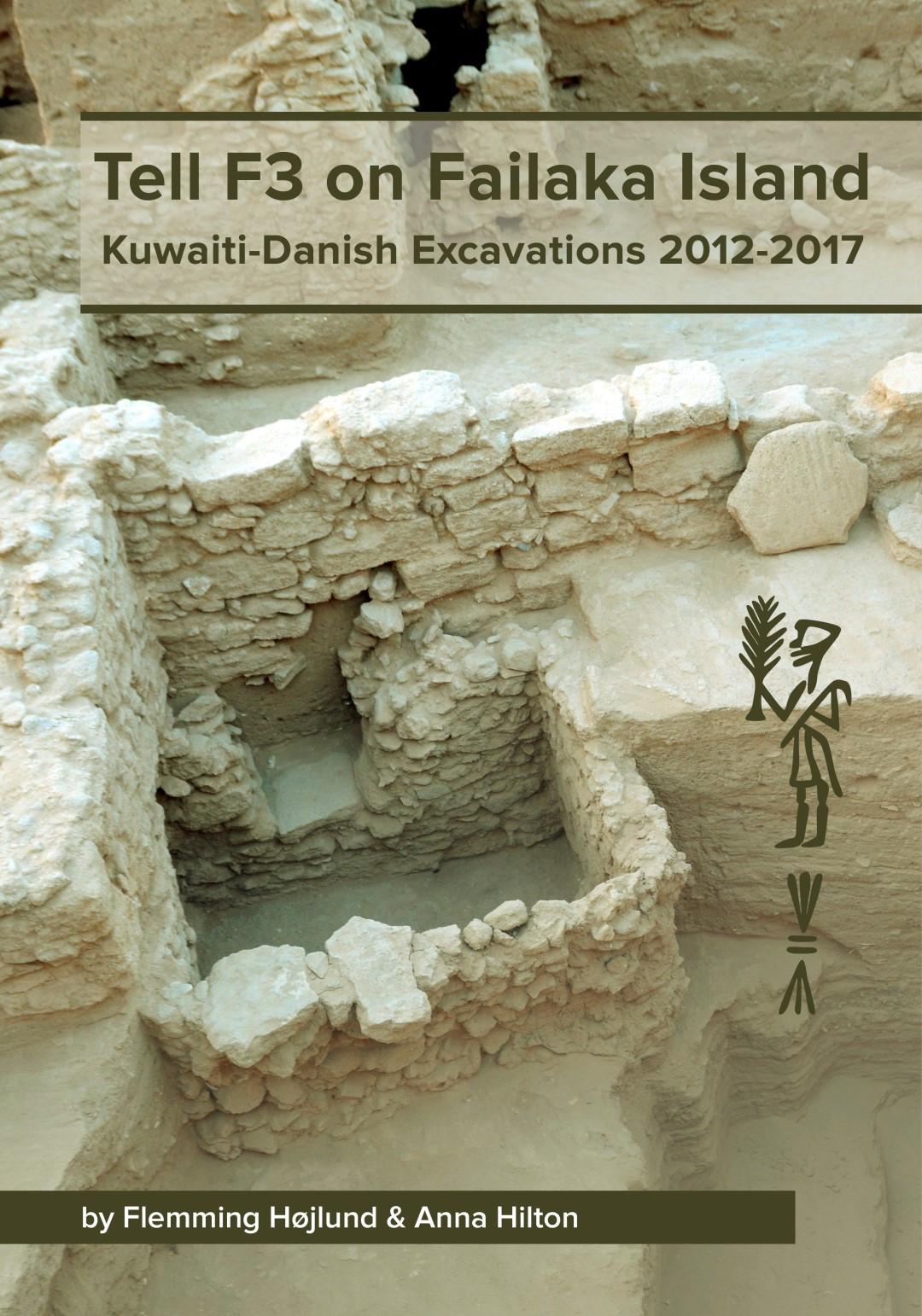
Six years of excavations in Tell F3 have uncovered several occupation phases belonging to the middle of the 2nd millennium BC, Failaka period 3B (c. 1600 BC). Though the material culture of Dilmun was heavily influenced by South Mesopotamia, this was a period where Dilmun regained its former importance after the economic and political collapse around 1700 BC, perhaps leading up to a final conquest by the Sealand Dynasty.
The end stages of the development of Dilmun stamp seals are documented, e.g. the first find of a Style III Dilmun seal in a safe period 3B context. The renaissance in stamp seal Style III is paralleled in stone vessels decorated in the Failaka Figurative Style.
Flemming Højlund: Former Head of Oriental Department at Moesgaard Museum, Denmark; directed excavations in Bahrain, Qatar and lately on Failaka Island in Kuwait (2008-2017); published numerous articles and monographs on Arabian Gulf archaeology; and organized exhibitions on the history and culture of the Gulf at Moesgaard Museum, at the Bahrain National Museum and in Abu Dhabi.
Anna Hilton: Educated at the Carsten Niebuhr Institute of University of Copenhagen and excavated extensively in the Near East, lately (2014-2019) as Field Director on Failaka. Published a monograph on the stone vessels found during the Danish excavations 1958-1963 at Tell F3 and F6 on Failaka, Kuwait.
Betal enkelt med kort, Klarna, Apple Pay eller Google Pay. Ikke fornøyd? Du har alltid 14 dagers angrerett. Les mer i våre vilkår. Har du spørsmål, send oss en e-post på hello@memmo.org.
Memmo gjør det enklere å studere – uansett hvor du er i verden. Hos oss samler du pensumbøker og smarte studieverktøy på ett og samme sted: sammendrag, quizer, podkaster og flashcards. Og så Ted, din studiekompis som svarer på alt du lurer på. Over 50 000 studenter studerer allerede her – bygget for at du skal lære raskere og stresse mindre.
Du vil kanskje også like
Kjøp boken0