
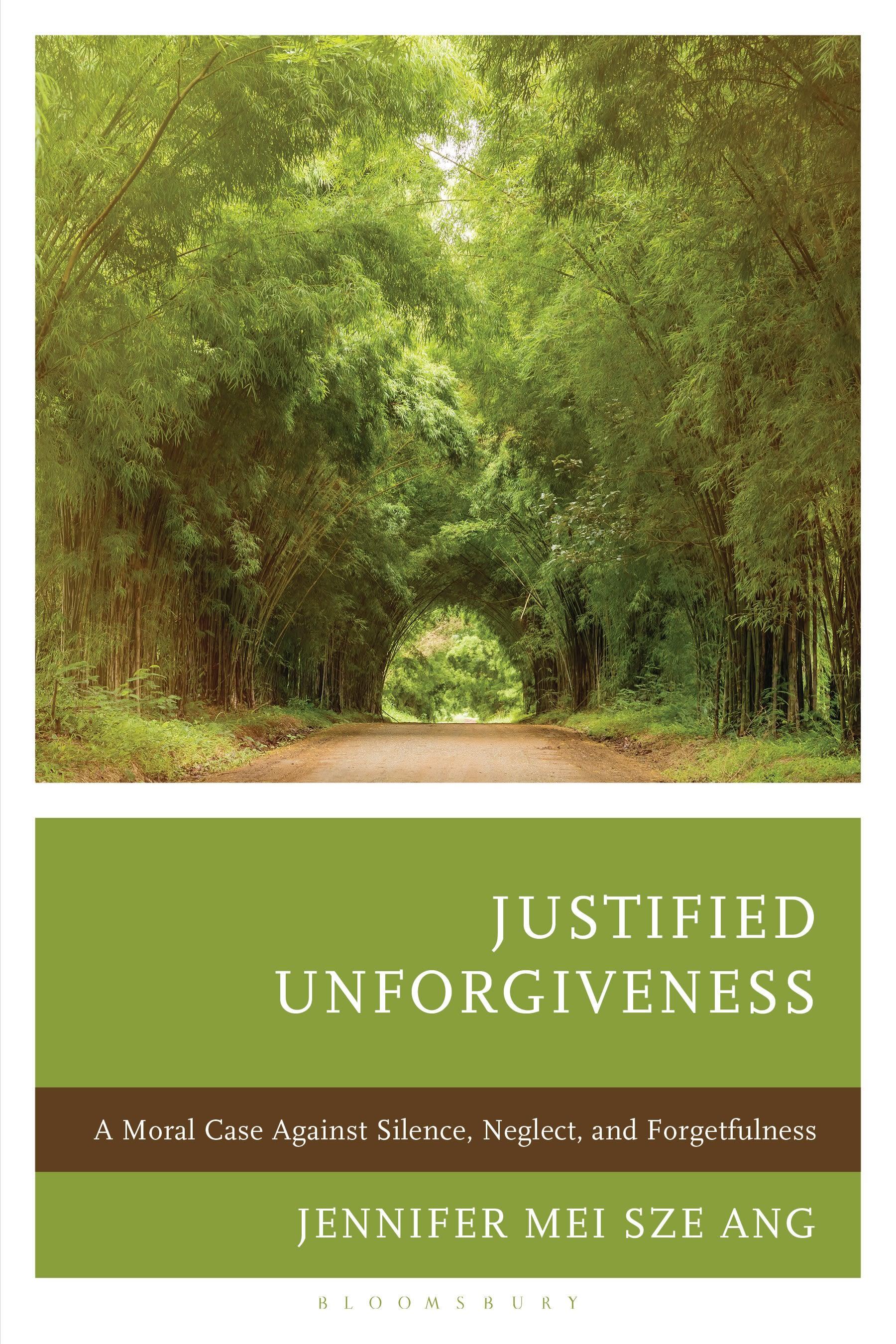
Justified Unforgiveness: A Moral Case Against Silence, Neglect, and Forgetfulness corrects the overemphasis on the benefits of forgiveness and shows how unforgiveness is a morally appropriate – and at times morally necessary – response towards unremorseful and unrepentant wrongdoers, grave wrongs brought about by absolute evil, and situations where justice is not served. In advancing an argument for unforgiveness, Jennifer M.S. Ang deals with three dimensions of forgiveness – forgiveness as the letting go of resentment, forgiveness as reparation of damaged moral relations with the community, and forgiveness as letting the past remain in the past. Ang examines these arguments using cases of mass atrocities that are not often discussed in the forgiveness literature, such as the Nanking massacre, the Japanese military comfort women system, and the Khmer Rouge genocide, to reflect on the paradigm example of the Holocaust as absolute evil. These discussions also clarify the relationship between time, forgiveness, and justice– how time can affect the willingness to forgive; how the carrying out of justice over time remains vulnerable to politicization; and how memory of mass atrocities enables victims to let go without forgiving.
Betal enkelt med kort, Klarna, Apple Pay eller Google Pay. Ikke fornøyd? Du har alltid 14 dagers angrerett. Les mer i våre vilkår. Har du spørsmål, send oss en e-post på hello@memmo.org.
Memmo gjør det enklere å studere – uansett hvor du er i verden. Hos oss samler du pensumbøker og smarte studieverktøy på ett og samme sted: sammendrag, quizer, podkaster og flashcards. Og så Ted, din studiekompis som svarer på alt du lurer på. Over 50 000 studenter studerer allerede her – bygget for at du skal lære raskere og stresse mindre.