
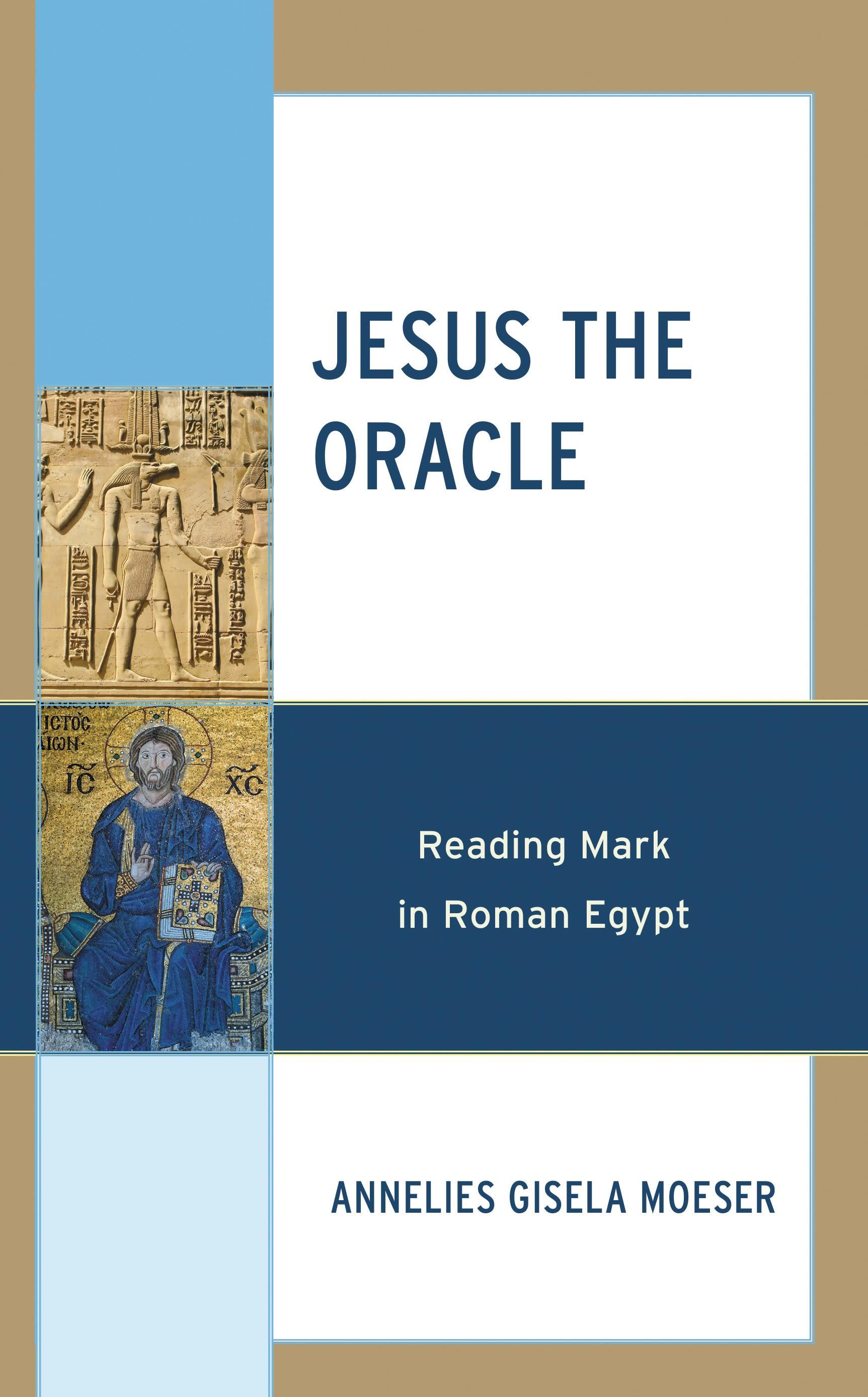
In Jesus the Oracle, Annelies Gisela Moeser reads Jesus’s journey from Capernaum to Jerusalem in Mark’s gospel through the cultural context of second/third century Roman Egypt. Moeser provides a rich description of the Egyptian practice of oracles, including processional oracles, to build a model with which to read Mark. This prism brings attention to descriptions of Jesus’s supernatural knowledge and wisdom, such as in the story of the Rich Man (Mk 10:17–22). In contrast to Clement of Alexandria’s homily on the Rich Man which counseled detachment from possessions, this reading from a non-elite perspective considers Jesus’s advice to be more radical. This model of processional oracles highlights the importance of access to the divine, including by non-elite crowds, by persons with disabilities (e.g., in comparing Bartimaeus [Mk 10:46–52] with Gemellus Horion of Karanis [a town in Egypt]), and by children. Traditional Egyptian religion upheld the existing sociopolitical regime. However, Jesus’s procession and proclamation of the basileia (reign) of G*d subverts the Roman world order and that of their local, elite allies.
Betal enkelt med kort, Klarna, Apple Pay eller Google Pay. Ikke fornøyd? Du har alltid 14 dagers angrerett. Les mer i våre vilkår. Har du spørsmål, send oss en e-post på hello@memmo.org.
Memmo gjør det enklere å studere – uansett hvor du er i verden. Hos oss samler du pensumbøker og smarte studieverktøy på ett og samme sted: sammendrag, quizer, podkaster og flashcards. Og så Ted, din studiekompis som svarer på alt du lurer på. Over 50 000 studenter studerer allerede her – bygget for at du skal lære raskere og stresse mindre.