
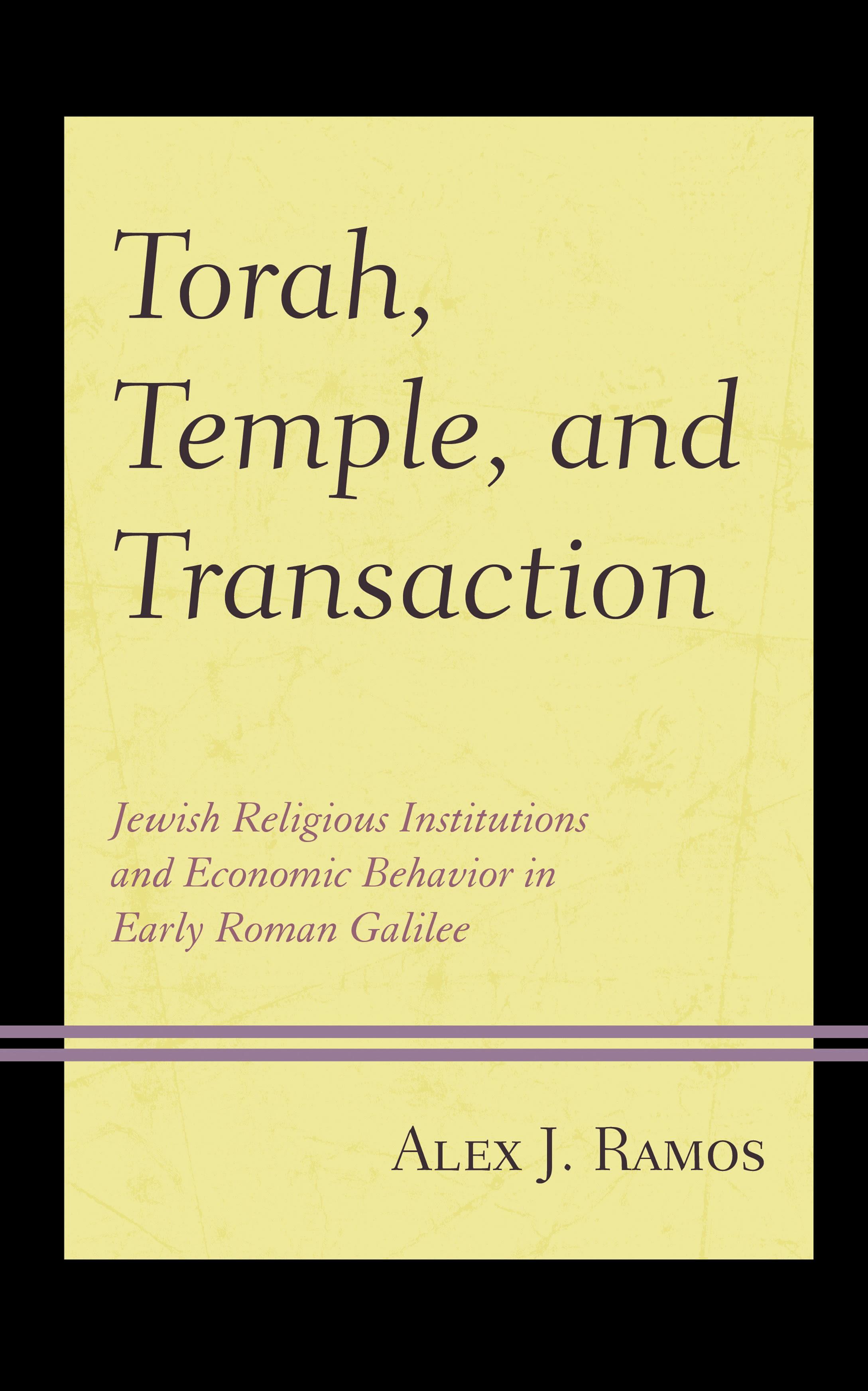
In this book, Alex J. Ramos examines production, consumption, and transaction in the regional economy of Galilee during the Early Roman period. Drawing on literary sources—including biblical texts, Josephus, and the Mishnah—and archaeological evidence, he assesses the ways that the Roman and Herodian states, settlement patterns, and Jewish religious obligations would have shaped household economic behavior. Approaching the topic through new institutional economics, Ramos considers the role of state institutions of administration and taxation and religious institutions derived from the Torah and the Temple in structuring for Galilean Jews the incentives, priorities, and costs of economic decision making. In contrast to classical economic assumptions of what is economically “rational” behavior, he considers the ways that the laws of the Torah defined the bounds of rational and socially permissible approaches to economic production, consumption, and transaction. Ultimately, Ramos argues that state institutions played a rather indirect and weak role in shaping the economy through much of the Early Roman Galilee; religious institutions, by comparison, played a more formative role in defining economic behavior.
Betal enkelt med kort, Klarna, Apple Pay eller Google Pay. Ikke fornøyd? Du har alltid 14 dagers angrerett. Les mer i våre vilkår. Har du spørsmål, send oss en e-post på hello@memmo.org.
Memmo gjør det enklere å studere – uansett hvor du er i verden. Hos oss samler du pensumbøker og smarte studieverktøy på ett og samme sted: sammendrag, quizer, podkaster og flashcards. Og så Ted, din studiekompis som svarer på alt du lurer på. Over 50 000 studenter studerer allerede her – bygget for at du skal lære raskere og stresse mindre.