
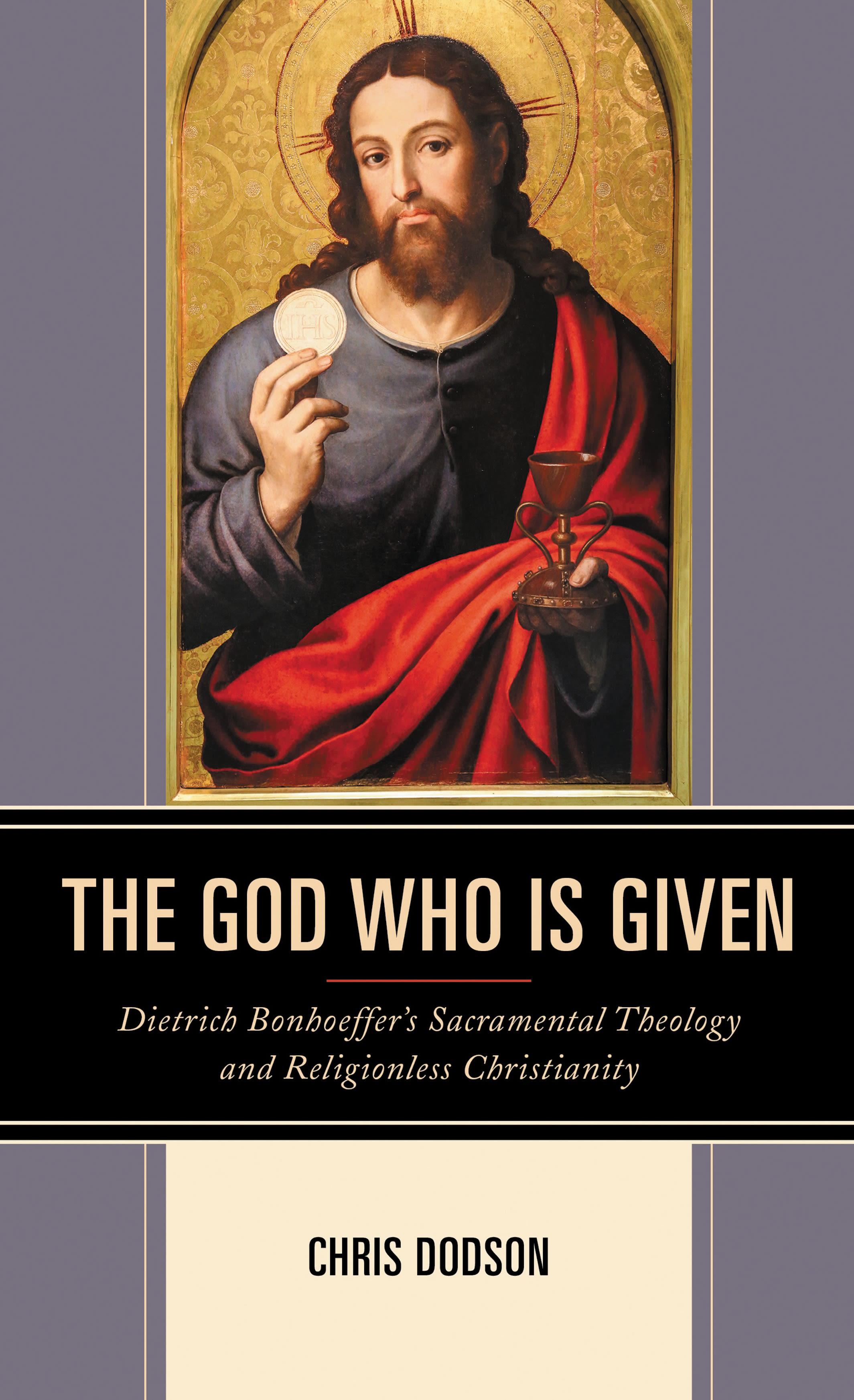
Dietrich Bonhoeffer's notions of religionless Christianity have provoked a great deal of theological inquiry, much of which has hindered evangelical reception of Bonhoeffer's work. By setting religionless Christianity in the context of Bonhoeffer's Lutheran sacramental theology, Chris Dodson furthers Bonhoeffer's belief that receiving the God given in the sacraments both resists Christians' proclivity towards religious, self-serving ends and draws Christians into a life of robust faith and love. Receiving Christ in baptism, the Eucharist, and confession serves to instill, sustain, locate, and vitalize the form of life that Bonhoeffer calls “religionless.” The church and its core practices are not abandoned in Bonhoeffer’s prison letters; they are reengaged with a more proper disposition: faithful love of God and neighbor. In this way, common evangelical skepticisms about Bonhoeffer’s later theology can be assuaged. Bonhoeffer’s theology, rightly construed, provokes evangelicals, and particularly American evangelicals, to reconsider and restructure their worship along the lines of a religionless Christianity that promotes a deeper faith resulting from a more vigorous encounter with Christ as he gives himself over to his people.
Betal enkelt med kort, Klarna, Apple Pay eller Google Pay. Ikke fornøyd? Du har alltid 14 dagers angrerett. Les mer i våre vilkår. Har du spørsmål, send oss en e-post på hello@memmo.org.
Memmo gjør det enklere å studere – uansett hvor du er i verden. Hos oss samler du pensumbøker og smarte studieverktøy på ett og samme sted: sammendrag, quizer, podkaster og flashcards. Og så Ted, din studiekompis som svarer på alt du lurer på. Over 50 000 studenter studerer allerede her – bygget for at du skal lære raskere og stresse mindre.