
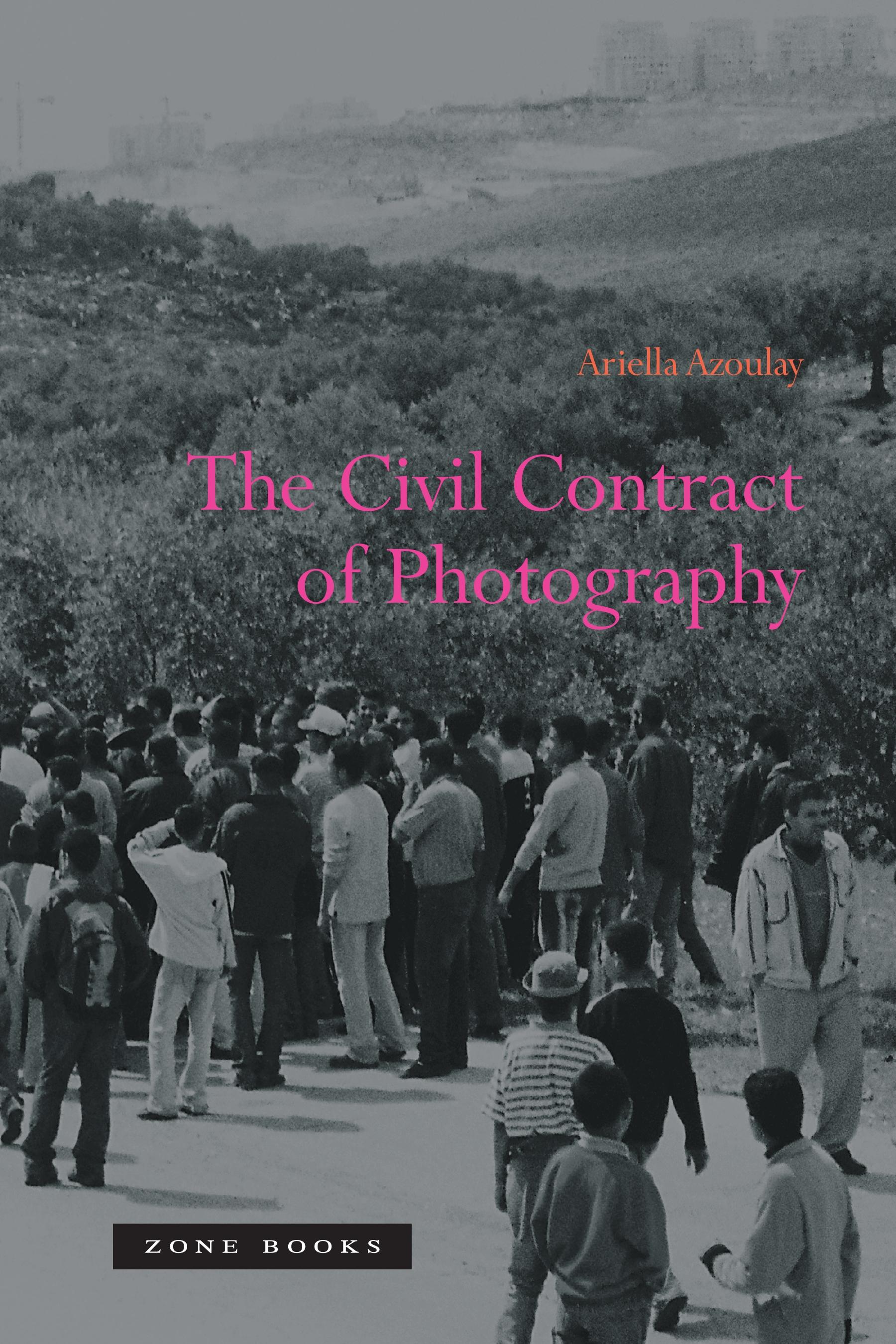
In this groundbreaking work, Ariella Azoulay thoroughly revises our understanding of the ethical status of photography. It must, she insists, be understood in its inseparability from the many catastrophes of recent history. She argues that photography is a particular set of relations between individuals and the powers that govern them and, at the same time, a form of relations among equals that constrains that power. Anyone, even a stateless person, who addresses others through photographs or occupies the position of a photograph’s addressee, is or can become a member of the citizenry of photography.
The crucial arguments of the book concern two groups that have been rendered invisible by their state of exception: the Palestinian noncitizens of Israel and women in Western societies. Azoulay’s leading question is: Under what legal, political, or cultural conditions does it become possible to see and show disaster that befalls those with flawed citizenship in a state of exception? The Civil Contract of Photography is an essential work for anyone seeking to understand the disasters of recent history and the consequences of how they and their victims are represented.
Betal enkelt med kort, Klarna, Apple Pay eller Google Pay. Ikke fornøyd? Du har alltid 14 dagers angrerett. Les mer i våre vilkår. Har du spørsmål, send oss en e-post på hello@memmo.org.
Memmo gjør det enklere å studere – uansett hvor du er i verden. Hos oss samler du pensumbøker og smarte studieverktøy på ett og samme sted: sammendrag, quizer, podkaster og flashcards. Og så Ted, din studiekompis som svarer på alt du lurer på. Over 50 000 studenter studerer allerede her – bygget for at du skal lære raskere og stresse mindre.