
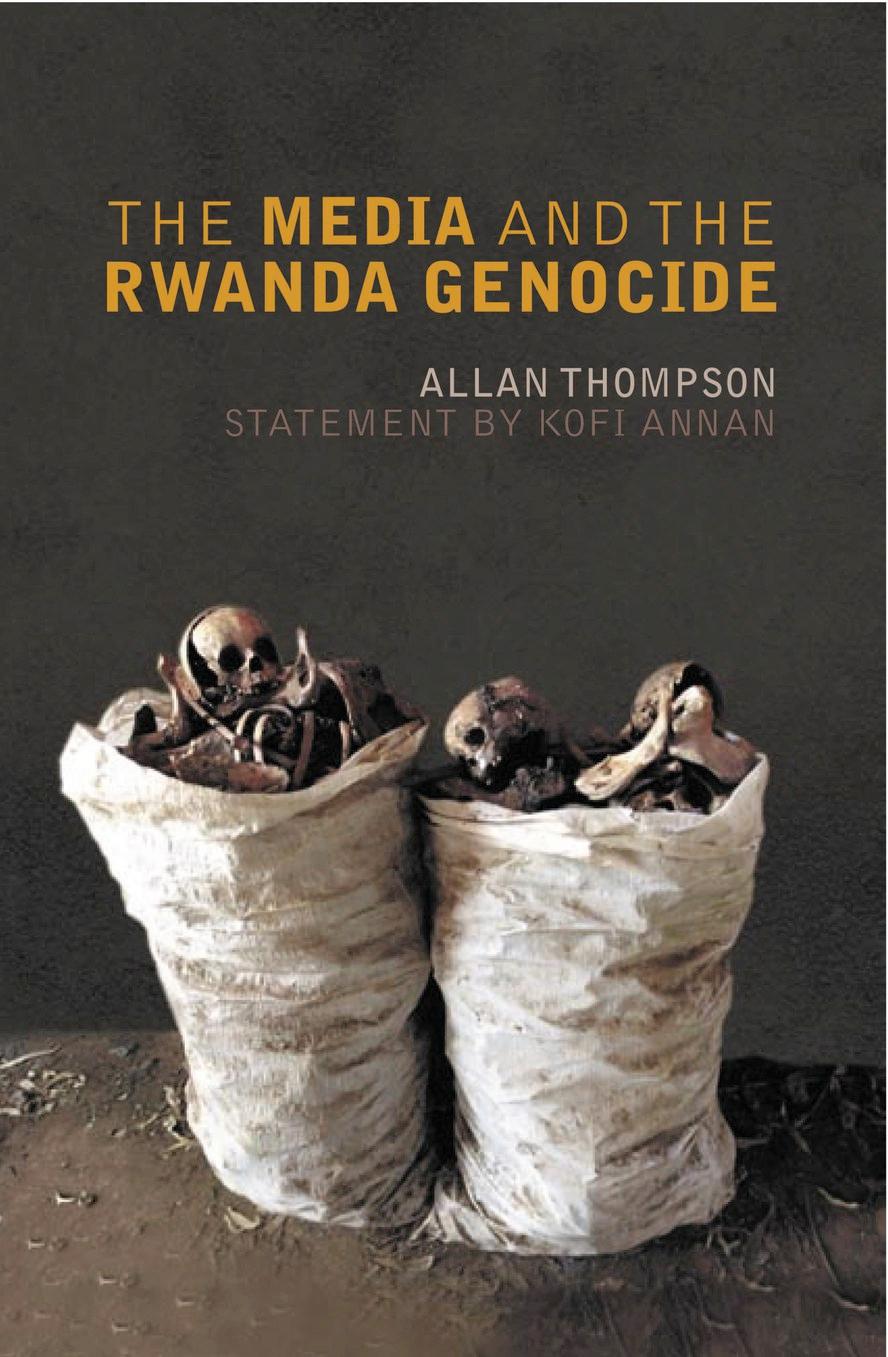
The news media played a crucial role in the 1994 Rwanda genocide: local media fuelled the killings, while the international media either ignored or seriously misconstrued what was happening.
This is the first book to explore both sides of that media equation. The book examines how local radio and print media were used as a tool of hate by encouraging neighbours to turn against each other. It also presents a critique of international media coverage of the cataclysmic events in Rwanda. Bringing together local reporters and commentators from Rwanda, high-profile Western journalists and leading media theorists, this is the only book to identify and probe the extent of the media's accountability. It also examines deliberations by the International Criminal Tribunal for Rwanda on the role of the media in the genocide.
In writing this startling record of the dangerous negative influence that the media can have, when used as a political tool or when news organisations and journalists fail to live up to their responsibilities, the authors put forward suggestions for the future; outlining how we can avoid censorship and propaganda, and arguing for a new responsibility in media reporting.
This is the first book to explore both sides of that media equation. The book examines how local radio and print media were used as a tool of hate by encouraging neighbours to turn against each other. It also presents a critique of international media coverage of the cataclysmic events in Rwanda. Bringing together local reporters and commentators from Rwanda, high-profile Western journalists and leading media theorists, this is the only book to identify and probe the extent of the media's accountability. It also examines deliberations by the International Criminal Tribunal for Rwanda on the role of the media in the genocide.
In writing this startling record of the dangerous negative influence that the media can have, when used as a political tool or when news organisations and journalists fail to live up to their responsibilities, the authors put forward suggestions for the future; outlining how we can avoid censorship and propaganda, and arguing for a new responsibility in media reporting.
Sider: 416
Kategori: Journalistik & kommunikation
e-ISBN: 9781849643450
Fraktvekt: 1.2 kg
Sendes innen: 1-2 dager
Betal enkelt med kort, Klarna, Apple Pay eller Google Pay. Ikke fornøyd? Du har alltid 14 dagers angrerett. Les mer i våre vilkår. Har du spørsmål, send oss en e-post på hello@memmo.org.
Memmo gjør det enklere å studere – uansett hvor du er i verden. Hos oss samler du pensumbøker og smarte studieverktøy på ett og samme sted: sammendrag, quizer, podkaster og flashcards. Og så Ted, din studiekompis som svarer på alt du lurer på. Over 50 000 studenter studerer allerede her – bygget for at du skal lære raskere og stresse mindre.
Du vil kanskje også like
Kjøp boken0