
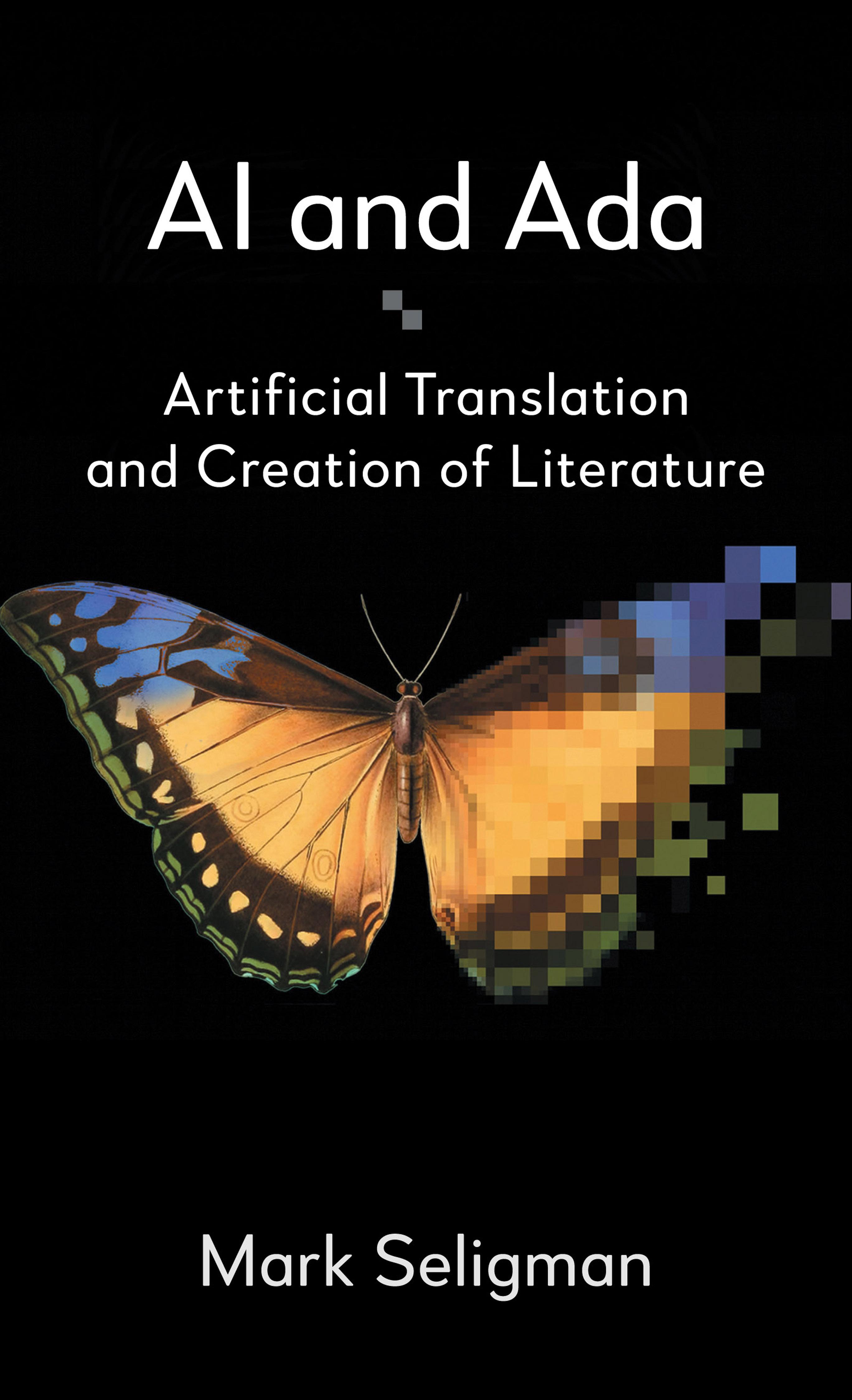
The book’s Preface places the current AI explosion in the context of other technological cataclysms and recounts the author’s personal (and not always deadly serious) AI journey. Chapter One (“Extracting the Essence”) assesses the potential of machine translation of literature, exploiting Vladimir Nabokov’s hyperconscious literary art as a reference point. Chapter Two (“Toward an Artificial Nabokov”) goes on to speculate on possibilities for actual artificial creation of literature. Chapter Three (“Large Literary Models? Intelligence and Language in the LLM Era”) explains recent spectacular progress in Generative Artificial Intelligence (GenAI), as exemplified by Large Language Models like ChatGPT. On the way, the chapter ventures to tackle perennial questions (“What is intelligence?” “What is language?”) and culminates in an assortment of striking demos. The volume’s Sendoff considers whether machines, while now arguably intelligent, can ever also gain sufficient sensation and emotion to create language art with other than borrowed depth – and, while viewing this development as likely all too soon, declines to despair on that account.
Betal enkelt med kort, Klarna, Apple Pay eller Google Pay. Ikke fornøyd? Du har alltid 14 dagers angrerett. Les mer i våre vilkår. Har du spørsmål, send oss en e-post på hello@memmo.org.
Memmo gjør det enklere å studere – uansett hvor du er i verden. Hos oss samler du pensumbøker og smarte studieverktøy på ett og samme sted: sammendrag, quizer, podkaster og flashcards. Og så Ted, din studiekompis som svarer på alt du lurer på. Over 50 000 studenter studerer allerede her – bygget for at du skal lære raskere og stresse mindre.