
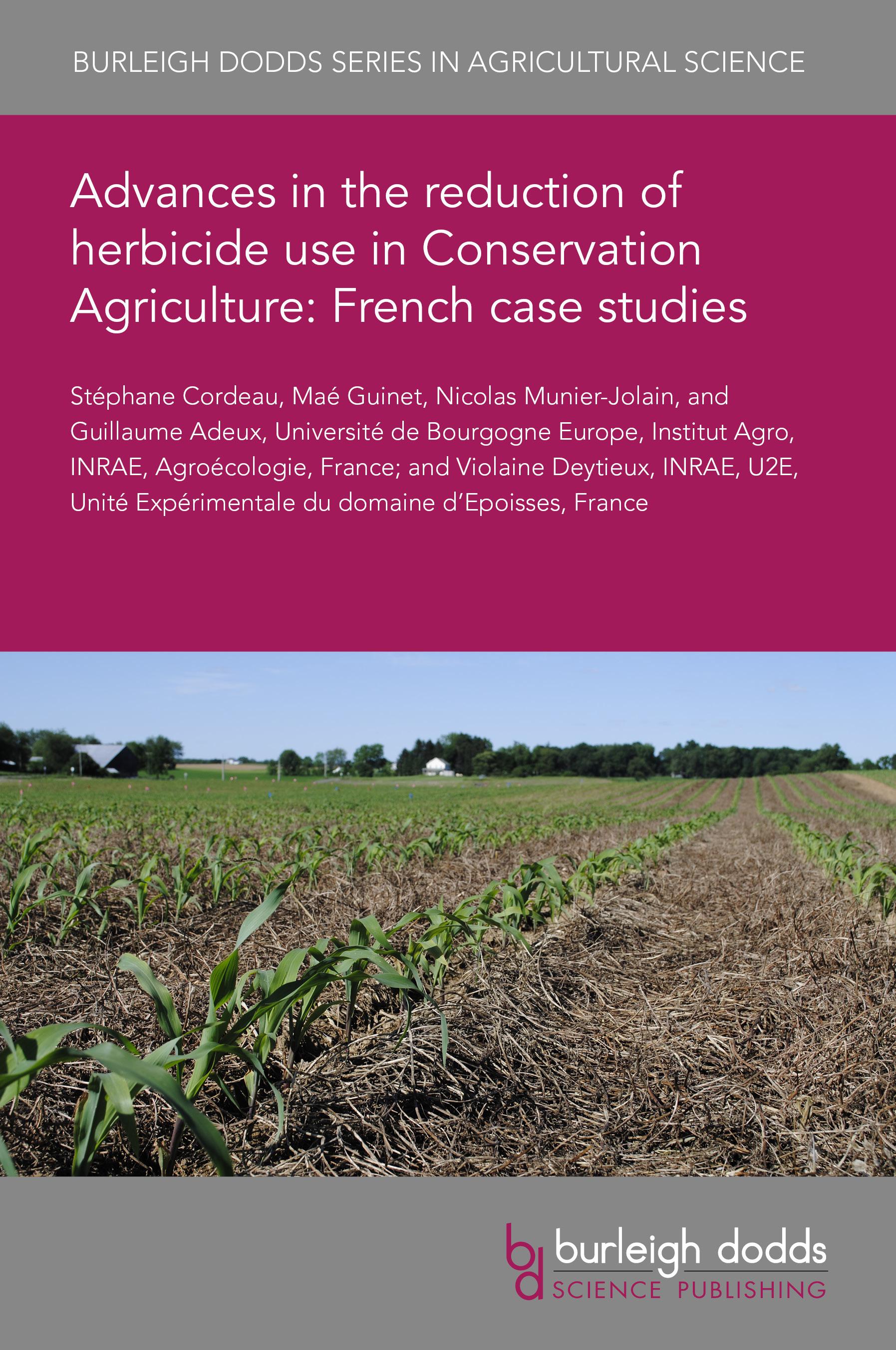
Conservation agriculture (CA) appears as a promising agricultural pathway to achieve multiperformance but is currently questioned due to its reliance on herbicides for weed management, especially glyphosate. One limit in the development of CA-based agroecological cropping system less reliant on herbicide use is the strict definition of CA based on technical means (i.e. the three principles) rather than targeted objectives. In this chapter, the authors mobilize research carried out on experimental stations (e.g. CA-SYS platform) and farmer networks (e.g. French DEPHY-farm network) to synthesize knowledge on how herbicide-free no-till agriculture could be achieved. They provide insights on the multiperformance of herbicide-free and nature-based CA systems compared to reference CA systems. Designing cover crops to ensure growth in a context of unpredictable weather conditions and facilitate mechanical termination, and ensuring crop establishment in absence of tillage and herbicides represent major research avenues for the development of pesticide-free CA systems.
Betal enkelt med kort, Klarna, Apple Pay eller Google Pay. Ikke fornøyd? Du har alltid 14 dagers angrerett. Les mer i våre vilkår. Har du spørsmål, send oss en e-post på hello@memmo.org.
Memmo gjør det enklere å studere – uansett hvor du er i verden. Hos oss samler du pensumbøker og smarte studieverktøy på ett og samme sted: sammendrag, quizer, podkaster og flashcards. Og så Ted, din studiekompis som svarer på alt du lurer på. Over 50 000 studenter studerer allerede her – bygget for at du skal lære raskere og stresse mindre.