
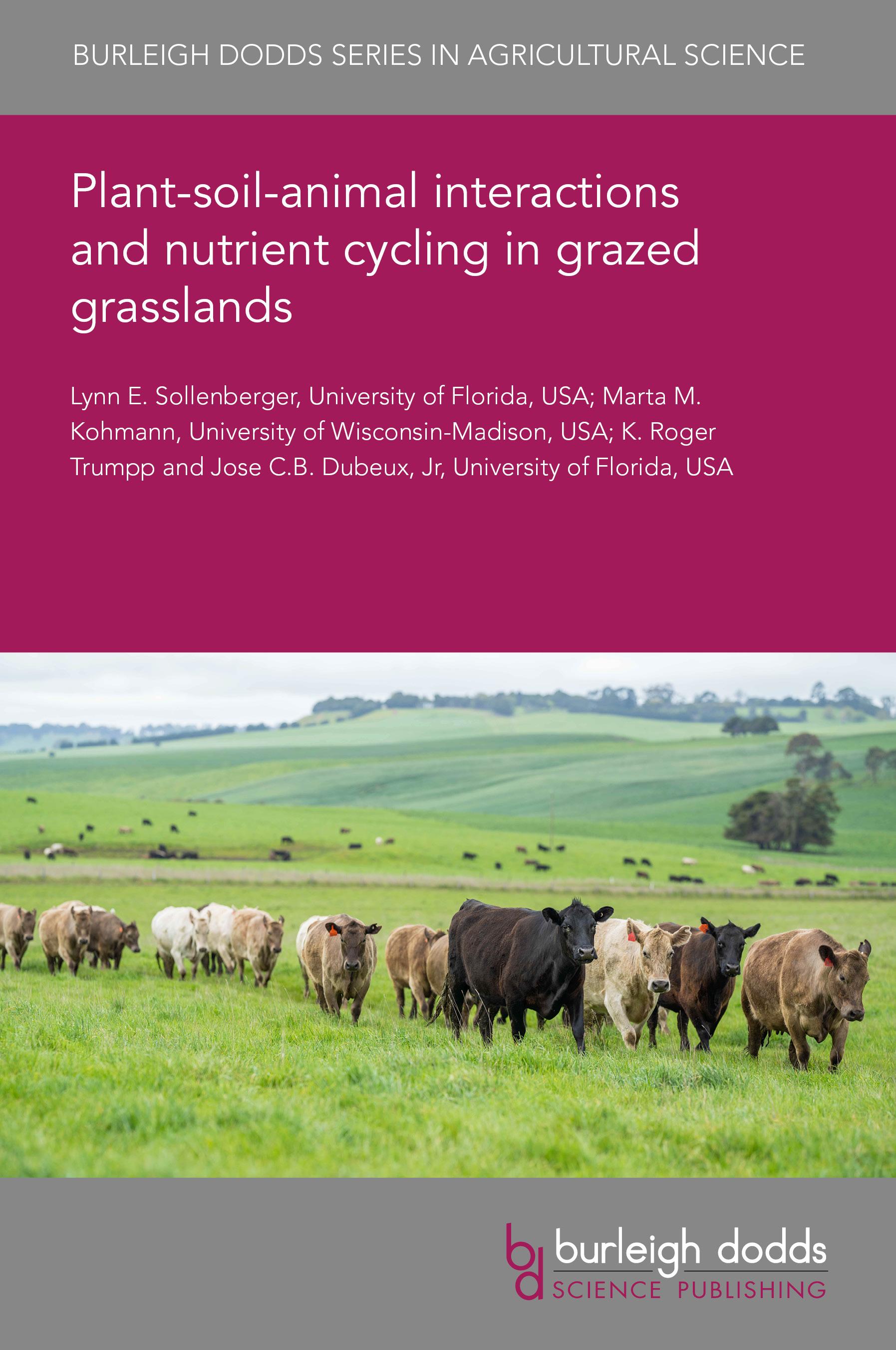
Interactions among plants, soils, and animals in grazed grasslands affect ecosystem functions, including nutrient cycling. Focusing on grazed grasslands in temperate environments, this chapter describes nutrient pools and fluxes, grassland management practices that enhance nutrient cycling efficiency, and soil fauna and nitrification inhibitor effects on nutrient cycling. Nutrient cycling efficiency is enhanced by grassland management that sustains pasture cover, reduces heterogeneity of dung and urine deposition, and increases legume adoption as an alternative to N fertilizer. Efficiency is also increased through presence of earthworms, dung beetles, and beneficial microbial communities, while the use of chemical and biological nitrification inhibitors shows increasing promise for reducing nitrate leaching and nitrous oxide emissions.
Betal enkelt med kort, Klarna, Apple Pay eller Google Pay. Ikke fornøyd? Du har alltid 14 dagers angrerett. Les mer i våre vilkår. Har du spørsmål, send oss en e-post på hello@memmo.org.
Memmo gjør det enklere å studere – uansett hvor du er i verden. Hos oss samler du pensumbøker og smarte studieverktøy på ett og samme sted: sammendrag, quizer, podkaster og flashcards. Og så Ted, din studiekompis som svarer på alt du lurer på. Over 50 000 studenter studerer allerede her – bygget for at du skal lære raskere og stresse mindre.