
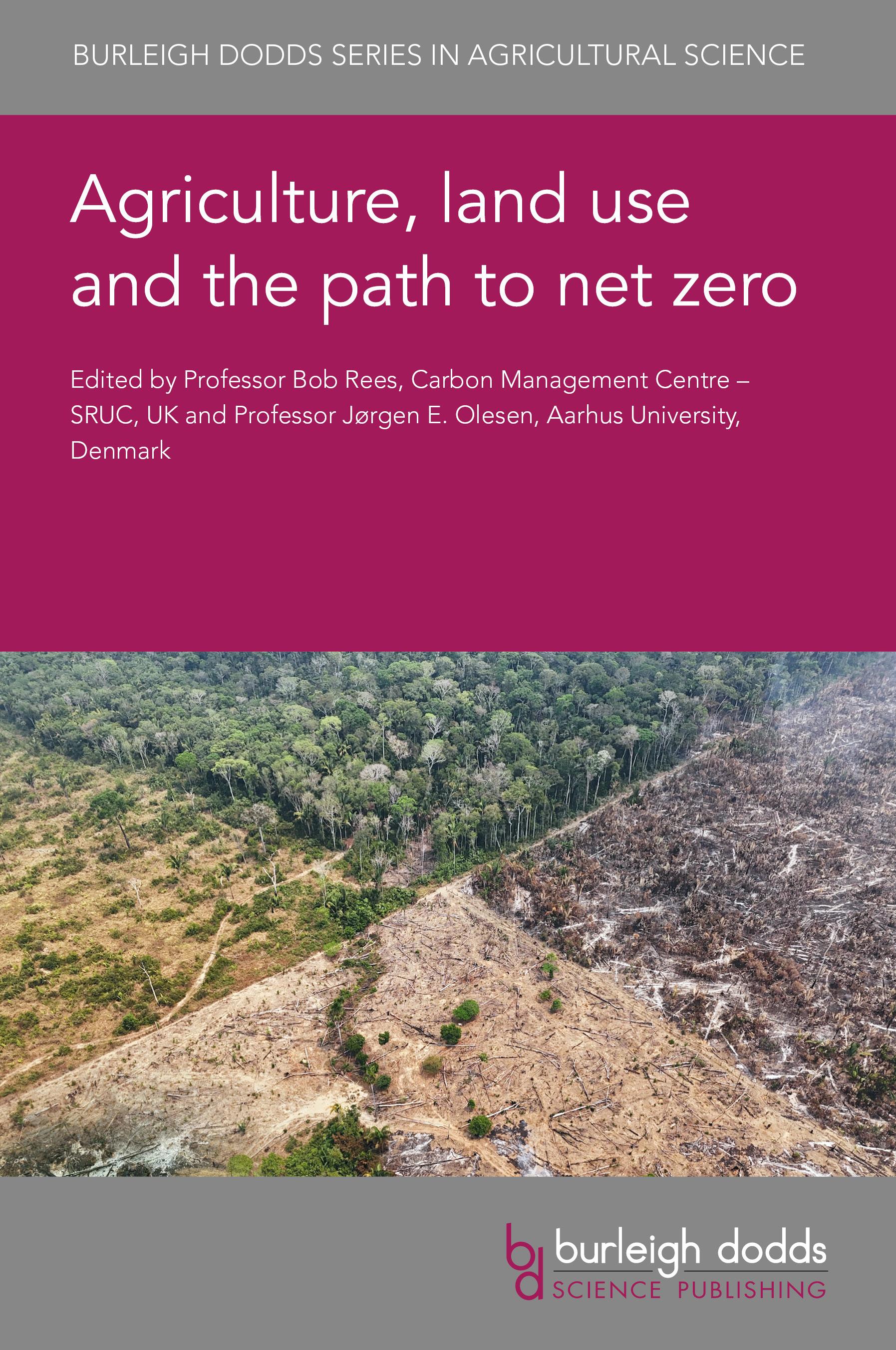
Agriculture, land use and the path to net zero
It’s been suggested that farming contributes to around 12% of global greenhouse gas (GHG) emissions, with land use associated with agriculture (such as deforestation to clear land for crop production) increasing this overall share to 25% of global GHG emissions. As the climate change emergency continues to threaten global food production and security, there is a growing need to modify or relocate existing farming systems to reduce their environmental impact and ensure a safe, sustainable and sufficient supply of food.
Agriculture, land use and the path to net zero provides a comprehensive overview of the role of agriculture in contributing to GHG emissions, including the role of farming in generating different GHGs and how these can be reduced. It also assesses ways agricultural land use can be used to offset emissions through different carbon sequestration strategies (whether through changing farming practices or restoring landscapes to optimise carbon storage). The book then reviews the challenges and opportunities faced by different regions in developing appropriate land use strategies for agriculture to achieve the goal of net zero.
Betal enkelt med kort, Klarna, Apple Pay eller Google Pay. Ikke fornøyd? Du har alltid 14 dagers angrerett. Les mer i våre vilkår. Har du spørsmål, send oss en e-post på hello@memmo.org.
Memmo gjør det enklere å studere – uansett hvor du er i verden. Hos oss samler du pensumbøker og smarte studieverktøy på ett og samme sted: sammendrag, quizer, podkaster og flashcards. Og så Ted, din studiekompis som svarer på alt du lurer på. Over 50 000 studenter studerer allerede her – bygget for at du skal lære raskere og stresse mindre.