
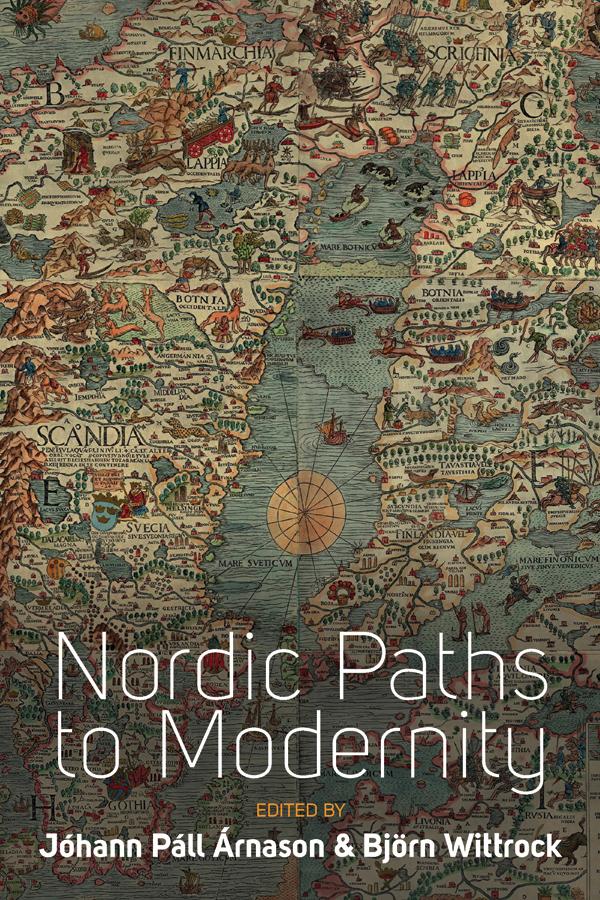
Within the growing attention to the diverse forms and trajectories of modern societies, the Nordic countries are now widely seen as a distinctive and instructive case. While discussions have centred on the ‘Nordic model’ of the welfare state and its record of adaptation to the changing global environment of the late twentieth century, this volume’s focus goes beyond these themes. The guiding principle here is that a long-term historical-sociological perspective is needed to make sense of the Nordic paths to modernity; of their significant but not complete convergence in patterns, which for some time were perceived as aspects of a model to be emulated in other settings; and of the specific features that still set the five countries in question (Denmark, Sweden, Norway, Finland and Iceland) apart from one another. The contributors explore transformative processes, above all the change from an absolutistmilitary state to a democratic one with its welfarist phase, as well as the crucial experiences that will have significant implications on future developments.
Betal enkelt med kort, Klarna, Apple Pay eller Google Pay. Ikke fornøyd? Du har alltid 14 dagers angrerett. Les mer i våre vilkår. Har du spørsmål, send oss en e-post på hello@memmo.org.
Memmo gjør det enklere å studere – uansett hvor du er i verden. Hos oss samler du pensumbøker og smarte studieverktøy på ett og samme sted: sammendrag, quizer, podkaster og flashcards. Og så Ted, din studiekompis som svarer på alt du lurer på. Over 50 000 studenter studerer allerede her – bygget for at du skal lære raskere og stresse mindre.