
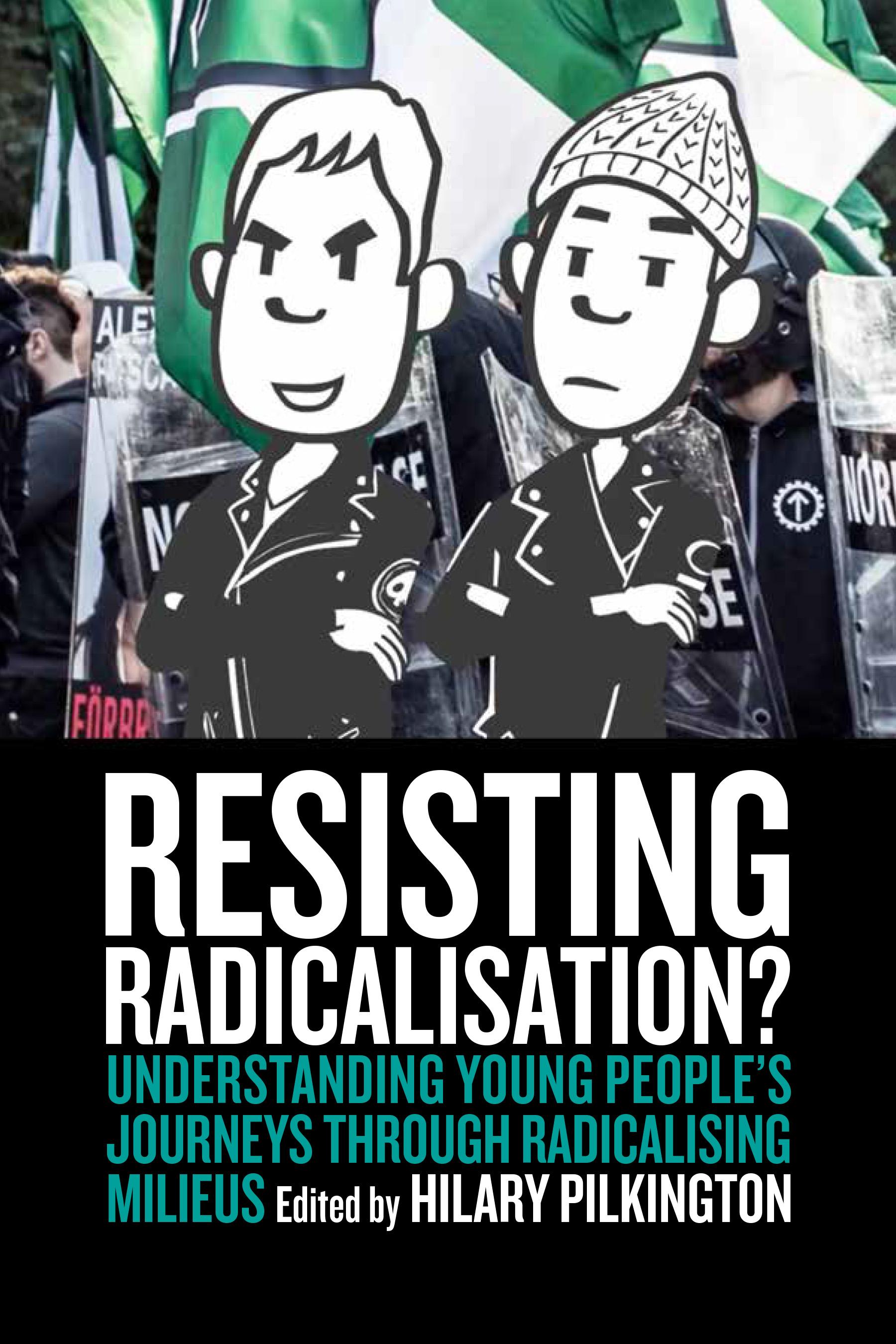
This landmark volume of extensive empirical research conducted across Europe explains how, and why, young people become engaged in radical(ising) milieus but also resist radicalisation into violent extremism.
Offering a critical perspective on the concept of radicalisation, this volume views it from the perspective of social actors who engage in radicalising milieus but for the most part have not crossed the threshold into violent extremism. It brings together contributions conducted as part of a cross-European (including France, Germany, the Netherlands, Greece, Russia, Turkey, the UK, and beyond) study of young people's engagement in ‘extreme right’ and ‘Islamist’ milieus.
It argues that radicalisation is best understood as a relational concept reflecting a social process rooted in relational inequalities but also shaped by interactional and situational dynamics, which not only facilitate but also constrain radicalisation.
Betal enkelt med kort, Klarna, Apple Pay eller Google Pay. Ikke fornøyd? Du har alltid 14 dagers angrerett. Les mer i våre vilkår. Har du spørsmål, send oss en e-post på hello@memmo.org.
Memmo gjør det enklere å studere – uansett hvor du er i verden. Hos oss samler du pensumbøker og smarte studieverktøy på ett og samme sted: sammendrag, quizer, podkaster og flashcards. Og så Ted, din studiekompis som svarer på alt du lurer på. Over 50 000 studenter studerer allerede her – bygget for at du skal lære raskere og stresse mindre.