
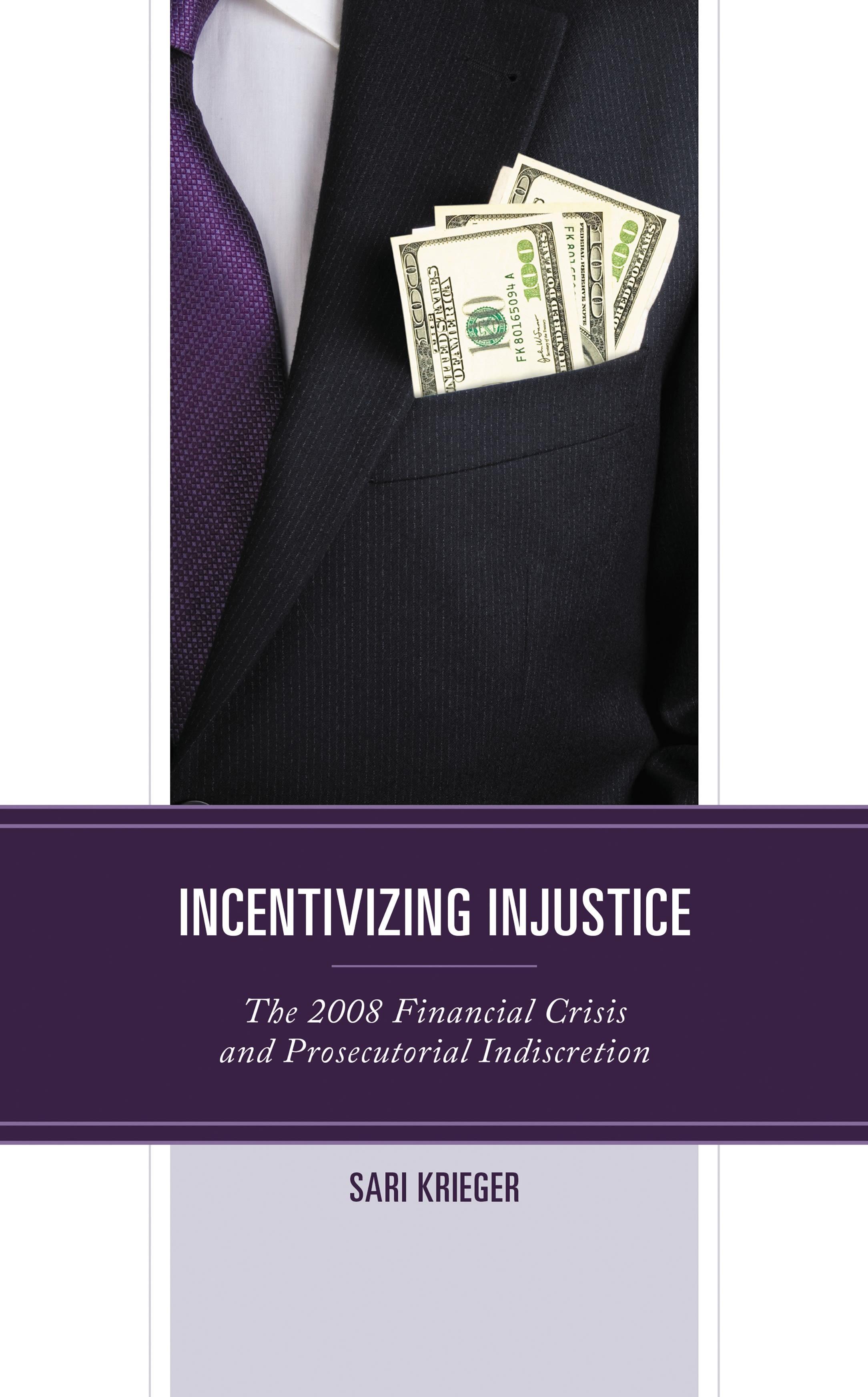
In a time of painful economic and legal inequities, we are still plagued by a gnawing question: Why did no major bank executive face any meaningful consequences for the 2008 financial crisis? Meanwhile, average Americans lost 8.8 million jobs and $19.2 trillion in household wealth, with the crisis’ impacts still reverberating throughout society. Moving beyond the popular narrative that the rich simply play by different rules, Incentivizing Injustice focuses not on the potential perpetrators, but on the powerful prosecutors deciding who faces charges and who goes home with a fine. In the years leading up to the financial crisis, the Justice Department experienced embarrassing losses and moved a deluge of resources away from everything else to fund post-9/11 counterterrorism. White-collar federal prosecutors found themselves working in an overly-cautious and under-funded institution. At the same time, the lure of defense firms had grown much stronger, offering million-dollar partnerships. Prosecutors had every incentive at this time to improve their image by obtaining big fines with banks through settlements, rather than risking complicated litigation, but at what cost to American justice and trust in the rule of law?
Betal enkelt med kort, Klarna, Apple Pay eller Google Pay. Ikke fornøyd? Du har alltid 14 dagers angrerett. Les mer i våre vilkår. Har du spørsmål, send oss en e-post på hello@memmo.org.
Memmo gjør det enklere å studere – uansett hvor du er i verden. Hos oss samler du pensumbøker og smarte studieverktøy på ett og samme sted: sammendrag, quizer, podkaster og flashcards. Og så Ted, din studiekompis som svarer på alt du lurer på. Over 50 000 studenter studerer allerede her – bygget for at du skal lære raskere og stresse mindre.