
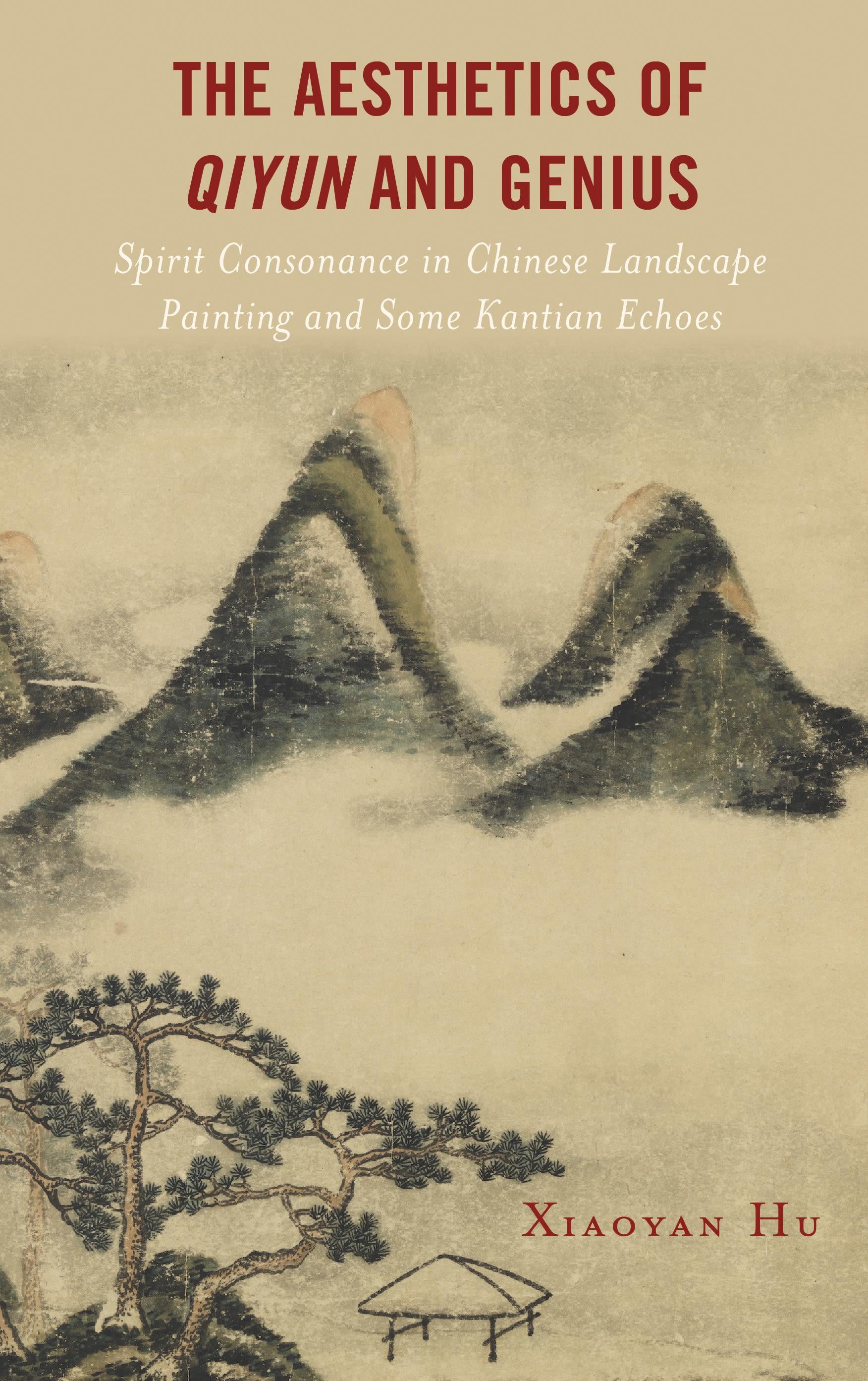
In The Aesthetics of Qiyun and Genius: Spirit Consonance in Chinese Landscape Painting and Some Kantian Echoes, Xiaoyan Hu provides an interpretation of the notion of qiyun, or spirit consonance, in Chinese painting, and considers why creating a painting—especially a landscape painting—replete with qiyun is regarded as an art of genius, where genius is an innate mental talent. Through a comparison of the role of this innate mental disposition in the aesthetics of qiyun and Kant’s account of artistic genius, the book addresses an important feature of the Chinese aesthetic tradition, one that evades the aesthetic universality assumed by a Kantian lens.
Drawing on the views of influential sixth to fourteenth-century theorists and art historians and connoisseurs, the first part explains and discusses qiyun and its conceptual development from a notion mainly applied to figure painting to one that also plays an enduring role in the aesthetics of landscape painting. In the light of Kant’s account of genius, the second part examines a range of issues regarding the role of the mind in creating a painting replete with qiyun and the impossibility of teaching qiyun. Through this comparison with Kant, Hu demystifies the uniqueness of qiyun aesthetics and also illuminates some limitations in Kant’s aesthetics.
The publication of this work was supported by the Fundamental Research Funds for the Central Universities (project no: 3213042202A1).
Drawing on the views of influential sixth to fourteenth-century theorists and art historians and connoisseurs, the first part explains and discusses qiyun and its conceptual development from a notion mainly applied to figure painting to one that also plays an enduring role in the aesthetics of landscape painting. In the light of Kant’s account of genius, the second part examines a range of issues regarding the role of the mind in creating a painting replete with qiyun and the impossibility of teaching qiyun. Through this comparison with Kant, Hu demystifies the uniqueness of qiyun aesthetics and also illuminates some limitations in Kant’s aesthetics.
The publication of this work was supported by the Fundamental Research Funds for the Central Universities (project no: 3213042202A1).
Betal enkelt med kort, Klarna, Apple Pay eller Google Pay. Ikke fornøyd? Du har alltid 14 dagers angrerett. Les mer i våre vilkår. Har du spørsmål, send oss en e-post på hello@memmo.org.
Memmo gjør det enklere å studere – uansett hvor du er i verden. Hos oss samler du pensumbøker og smarte studieverktøy på ett og samme sted: sammendrag, quizer, podkaster og flashcards. Og så Ted, din studiekompis som svarer på alt du lurer på. Over 50 000 studenter studerer allerede her – bygget for at du skal lære raskere og stresse mindre.