
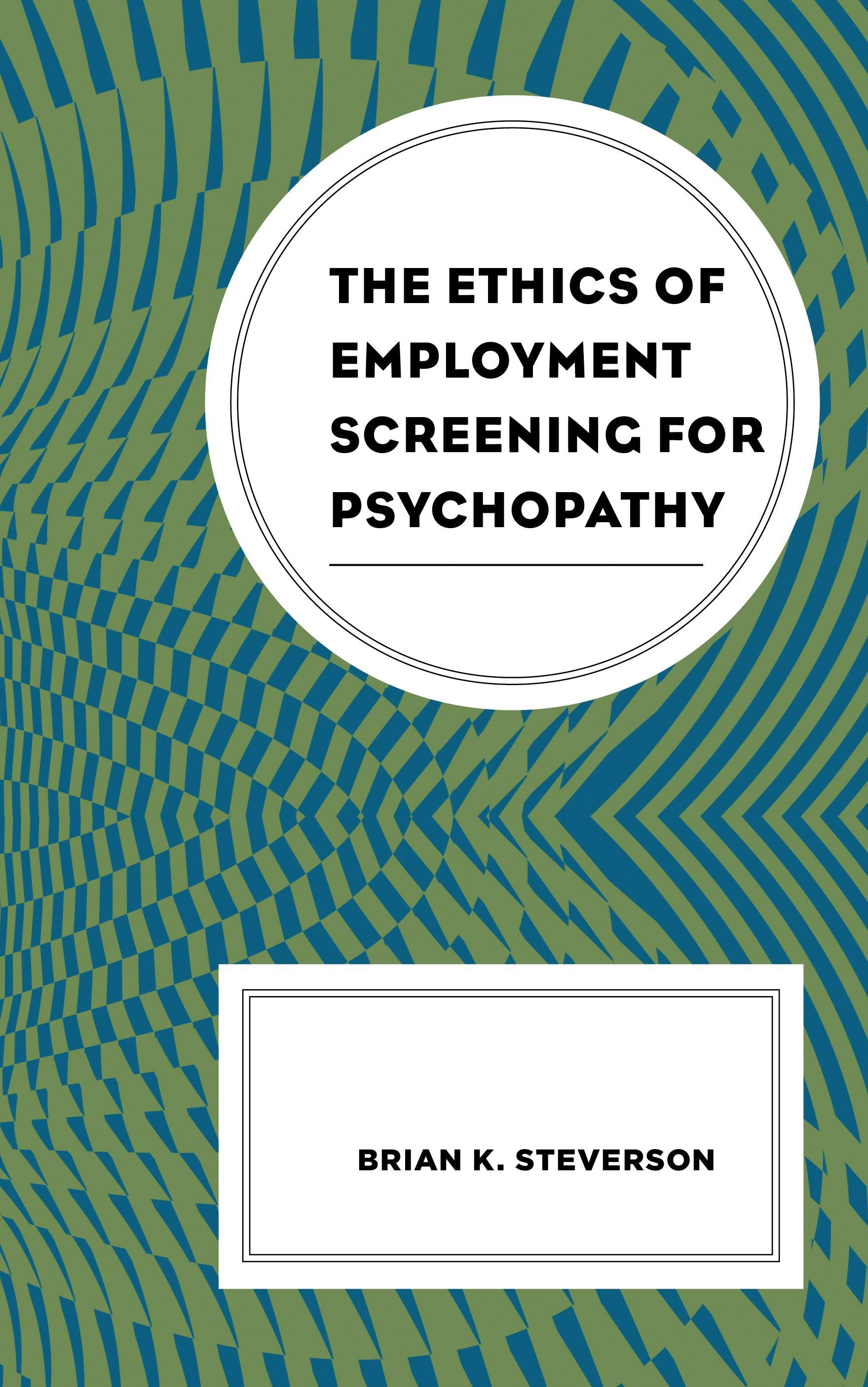
In 2006, Babiak and Hare alerted the public to the danger of “corporate psychopaths,” psychopathic individuals occupying positions of power in business organizations. Since then, academicians and the public media have advertised their presence, documented the harm they can cause, and issued a call to arms to identify corporate psychopaths and eliminate their presence in the workplace. Very little attention has been paid, however, to the ethics of such a “seek and destroy” mission. The Ethics of Employment Screening for Psychopathy argues that employment screening for psychopathy would be illegal and unethical. On legal grounds, Brian K Steverson argues that psychopathy would qualify as a protected disability under the Americans with Disabilities Act, and, hence, medical screening to identify potential corporate psychopaths would be in violation of the ADA. On ethical grounds, the case is made that such screening would violate a social commitment to equal opportunity, would constitute a morally unjustified violation of personal privacy, and would, in practice, not produce the intended benefits, while at the same time inflicting harm on the subjects of the screening.
Betal enkelt med kort, Klarna, Apple Pay eller Google Pay. Ikke fornøyd? Du har alltid 14 dagers angrerett. Les mer i våre vilkår. Har du spørsmål, send oss en e-post på hello@memmo.org.
Memmo gjør det enklere å studere – uansett hvor du er i verden. Hos oss samler du pensumbøker og smarte studieverktøy på ett og samme sted: sammendrag, quizer, podkaster og flashcards. Og så Ted, din studiekompis som svarer på alt du lurer på. Over 50 000 studenter studerer allerede her – bygget for at du skal lære raskere og stresse mindre.