
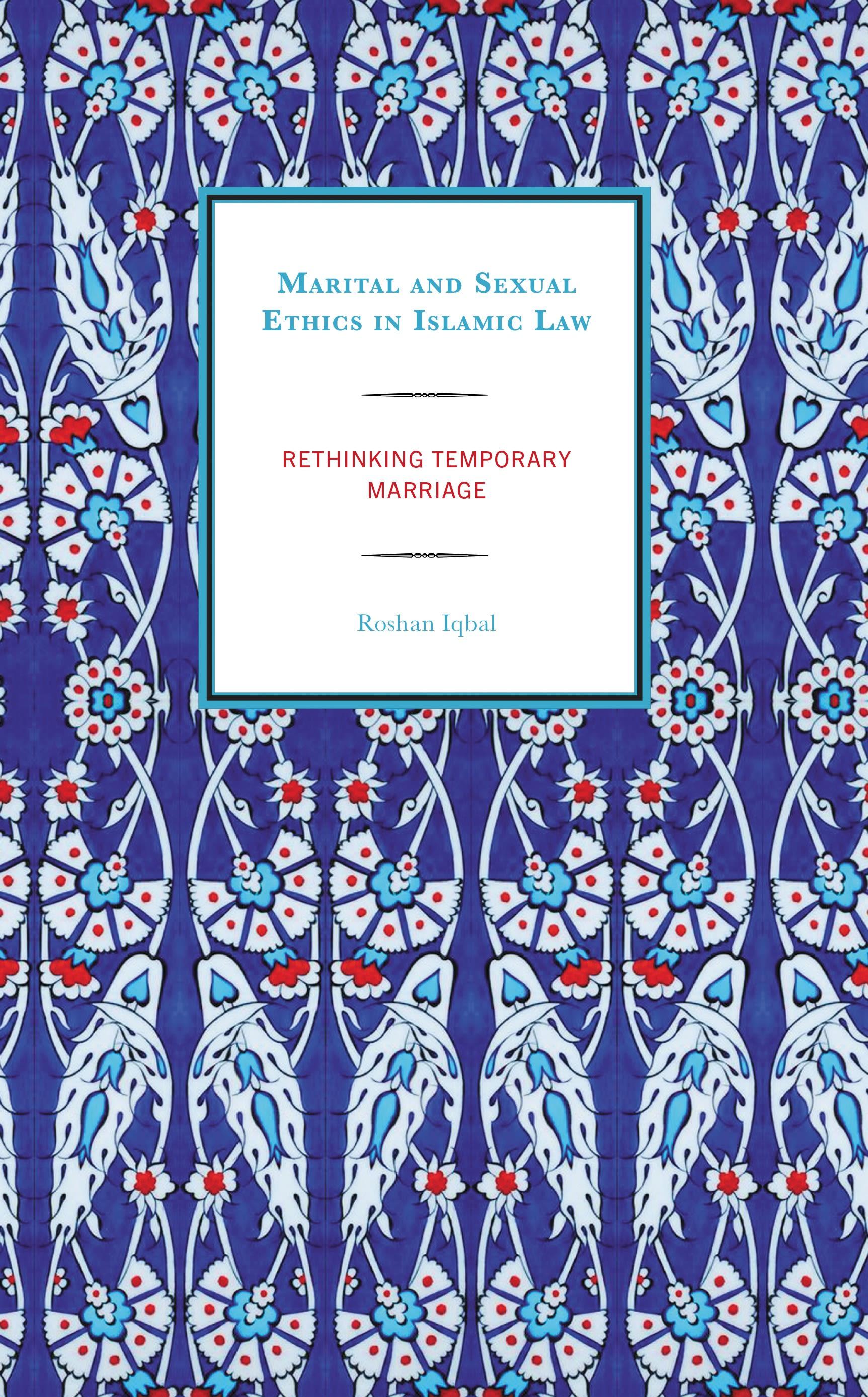
Roshan Iqbal traces the intellectual legacy of the exegesis of Qur’an 4:24, which is used as the proof text for the permissibility of mut’a (temporary marriage) and asks if the use of verse 4.24 for the permissibility of mut’a marriage is justified within the rules and regulations of Qur’anic hermeneutics. Iqbal examines seventeen Qur’an commentaries, the chronological span of which extends from the first extant commentary to the present day in three major Islamicate languages. Iqbal concludes that doctrinal self-identity, rather than strictly philological analyses, shaped the interpretation of this verse. As Western academia’s first comprehensive work concerning the intellectual history of mut’a marriage and sexual ethics, this work illustrates the power of sectarian influences on how scholars have interpreted verse 4:24. This book is the only work in English that includes a plurality of voices from minor schools (Ibadi, Ashari, Zaidi, and Ismaili) largely neglected by Western scholars, alongside major schools, and draws from all available sub-genres of exegesis. Further, by revealing ambiguities in the interpretation of mut’a, this work challenges accepted sexual ethics in Islamic thought—as presented by most classical and many modern Muslim scholars—and thus opens up space to theorize Islamic sexual ethics anew and contribute to this crucial conversation from the perspective of Muslim feminism.
Betal enkelt med kort, Klarna, Apple Pay eller Google Pay. Ikke fornøyd? Du har alltid 14 dagers angrerett. Les mer i våre vilkår. Har du spørsmål, send oss en e-post på hello@memmo.org.
Memmo gjør det enklere å studere – uansett hvor du er i verden. Hos oss samler du pensumbøker og smarte studieverktøy på ett og samme sted: sammendrag, quizer, podkaster og flashcards. Og så Ted, din studiekompis som svarer på alt du lurer på. Over 50 000 studenter studerer allerede her – bygget for at du skal lære raskere og stresse mindre.