
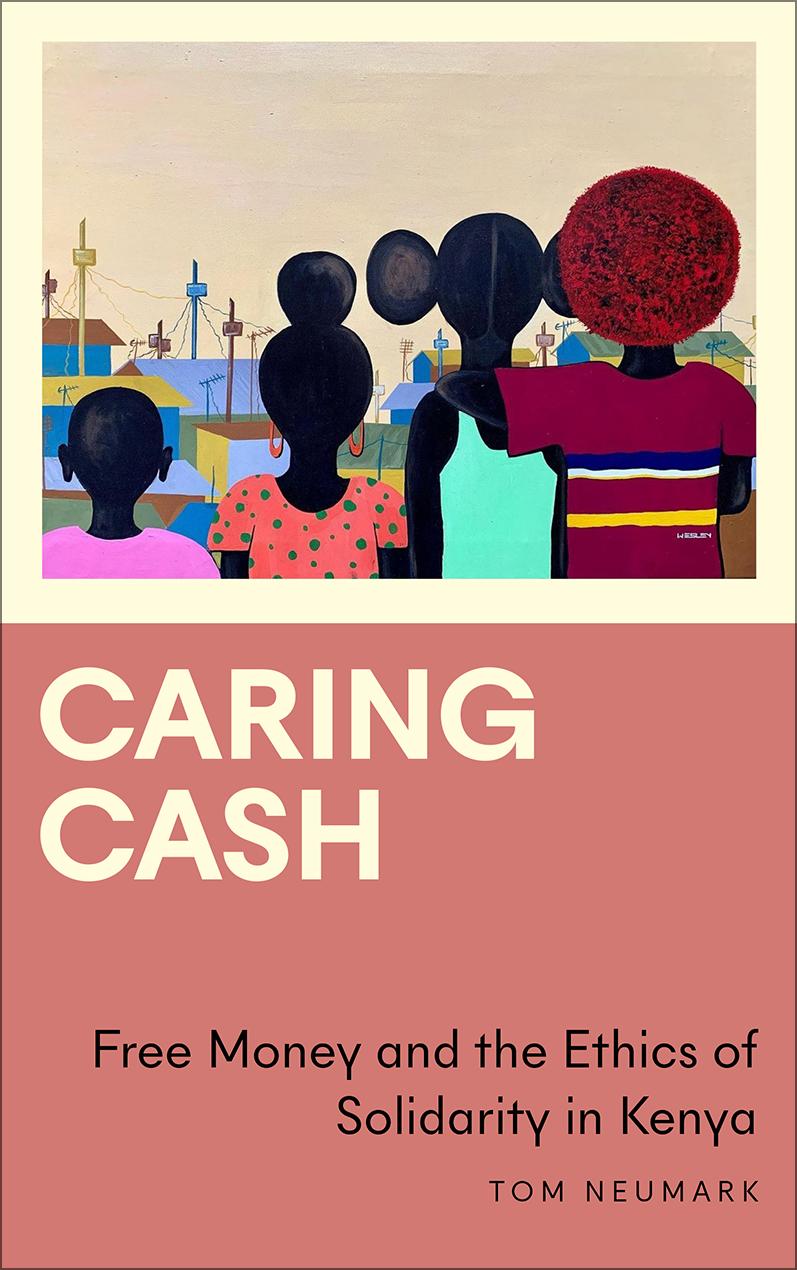
Anthropological study of the impact of cash grants on the economic dynamics and relationships among Kenya's urban poor
The idea of giving cash, no-strings-attached, to the poor has become popular in the 21st century. While hardly a radical form of global redistribution, these cash grants, often known as unconditional cash transfers, claim to offer a new type of care that is less paternalistic than other forms of assistance.
Caring Cash explores the caring practices that these grant experiments produced in the Nairobi ghetto of Korogocho. After receiving the grants, people there did not only look after themselves and their family, friends, lovers, clients, and patrons but also maintained the bonds that held them all together.
Putting his interlocutors' lives in conversation with ideas around care, ethics, and economies, Tom Neumark argues that for those in the ghetto, caring for relationships is as important as the care that takes place within relationships. Seeing care in this way reveals the importance of managing one's proximity, distance, and detachment from others, and raises questions about the disquieting decisions that allow people to live together amidst violence and poverty.
Betal enkelt med kort, Klarna, Apple Pay eller Google Pay. Ikke fornøyd? Du har alltid 14 dagers angrerett. Les mer i våre vilkår. Har du spørsmål, send oss en e-post på hello@memmo.org.
Memmo gjør det enklere å studere – uansett hvor du er i verden. Hos oss samler du pensumbøker og smarte studieverktøy på ett og samme sted: sammendrag, quizer, podkaster og flashcards. Og så Ted, din studiekompis som svarer på alt du lurer på. Over 50 000 studenter studerer allerede her – bygget for at du skal lære raskere og stresse mindre.