
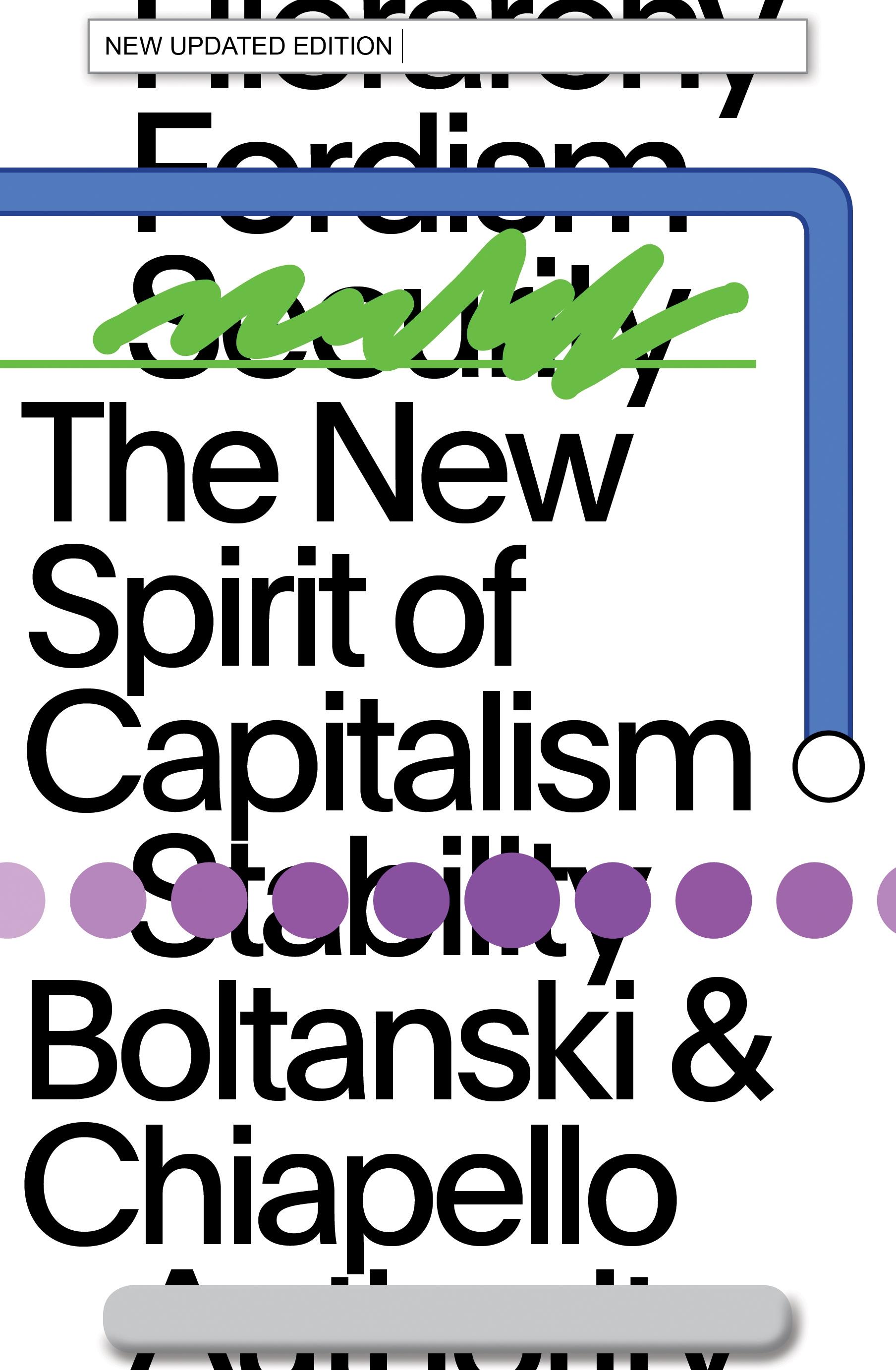
In this major work, sociologists Luc Boltanski and Eve Chiapello go to the heart of the changes in contemporary capitalism. Via an unprecedented analysis of the latest management texts that have formed the thinking of employers in their reorganization of business, the authors trace the contours of a new spirit of capitalism. They argue that from the middle of the 1970s onwards, capitalism abandoned the hierarchical Fordist work structure and developed a new network-based form of organization that was founded on employee initiative and autonomy in the workplace-a "freedom" that came at the cost of material and psychological security. The authors connect this new spirit with the children of the libertarian and romantic currents of the late 1960s (as epitomised by dressed-down, cool capitalists such as Bill Gates and "Ben and Jerry") arguing that they practice a more successful and subtle-form of exploitation. Now a classic work charting the sociological structure of neoliberalism, Boltanski and Chiapello show how the new spirit triumphed thanks to a remarkable recuperation of the left's critique of the alienation of everyday life that simultaneously undermined their "social critique."
In this new edition, the two authors reflect on the reception of the book and the debates it has stimulated.
In this new edition, the two authors reflect on the reception of the book and the debates it has stimulated.
Betal enkelt med kort, Klarna, Apple Pay eller Google Pay. Ikke fornøyd? Du har alltid 14 dagers angrerett. Les mer i våre vilkår. Har du spørsmål, send oss en e-post på hello@memmo.org.
Memmo gjør det enklere å studere – uansett hvor du er i verden. Hos oss samler du pensumbøker og smarte studieverktøy på ett og samme sted: sammendrag, quizer, podkaster og flashcards. Og så Ted, din studiekompis som svarer på alt du lurer på. Over 50 000 studenter studerer allerede her – bygget for at du skal lære raskere og stresse mindre.
Du vil kanskje også like
Kjøp boken0