
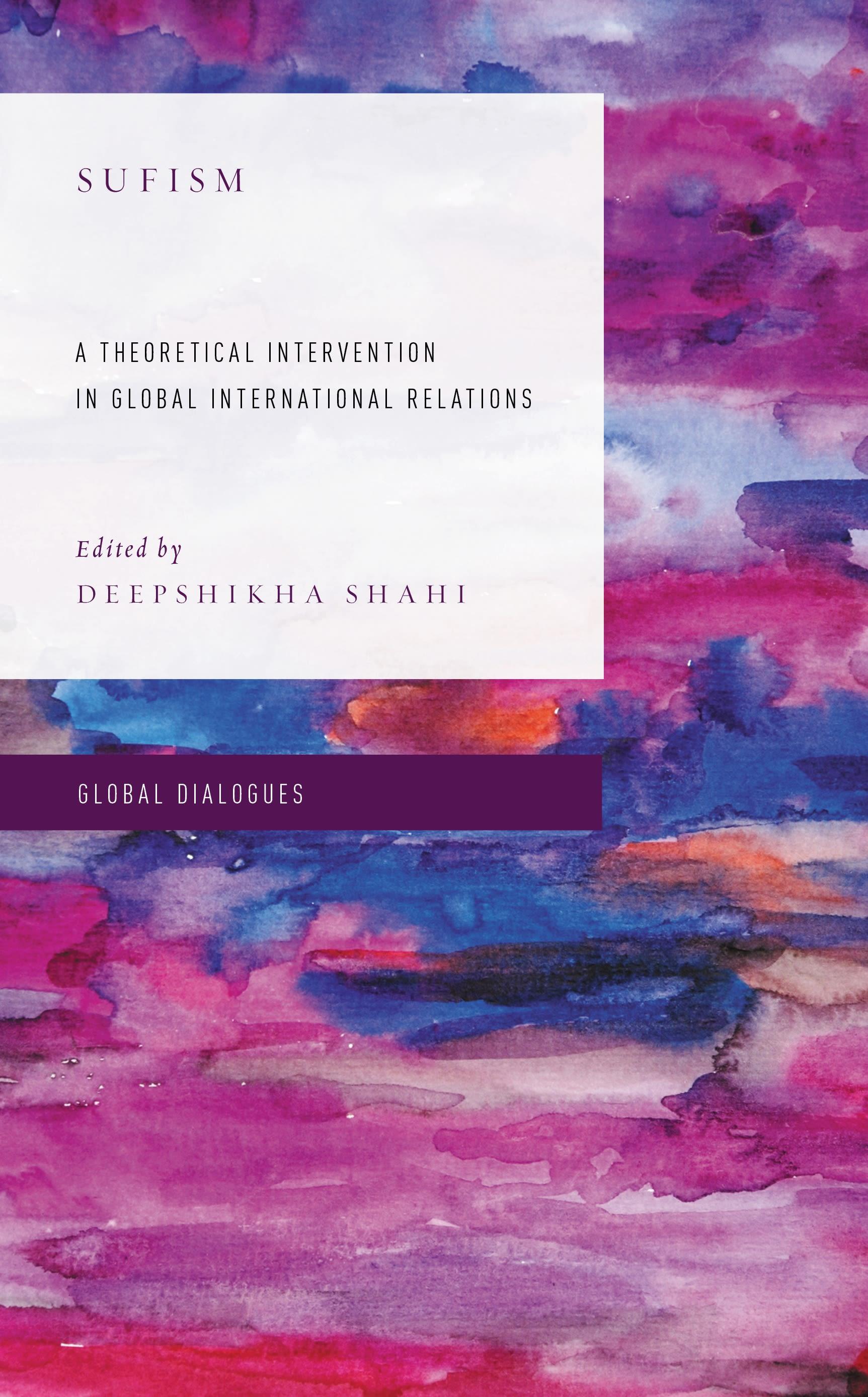
In an effort to attain a ‘global’ character, the contemporary academic discipline of International Relations (IR) increasingly seeks to surpass its Eurocentric limits, thereby opening up pathways to incorporate non-Eurocentric worldviews. Lately, many of the non-Eurocentric worldviews have emerged which either engender a ‘derivative’ discourse of the same Eurocentric IR theories, or construct an ‘exceptionalist’ discourse which is particularly applicable to the narrow experiential realities of a native time-space zone: as such, they fall short of the ambition to produce a genuinely ‘non-derivative’ and ‘non-exceptionalist’ Global IR theory.
Against this backdrop, Sufism: A Theoretical Intervention in Global International Relations performs a multidisciplinary research to explore how ‘Sufism’ – as an established non-Western philosophy with a remarkable temporal-spatial spread across the globe – facilitates a creative intervention in the theoretical understanding of Global IR.
Against this backdrop, Sufism: A Theoretical Intervention in Global International Relations performs a multidisciplinary research to explore how ‘Sufism’ – as an established non-Western philosophy with a remarkable temporal-spatial spread across the globe – facilitates a creative intervention in the theoretical understanding of Global IR.
Betal enkelt med kort, Klarna, Apple Pay eller Google Pay. Ikke fornøyd? Du har alltid 14 dagers angrerett. Les mer i våre vilkår. Har du spørsmål, send oss en e-post på hello@memmo.org.
Memmo gjør det enklere å studere – uansett hvor du er i verden. Hos oss samler du pensumbøker og smarte studieverktøy på ett og samme sted: sammendrag, quizer, podkaster og flashcards. Og så Ted, din studiekompis som svarer på alt du lurer på. Over 50 000 studenter studerer allerede her – bygget for at du skal lære raskere og stresse mindre.