
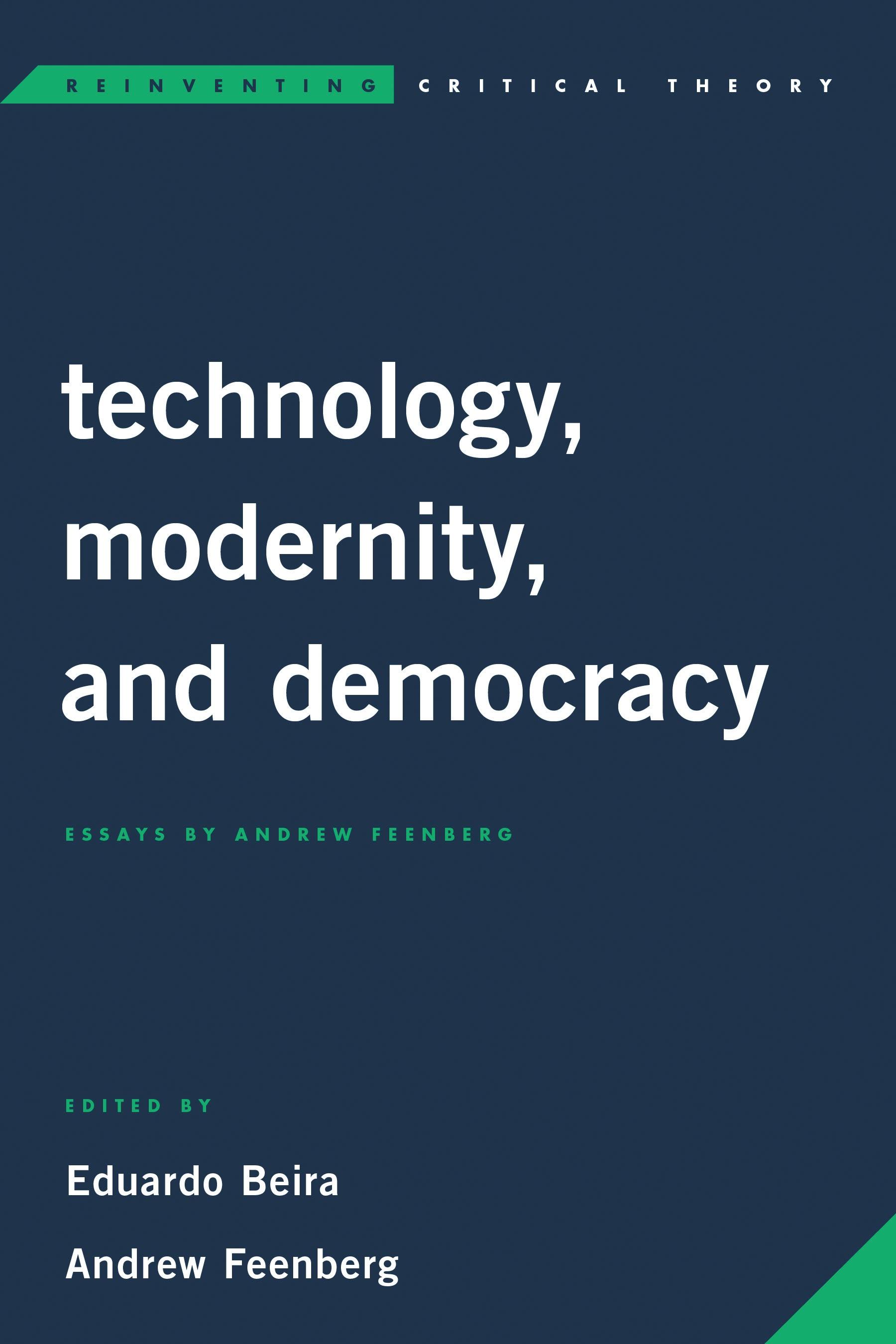
This important collection of essays by Andrew Feenberg presents his critical theory of technology, an innovative approach to philosophy and sociology of technology based on a synthesis of ideas drawn from STS and Frankfurt School Critical Theory.
According to critical theory of technology, technologies are neither neutral nor deterministic, but are encoded with specific socio-economic values and interests. Feenberg explores how they can be developed and adapted to more or less democratic values and institutions, and how their future is subject to social action, negotiation and reinterpretation. Technologies bring with them a particular "rationality," sets of rules and implied ways of behaving and thinking which, despite their profound influence on institutions, ideas and actions, can be transformed in a process of democratic rationalization. Feenberg argues that the emergence of human communication on the Internet and the environmental movement offer abundant examples of public interventions that have reshaped technologies originally designed for different purposes. This volume includes chapters on citizenship and critical theory of technology, philosophy of technology and modernity, and Heidegger and Marcuse, two of the most prominent philosophers of technology.
According to critical theory of technology, technologies are neither neutral nor deterministic, but are encoded with specific socio-economic values and interests. Feenberg explores how they can be developed and adapted to more or less democratic values and institutions, and how their future is subject to social action, negotiation and reinterpretation. Technologies bring with them a particular "rationality," sets of rules and implied ways of behaving and thinking which, despite their profound influence on institutions, ideas and actions, can be transformed in a process of democratic rationalization. Feenberg argues that the emergence of human communication on the Internet and the environmental movement offer abundant examples of public interventions that have reshaped technologies originally designed for different purposes. This volume includes chapters on citizenship and critical theory of technology, philosophy of technology and modernity, and Heidegger and Marcuse, two of the most prominent philosophers of technology.
Sider: 192
Kategori: Statsvetenskap & Politik
e-ISBN: 9781786607201
Fraktvekt: 1.2 kg
Sendes innen: 1-2 dager
Betal enkelt med kort, Klarna, Apple Pay eller Google Pay. Ikke fornøyd? Du har alltid 14 dagers angrerett. Les mer i våre vilkår. Har du spørsmål, send oss en e-post på hello@memmo.org.
Memmo gjør det enklere å studere – uansett hvor du er i verden. Hos oss samler du pensumbøker og smarte studieverktøy på ett og samme sted: sammendrag, quizer, podkaster og flashcards. Og så Ted, din studiekompis som svarer på alt du lurer på. Over 50 000 studenter studerer allerede her – bygget for at du skal lære raskere og stresse mindre.