
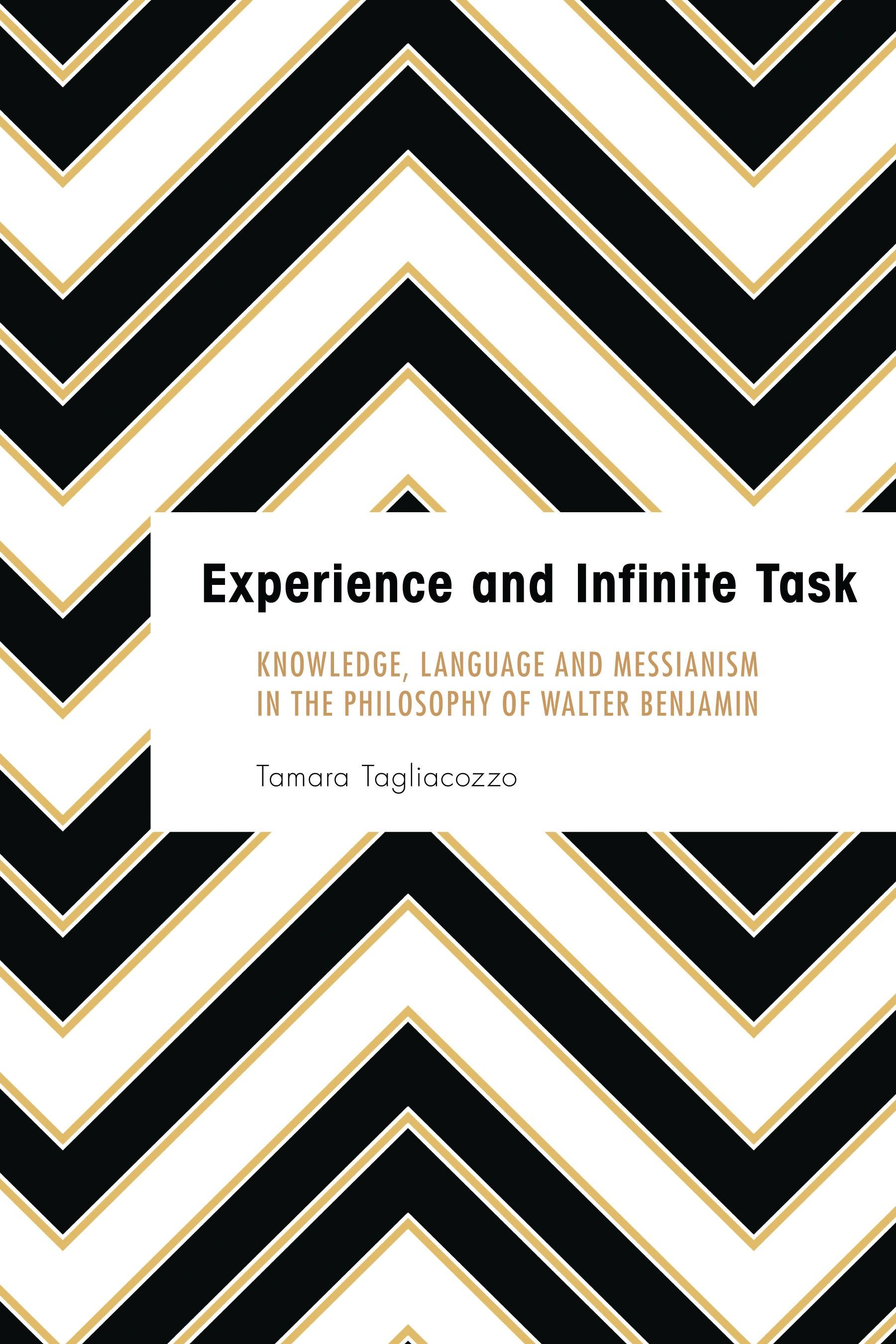
This book examines the philosophical thought of the young Walter Benjamin and its development in his later work. Starting from his critique of the philosophy of Immanuel Kant and Hermann Cohen, the author traces the relationships among Benjamin’s theories — developed in tandem with his friend Gershom Scholem — of knowledge, language, ethics, politics, the philosophy of history and aesthetics, all linked to the Judaic theme of messianism and language as a realm of redemption. She delineates a horizon in which the concept of experience as structure, philosophical system and “infinite task” (On the Program of the Coming Philosophy, 1917/18) evolves into a concept of the origin as monad (The Origin of German Tragic Drama, 1925), merging finally into the historical concept as monad and dialectical image (On the Concept of History, 1940). Tagliacozzo asserts that the concept of experience as structure and symbolic system, derived from his critical interpretation of Kant and Neo-Kantianism, develops into a conception of thought founded on a theological language of revelation.
Betal enkelt med kort, Klarna, Apple Pay eller Google Pay. Ikke fornøyd? Du har alltid 14 dagers angrerett. Les mer i våre vilkår. Har du spørsmål, send oss en e-post på hello@memmo.org.
Memmo gjør det enklere å studere – uansett hvor du er i verden. Hos oss samler du pensumbøker og smarte studieverktøy på ett og samme sted: sammendrag, quizer, podkaster og flashcards. Og så Ted, din studiekompis som svarer på alt du lurer på. Over 50 000 studenter studerer allerede her – bygget for at du skal lære raskere og stresse mindre.