
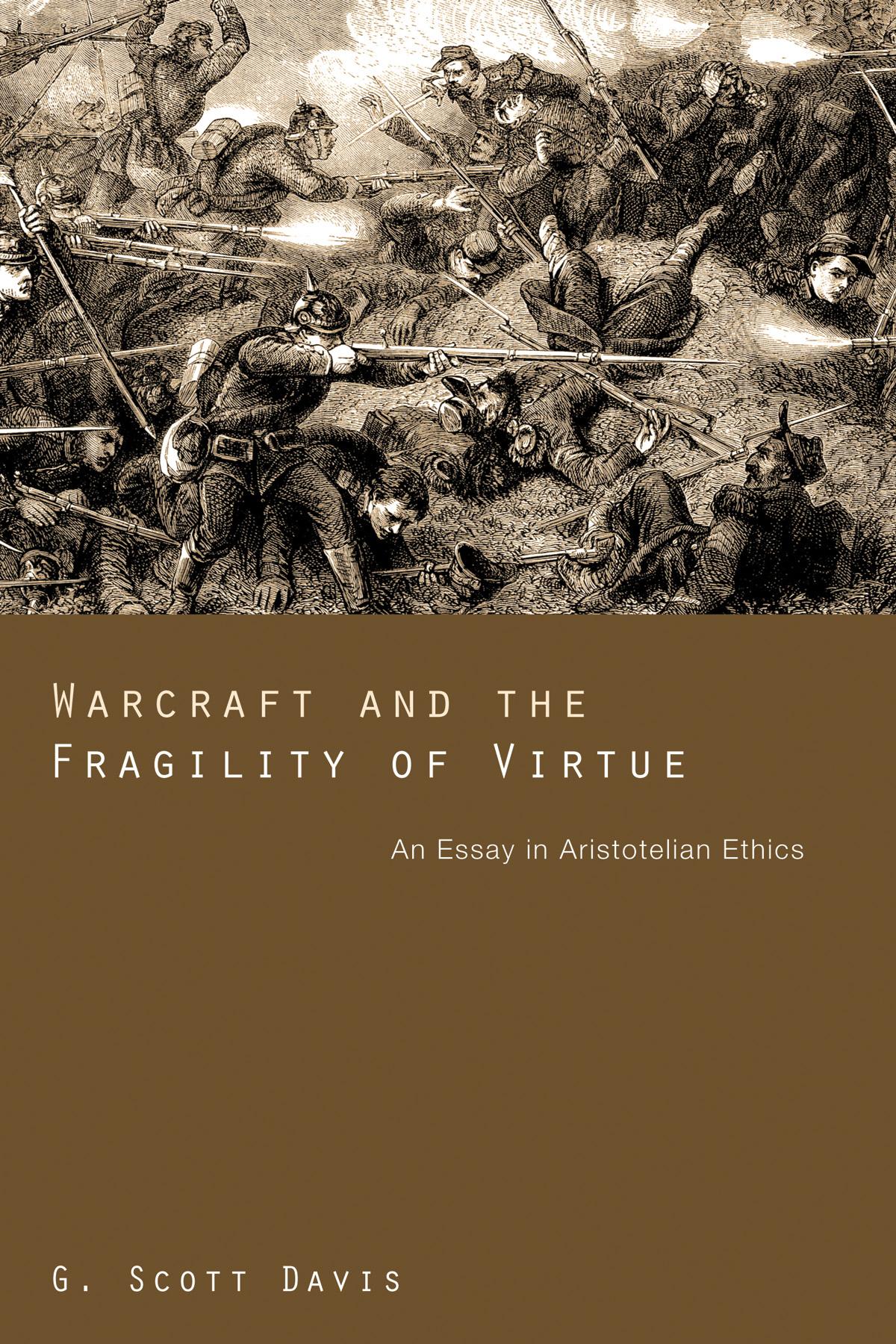
Recent work by Stanley Hauerwas, Alasdair MacIntyre, and Robert Bellah has brought considerable attention to bear on the ethics of virtue. Little clarity has, however, emerged from that discussion on what difference such an ethic would make in practical and political deliberations. Warcraft and the Fragility of Virtue presents, for the first time, a well-developed and effective Aristotelian perspective on reasoning about war and warfare.
Author G. Scott Davis first sketches the fundamentals of as Aristotelian approach to the ethics of war, arguing that the virtue is a craft, of itself fragile, that must be sustained by a community that makes the highest demands upon itself. Introduced as a criterion for evaluating alliances and international relations, the concept of moral community is also of the highest significance for interpreting those ruptures within the community, including resistance and rebellion, that arise concomitantly with the prospect and onset of war.
Betal enkelt med kort, Klarna, Apple Pay eller Google Pay. Ikke fornøyd? Du har alltid 14 dagers angrerett. Les mer i våre vilkår. Har du spørsmål, send oss en e-post på hello@memmo.org.
Memmo gjør det enklere å studere – uansett hvor du er i verden. Hos oss samler du pensumbøker og smarte studieverktøy på ett og samme sted: sammendrag, quizer, podkaster og flashcards. Og så Ted, din studiekompis som svarer på alt du lurer på. Over 50 000 studenter studerer allerede her – bygget for at du skal lære raskere og stresse mindre.
Du vil kanskje også like
Kjøp boken0