
Noted as a ‘civil poet’ by Alberto Moravia, Pier Paolo Pasolini was a creative and philosophical genius whose works challenged generations of Western Europeans and Americans to reconsider not only issues regarding the self, but also various social concerns. Pasolini’s works touched and continues to inspire students, scholars, and intellectuals alike to question the status quo. This collection of thirteen articles and two interviews evidences the on-going discourse around Pasolini’s lasting impressions on the new generation.
Pasolini’s Lasting Impressions: Death, Eros and Literary Enterprise in the Opus of Pier Paolo Pasolini thus explores the civic poet’s oeuvre in four parts: poetry, theatre, film, and culture. Although the collection does not include every genre in which Pasolini wrote, it addresses many, some which often receive little or no attention, particularly in Italian Studies of North America. The underlining theme of the book, ‘death, eros and literary enterprise’ intertwines these genres in a rather unique way, allowing for inter-disciplinary interpretations to Pasolini’s rich opus.
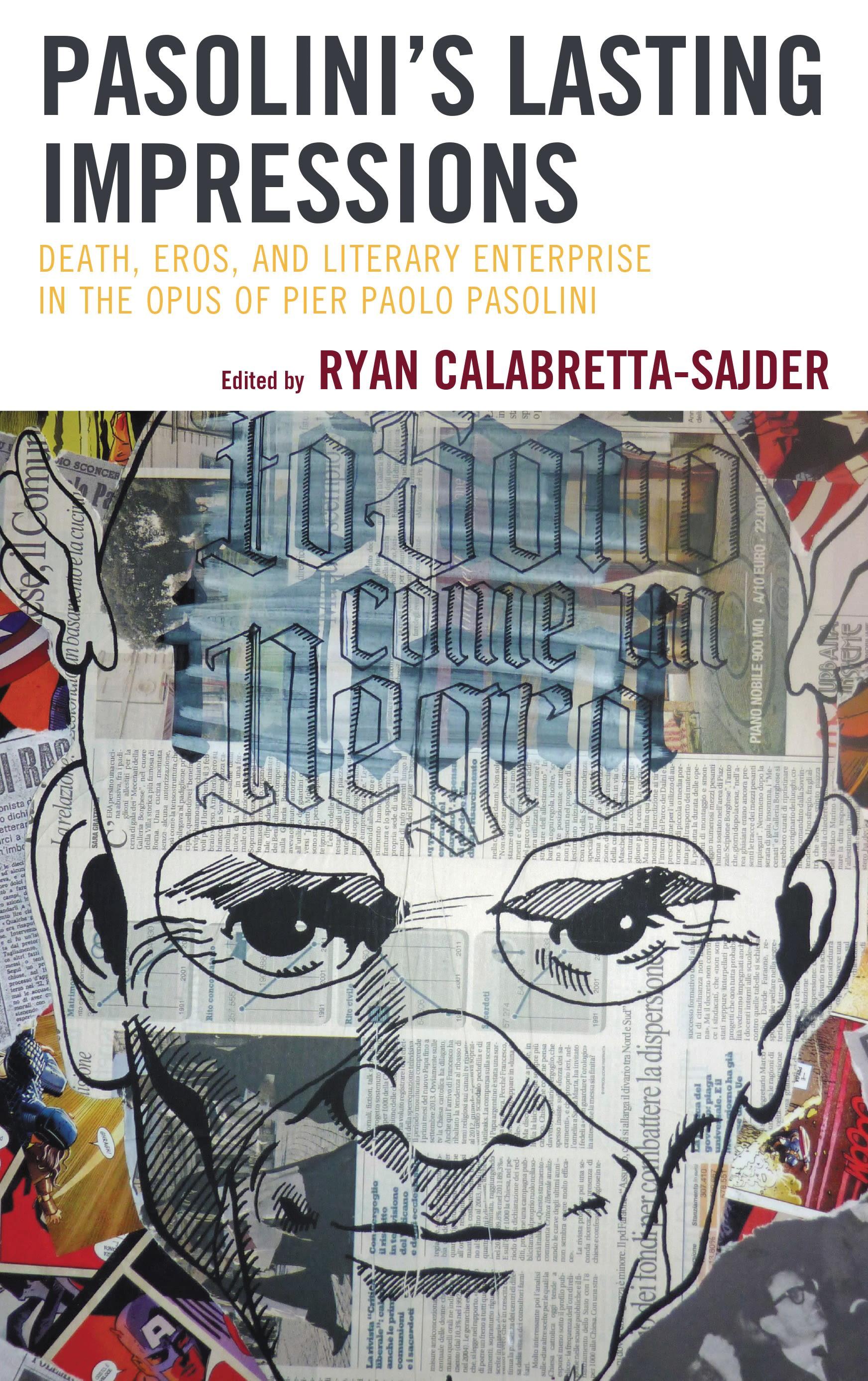
The edited volume concludes with two artists, Dacia Maraini and Ominio71’s reflections on Pasolini in the 21st century. In fact, the cover represents a recent work on Ominio71 underscoring Pasolini’s visual presence still within the Roman walls. In conclusion, this collection demonstrates how his works still influence contemporary Italian society and motivate intellectual dialogue through new theoretical outlooks on Pasolini’s oeuvre.
Pasolini’s Lasting Impressions: Death, Eros and Literary Enterprise in the Opus of Pier Paolo Pasolini thus explores the civic poet’s oeuvre in four parts: poetry, theatre, film, and culture. Although the collection does not include every genre in which Pasolini wrote, it addresses many, some which often receive little or no attention, particularly in Italian Studies of North America. The underlining theme of the book, ‘death, eros and literary enterprise’ intertwines these genres in a rather unique way, allowing for inter-disciplinary interpretations to Pasolini’s rich opus.
The edited volume concludes with two artists, Dacia Maraini and Ominio71’s reflections on Pasolini in the 21st century. In fact, the cover represents a recent work on Ominio71 underscoring Pasolini’s visual presence still within the Roman walls. In conclusion, this collection demonstrates how his works still influence contemporary Italian society and motivate intellectual dialogue through new theoretical outlooks on Pasolini’s oeuvre.
Betal enkelt med kort, Klarna, Apple Pay eller Google Pay. Ikke fornøyd? Du har alltid 14 dagers angrerett. Les mer i våre vilkår. Har du spørsmål, send oss en e-post på hello@memmo.org.
Memmo gjør det enklere å studere – uansett hvor du er i verden. Hos oss samler du pensumbøker og smarte studieverktøy på ett og samme sted: sammendrag, quizer, podkaster og flashcards. Og så Ted, din studiekompis som svarer på alt du lurer på. Over 50 000 studenter studerer allerede her – bygget for at du skal lære raskere og stresse mindre.