
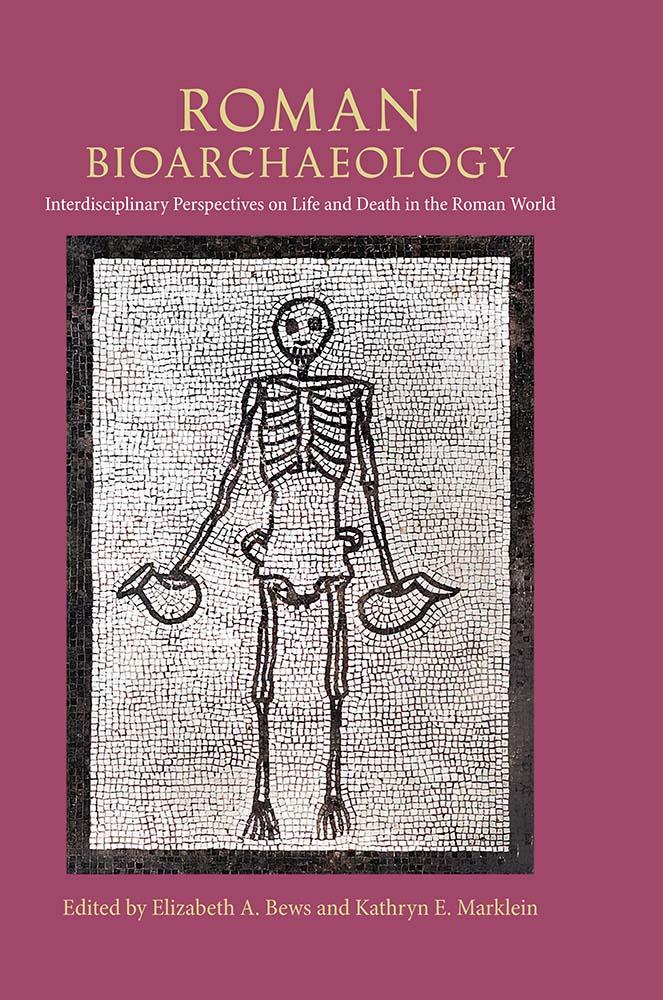
How bioarchaeology can illuminate the lived experiences of people in the Roman Empire
Research on the Roman Empire has long focused on Rome’s legendary leaders, culture, and conquest. But at the empire’s peak, tens of millions of ordinary people coexisted in its territories—people who built the structures, wrote the literature, and transformed the landscapes we study today. In Roman Bioarchaeology, researchers use human skeletal remains recovered from throughout the Roman world to portray how individuals lived and died, spanning the empire’s vast geography and 1,000 years of ancient history.
This volume brings together scholarship from archaeological sites in Europe, the Eastern Mediterranean, and Africa, featuring new and advanced scientific approaches including DNA studies, stable isotope analysis, paleoparasitology, paleopathology, biodistance, and more. Throughout, contributors prioritize the ethical treatment of the deceased by highlighting individual narratives and working with local descendants where possible. From rural homes in Britannia to bustling cities in Phoenicia, these essays showcase the diversity of Roman lives and illuminate the experiences of the most vulnerable in these societies. This book demonstrates how bioarchaeology can enrich our understanding of many facets of life in the Roman world.
Betal enkelt med kort, Klarna, Apple Pay eller Google Pay. Ikke fornøyd? Du har alltid 14 dagers angrerett. Les mer i våre vilkår. Har du spørsmål, send oss en e-post på hello@memmo.org.
Memmo gjør det enklere å studere – uansett hvor du er i verden. Hos oss samler du pensumbøker og smarte studieverktøy på ett og samme sted: sammendrag, quizer, podkaster og flashcards. Og så Ted, din studiekompis som svarer på alt du lurer på. Over 50 000 studenter studerer allerede her – bygget for at du skal lære raskere og stresse mindre.