
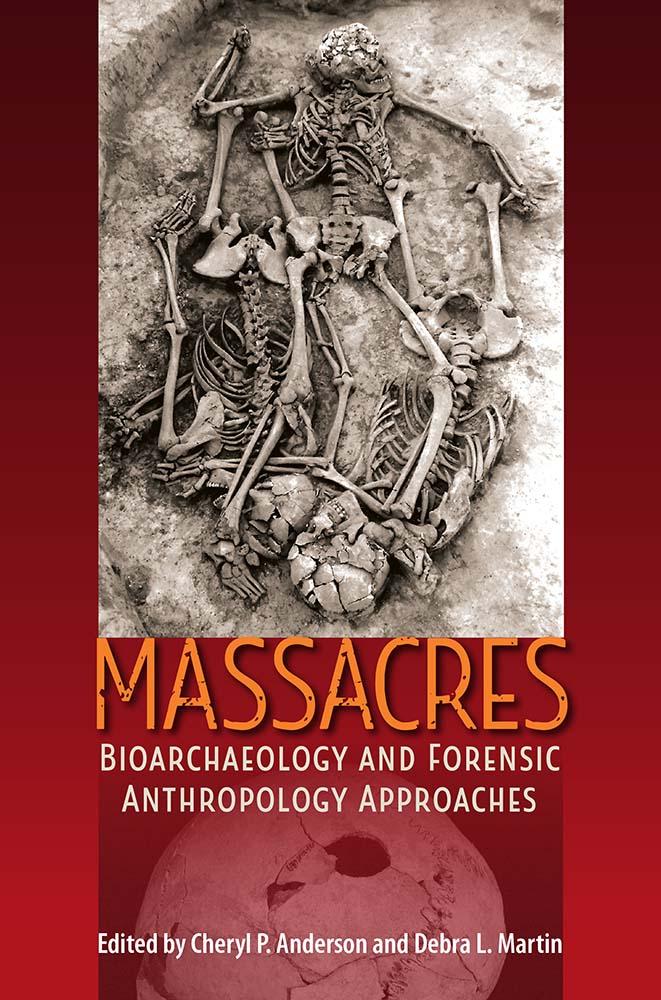
This volume integrates data from researchers in bioarchaeology and forensic anthropology to explain when and why group-targeted violence occurs. Massacres have plagued both ancient and modern societies, and by analyzing skeletal remains from these events within their broader cultural and historical contexts this volume opens up important new understandings of the underlying social processes that continue to lead to these tragedies.
In case studies that include Crow Creek in South Dakota, Khmer Rouge–era Cambodia, the Peruvian Andes, the Tennessee River Valley, and northern Uganda, contributors demonstrate that massacres are a process—a nonrandom pattern of events that precede the acts of violence and continue long afterward. They also show that massacres have varying aims and are driven by culture-specific forces and logic, ranging from small events to cases of genocide. Many of these studies examine bones found in mass graves, while others focus on victims whose bodies have never been buried. Notably, they also expand widely held definitions of massacres to include structural violence, featuring the radical argument that the large-scale death of undocumented migrants in Arizona’s Sonoran Desert should be viewed as an extended massacre.
This is the first volume to focus exclusively on massacres as a unique form of violence. Its interdisciplinary approach illuminates similarities in human behavior across time and space, provides methods for identifying killings as massacres, and helps today’s societies learn from patterns of the past.
Contributors: Cheryl P. Anderson | Cate E. Bird | William E. De Vore | David H. Dye | Julie M. Fleischman | Julia R. Hanebrink | Ryan P. Harrod | Keith P. Jacobi | Ashley E. Kendell | Krista E. Latham | Justin Maiers | Debra L. Martin | Alyson O’Daniel | Anna J. Osterholtz | Marin A. Pilloud | His Excellency Sonnara Prak | Tricia Redeker Hepner | Sophearavy Ros | Al W. Schwitalla | Dawnie Wolfe Steadman | J. Marla Toyne | Vuthy Voeun | P. Willey
A volume in the series Bioarchaeological Interpretations of the Human Past: Local, Regional, and Global Perspectives, edited by Clark Spencer Larsen
Betal enkelt med kort, Klarna, Apple Pay eller Google Pay. Ikke fornøyd? Du har alltid 14 dagers angrerett. Les mer i våre vilkår. Har du spørsmål, send oss en e-post på hello@memmo.org.
Memmo gjør det enklere å studere – uansett hvor du er i verden. Hos oss samler du pensumbøker og smarte studieverktøy på ett og samme sted: sammendrag, quizer, podkaster og flashcards. Og så Ted, din studiekompis som svarer på alt du lurer på. Over 50 000 studenter studerer allerede her – bygget for at du skal lære raskere og stresse mindre.
Du vil kanskje også like
Kjøp boken0