
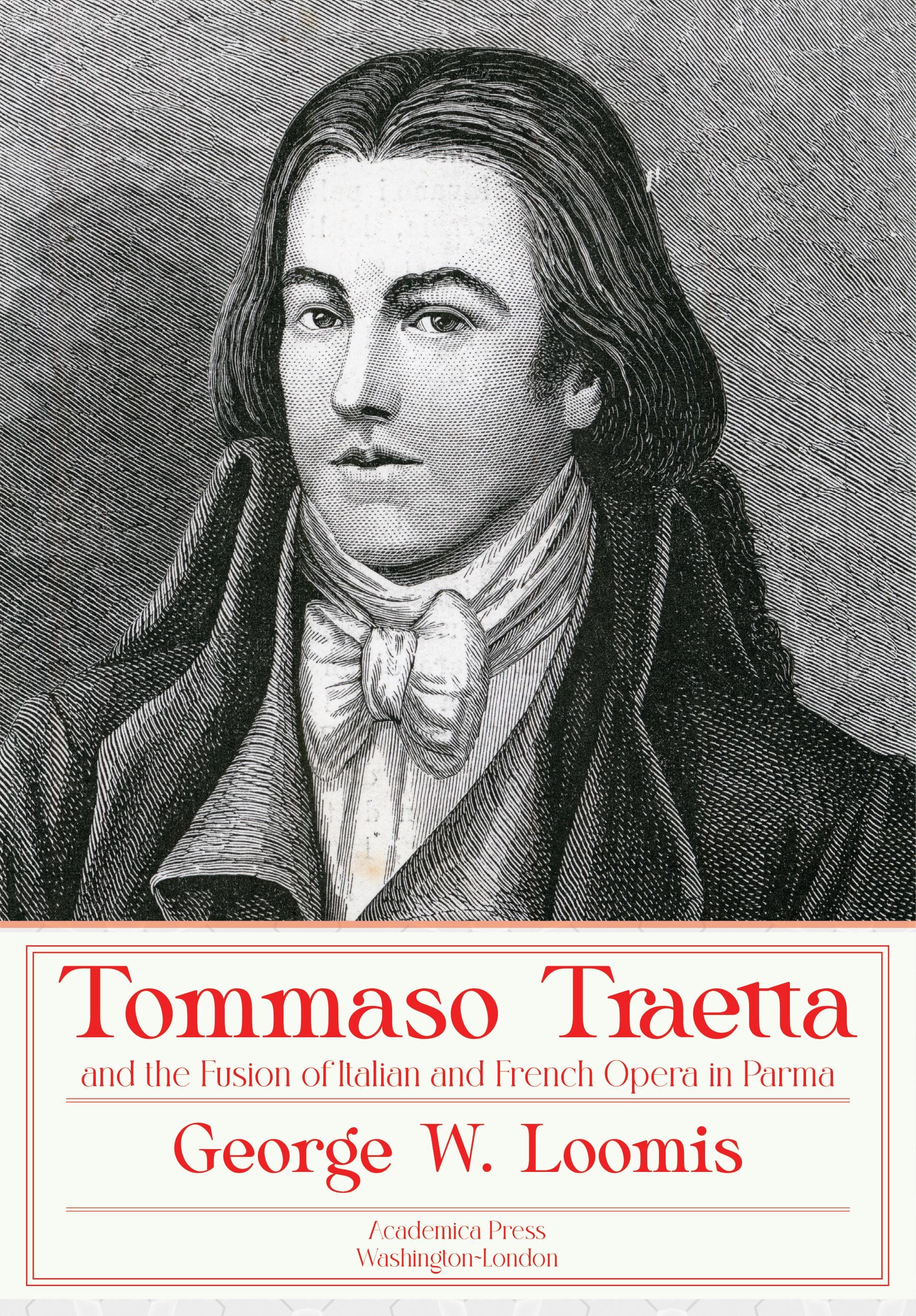
In 1759, the court of the Italian Duchy of Parma adopted the inspiration of cultural creators who recommended a reform of Italian opera along French lines. These writers favored combining Italian-style music with the wider range of musical genres and scenic variety of French opera. As the music critic and commentator George W. Loomis shows in this groundbreaking volume, the young composer Tommaso Traetta was engaged to create new operas responding to these demands.
As Loomis deftly demonstrates, Traetta’s operas were largely oriented toward the formal aria, a byproduct of making Italian music an essential component of this cross-cultural fusion. Nevertheless, they were strikingly innovative in their use of chorus, integrated dance, and accompanied recitative. Structurally, the operas reflect the French distinction between scenes of action and divertissements. After a brief flowering, the project was abandoned, primarily for lack of interest, but Traetta’s Parma operas deserve a previously unrecognized place in the history of Western music for their stimulation of opera seria in Italy and beyond. This included the works of Wolfgang Amadeus Mozart, whose genre-defining Idomeneo (1781) proved a turning point in the development of opera.
Betal enkelt med kort, Klarna, Apple Pay eller Google Pay. Ikke fornøyd? Du har alltid 14 dagers angrerett. Les mer i våre vilkår. Har du spørsmål, send oss en e-post på hello@memmo.org.
Memmo gjør det enklere å studere – uansett hvor du er i verden. Hos oss samler du pensumbøker og smarte studieverktøy på ett og samme sted: sammendrag, quizer, podkaster og flashcards. Og så Ted, din studiekompis som svarer på alt du lurer på. Over 50 000 studenter studerer allerede her – bygget for at du skal lære raskere og stresse mindre.
Du vil kanskje også like
Kjøp boken0