
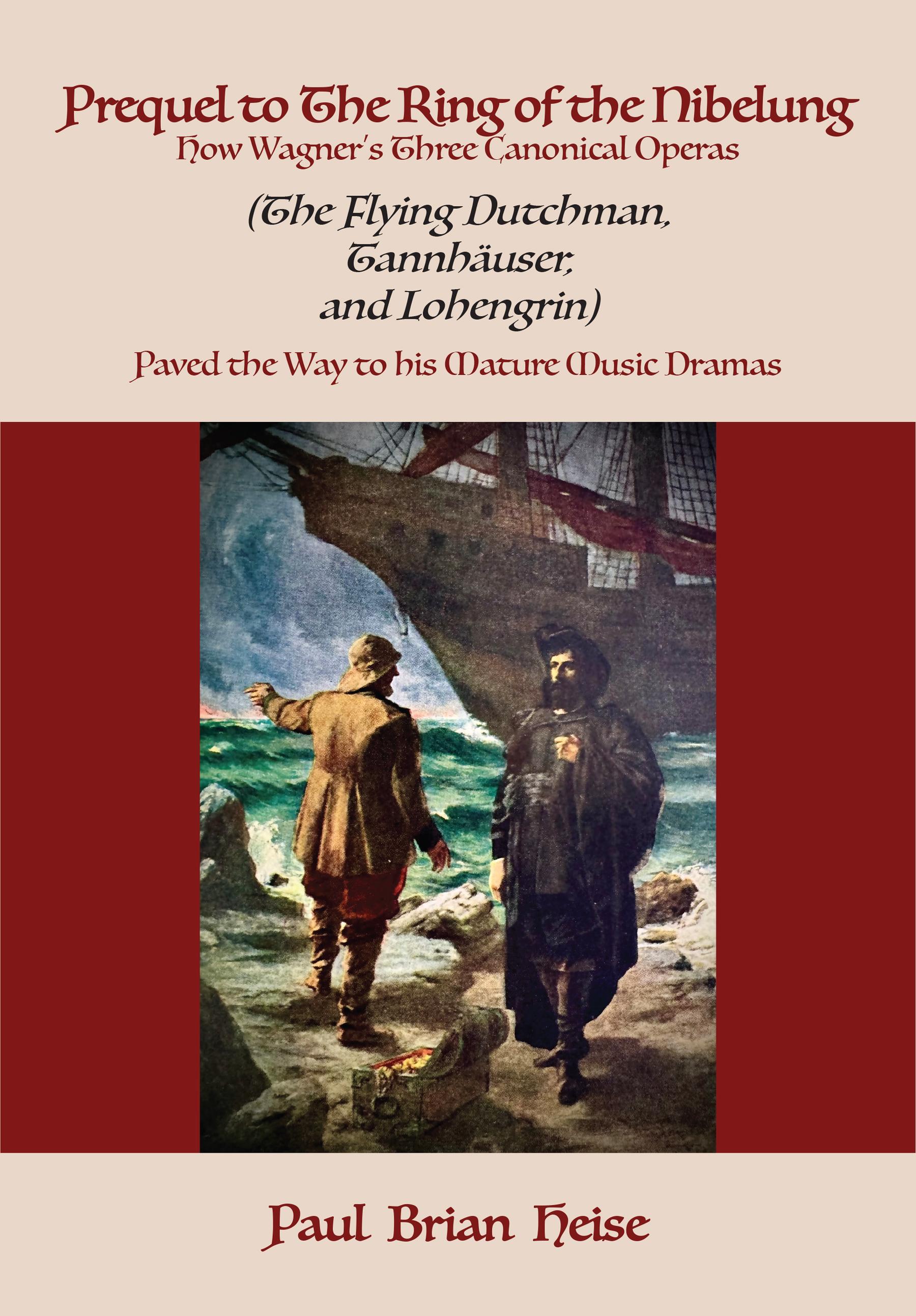
Scholars of Richard Wagner’s works have long noted his numerous comparisons between their characters and plots in his letters, essays, and recorded remarks. Yet no one has previously attempted to assess their implications for our understanding of his art systematically. Paul Heise’s quest to grasp the allegorical unity underlying Wagner’s canonical artworks began in the 1970s. Following his allegorical interpretation of Wagner’s Ring of the Nibelung, The Wound That Will Never Heal (Academica Press, 2021), this fresh installment of Heise’s lifelong Wagner project will demonstrate how the composer employed key facets of the plots of his first three canonical operas The Flying Dutchman, Tannhäuser, and Lohengrin in building the sophisticated allegorical superstructure which culminated in his Ring of the Nibelung and his other mature music-dramas, Tristan and Isolde, The Mastersingers of Nuremberg, and Parsifal. This study casts a retrospective light on the many meanings hidden within these three operas, which were the prequel to the Ring, revealing their heretofore subliminal content as never before.
Betal enkelt med kort, Klarna, Apple Pay eller Google Pay. Ikke fornøyd? Du har alltid 14 dagers angrerett. Les mer i våre vilkår. Har du spørsmål, send oss en e-post på hello@memmo.org.
Memmo gjør det enklere å studere – uansett hvor du er i verden. Hos oss samler du pensumbøker og smarte studieverktøy på ett og samme sted: sammendrag, quizer, podkaster og flashcards. Og så Ted, din studiekompis som svarer på alt du lurer på. Over 50 000 studenter studerer allerede her – bygget for at du skal lære raskere og stresse mindre.