
Choice 2025 Outstanding Academic Title
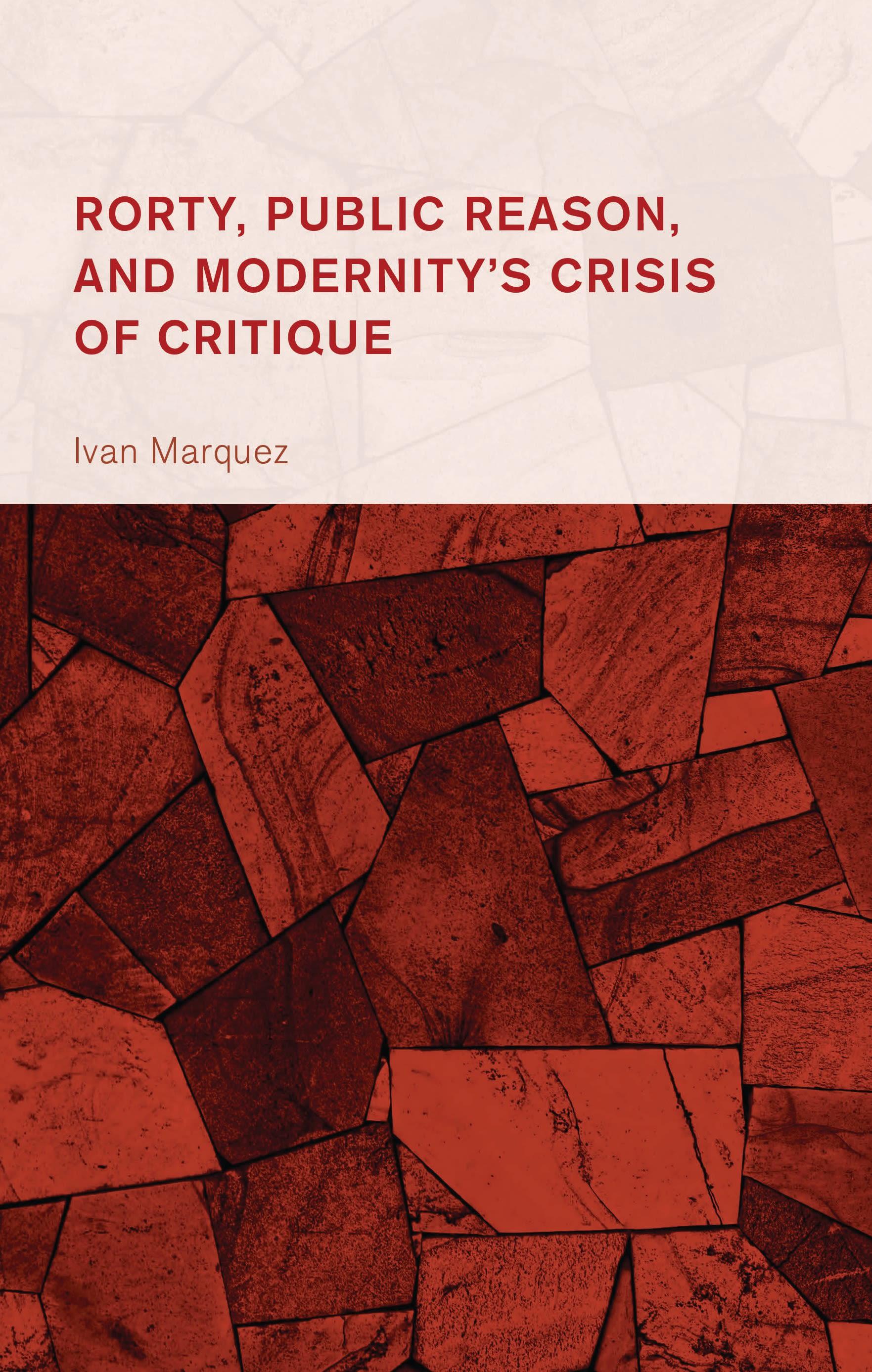
Starting with Richard Rorty's critique of reason, this book discusses modernity's legitimation crisis in political discourse. Rorty, Public Reason, and Modernity's Crisis of Critique explores the contemporary crisis of rational justification and collective will-formation in our current political institutions and the public sphere, arguing that there is an array of untapped rational resources that should be deployed to justify social, political, and economic views, agendas, and programs. It also identifies limits to the powers of public reason to generate rational agreement and collective will-formation. Using a critical analysis of Rorty's non-foundationalist perspective as a vehicle to study modernity's project of rational critique, Ivan Marquez highlights both the strengths and promise and the weaknesses and limitations of liberal and democratic societies-especially within pluralistic socio-cultural contexts-and some possible ways to work within this space of possibilities and constraints. Ultimately, this book can be seen as elaborating a political epistemology view that argues for a redefinition of philosophy and defends a type of post-metaphysical culture.
Starting with Richard Rorty's critique of reason, this book discusses modernity's legitimation crisis in political discourse. Rorty, Public Reason, and Modernity's Crisis of Critique explores the contemporary crisis of rational justification and collective will-formation in our current political institutions and the public sphere, arguing that there is an array of untapped rational resources that should be deployed to justify social, political, and economic views, agendas, and programs. It also identifies limits to the powers of public reason to generate rational agreement and collective will-formation. Using a critical analysis of Rorty's non-foundationalist perspective as a vehicle to study modernity's project of rational critique, Ivan Marquez highlights both the strengths and promise and the weaknesses and limitations of liberal and democratic societies-especially within pluralistic socio-cultural contexts-and some possible ways to work within this space of possibilities and constraints. Ultimately, this book can be seen as elaborating a political epistemology view that argues for a redefinition of philosophy and defends a type of post-metaphysical culture.
Betal enkelt med kort, Klarna, Apple Pay eller Google Pay. Ikke fornøyd? Du har alltid 14 dagers angrerett. Les mer i våre vilkår. Har du spørsmål, send oss en e-post på hello@memmo.org.
Memmo gjør det enklere å studere – uansett hvor du er i verden. Hos oss samler du pensumbøker og smarte studieverktøy på ett og samme sted: sammendrag, quizer, podkaster og flashcards. Og så Ted, din studiekompis som svarer på alt du lurer på. Over 50 000 studenter studerer allerede her – bygget for at du skal lære raskere og stresse mindre.