
Choice 2025 Outstanding Academic Title
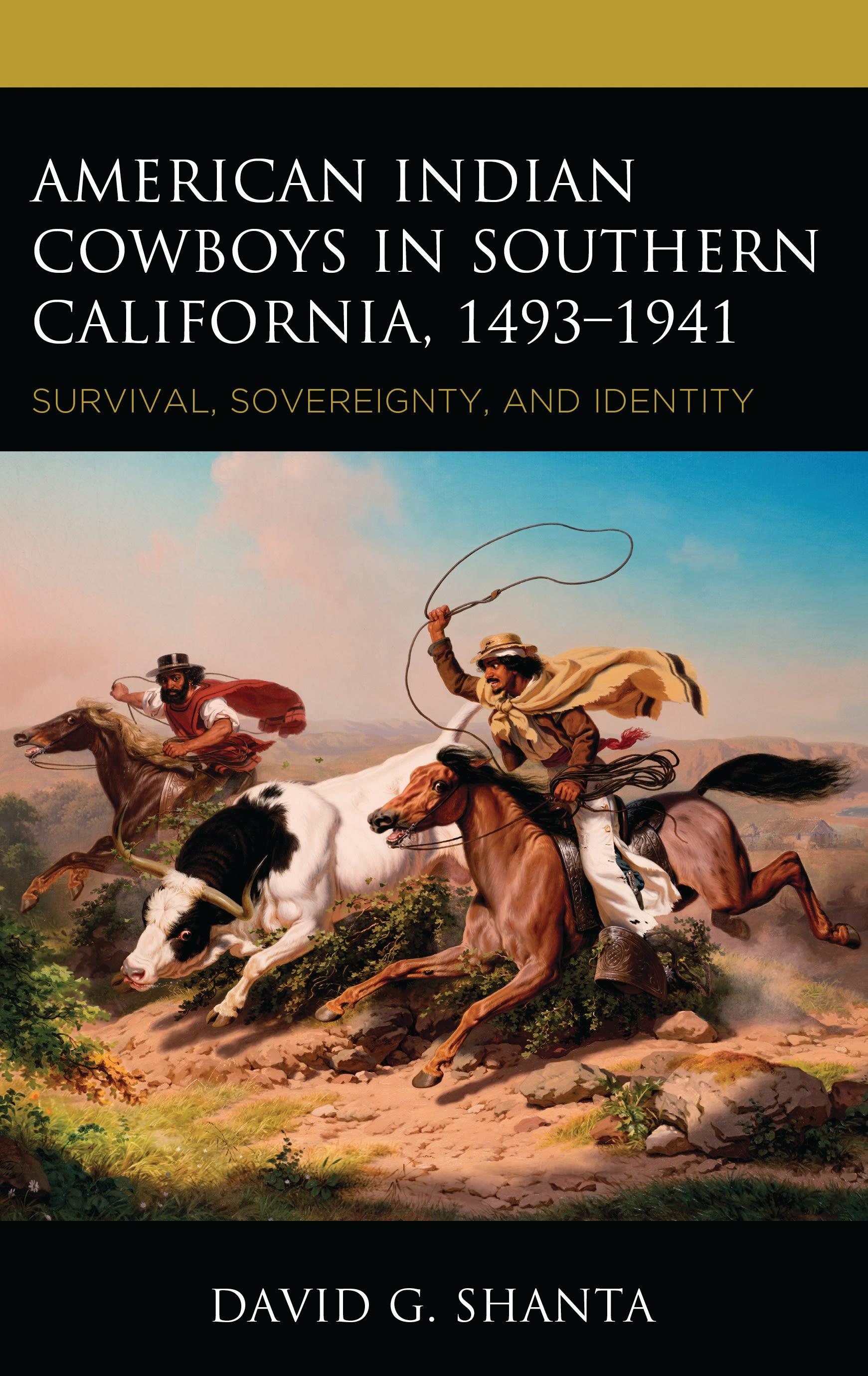
In 1769–1770, Spanish Catholic missionaries, soldiers, and Cochimí Indians of Baja California launched The Sacred Expedition to Alta California, to claim it for God and King. Domesticated animals like horses and cattle provided food security in the continual expansion of the Spanish empire. The rapidly increasing herds consumed traditional sources of Indigenous foods, medicines, tools, and weapons and soon outstripped the ability of soldiers and priests to control them. This reality forced the Spanish to train trusted Indian converts in the art of cowboying and cattle ranching. In this book, David G. Shanta provides new insights into the impact of horses and cattle on the Indigenous peoples of the Spanish Borderlands after early colonization. American Indian cowboys formed the backbone of Spanish mission economies, the international trade in cowhides and tallow that created the Mexican ranchero class known as Californios, and later on American cattle operations. Shanta shows that California Native peoples first adopted cowboying and cattle ranching, as a survival strategy. They acquired and ran their own herds, forming a new, California Indian economy based on cattle. This new economy reinforced their demands for sovereignty over their ancestral lands. This book affirms the innovative nature of American Indian Cowboys and brings to light how they survived, gained recognition of their sovereign status, and incorporated cowboying and cattle ranching into family traditions and tribal identities.
In 1769–1770, Spanish Catholic missionaries, soldiers, and Cochimí Indians of Baja California launched The Sacred Expedition to Alta California, to claim it for God and King. Domesticated animals like horses and cattle provided food security in the continual expansion of the Spanish empire. The rapidly increasing herds consumed traditional sources of Indigenous foods, medicines, tools, and weapons and soon outstripped the ability of soldiers and priests to control them. This reality forced the Spanish to train trusted Indian converts in the art of cowboying and cattle ranching. In this book, David G. Shanta provides new insights into the impact of horses and cattle on the Indigenous peoples of the Spanish Borderlands after early colonization. American Indian cowboys formed the backbone of Spanish mission economies, the international trade in cowhides and tallow that created the Mexican ranchero class known as Californios, and later on American cattle operations. Shanta shows that California Native peoples first adopted cowboying and cattle ranching, as a survival strategy. They acquired and ran their own herds, forming a new, California Indian economy based on cattle. This new economy reinforced their demands for sovereignty over their ancestral lands. This book affirms the innovative nature of American Indian Cowboys and brings to light how they survived, gained recognition of their sovereign status, and incorporated cowboying and cattle ranching into family traditions and tribal identities.
Betal enkelt med kort, Klarna, Apple Pay eller Google Pay. Ikke fornøyd? Du har alltid 14 dagers angrerett. Les mer i våre vilkår. Har du spørsmål, send oss en e-post på hello@memmo.org.
Memmo gjør det enklere å studere – uansett hvor du er i verden. Hos oss samler du pensumbøker og smarte studieverktøy på ett og samme sted: sammendrag, quizer, podkaster og flashcards. Og så Ted, din studiekompis som svarer på alt du lurer på. Over 50 000 studenter studerer allerede her – bygget for at du skal lære raskere og stresse mindre.