
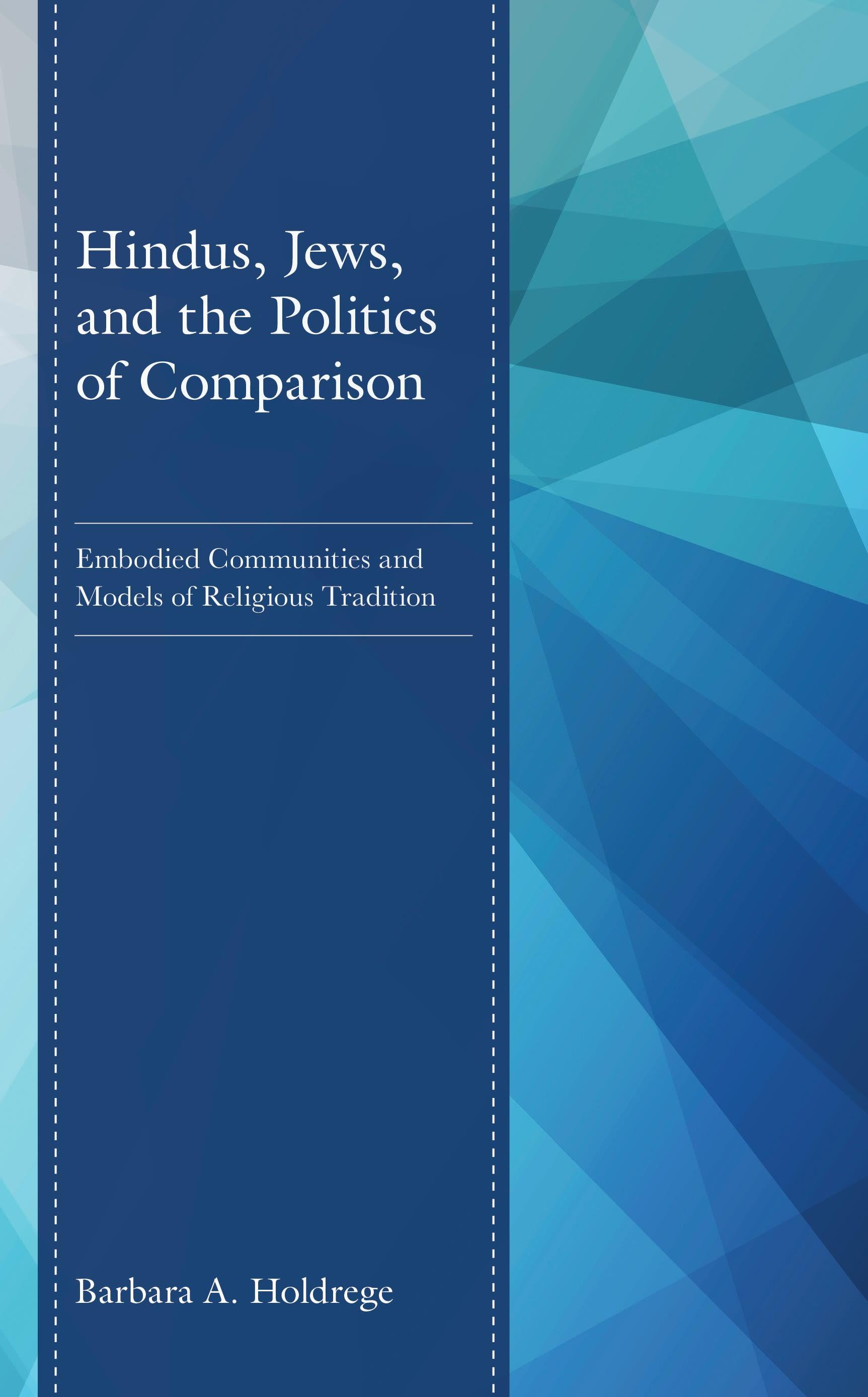
In Hindus, Jews, and the Politics of Comparison: Embodied Communities and Models of Religious Tradition, Barbara A. Holdrege emphasizes the role of comparative study as a method of critical interrogation that can serve as a means to challenge hegemonic taxonomies and categories in the academy and to reconstitute our scholarly discourse to allow for a multiplicity of epistemologies. Holdrege provides an extended series of reflections on the politics, problematics, and dynamics of comparison in which she explores how certain analytical categories in the study of religion-such as the body, scripture, sacrifice, purity, and food-can be fruitfully reimagined through a comparative analysis of their Hindu and Jewish instantiations. The author argues that this re-visioning of analytical categories through sustained comparative historical studies of a range of Hindu and Jewish traditions can provide the basis for generating alternative imaginaries to the prevailing Eurocentric and Protestant-based paradigms in the academy that have perpetuated the ideals of Enlightenment discourse and colonial and neocolonial projects. Such studies can serve as an important corrective to the scholarly practices through which certain categories and models have been privileged over others in the social sciences and humanities and in religious studies more specifically.
Betal enkelt med kort, Klarna, Apple Pay eller Google Pay. Ikke fornøyd? Du har alltid 14 dagers angrerett. Les mer i våre vilkår. Har du spørsmål, send oss en e-post på hello@memmo.org.
Memmo gjør det enklere å studere – uansett hvor du er i verden. Hos oss samler du pensumbøker og smarte studieverktøy på ett og samme sted: sammendrag, quizer, podkaster og flashcards. Og så Ted, din studiekompis som svarer på alt du lurer på. Over 50 000 studenter studerer allerede her – bygget for at du skal lære raskere og stresse mindre.