
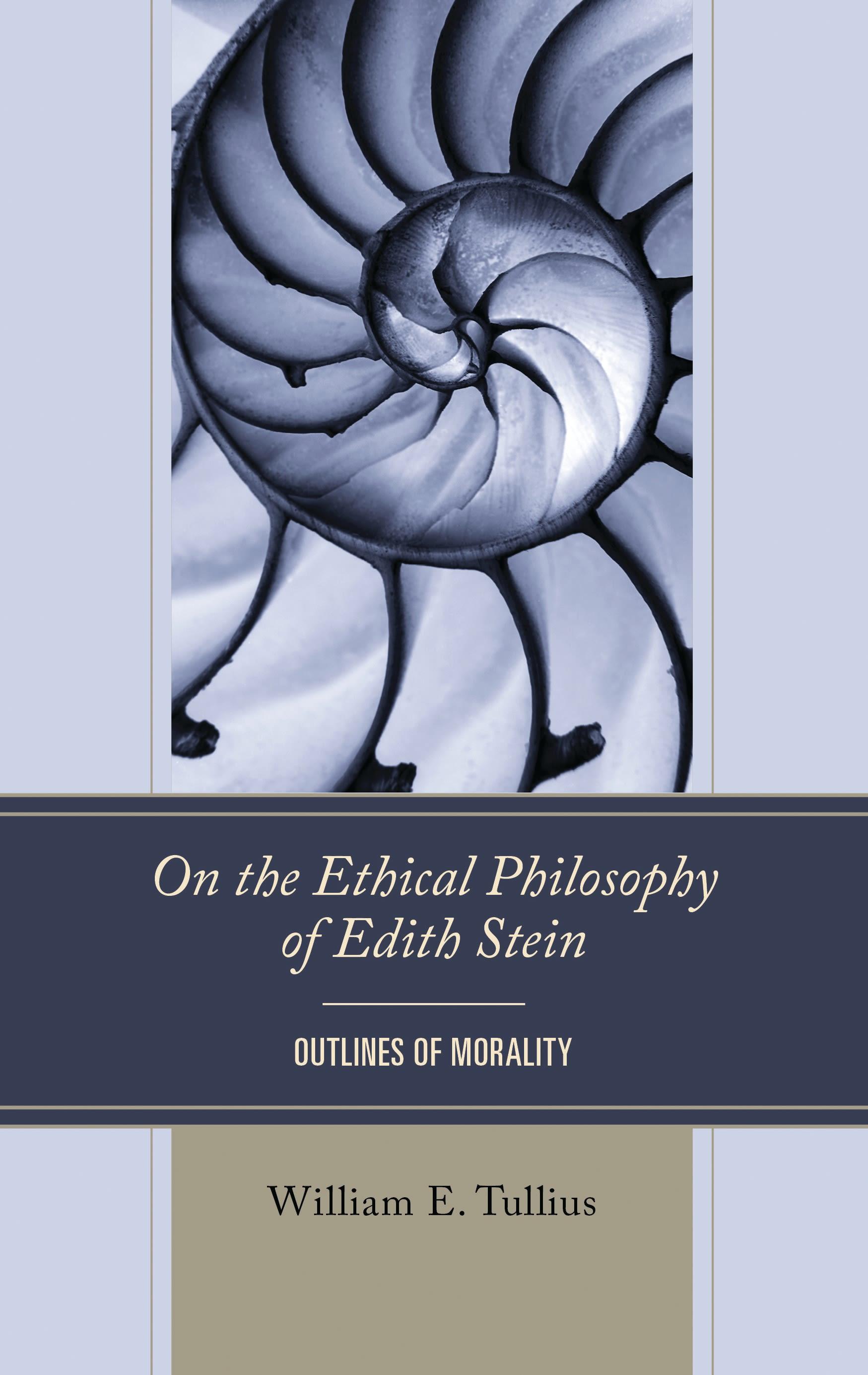
Although she never penned a text dedicated exclusively to ethics, Edith Stein’s work encompasses an implicit, but self-consciously developed, moral philosophy not yet sufficiently developed in the current English-language literature. However, comparison of Stein’s anthropological and metaphysical theories against the ethical philosophy of other early phenomenological thinkers, such as Max Scheler and Edmund Husserl, reveals lines of moral theory woven throughout her texts. In On the Ethical Philosophy of Edith Stein: Outlines of Morality, William E. Tullius endeavors to present a systematic account of Stein’s moral thought as it takes shape in conversation with neo-scholasticism and develops across her corpus in conversation with her philosophical anthropology, axiological theory, and metaphysics. The ethics which emerge from these sources is oriented around the moral project of the development of personality through the unfolding of one’s personal core and which entails a call to the development of an ethical community reflective of and oriented by its responsiveness to the highest values and to the communal destiny of all humanity in God
Betal enkelt med kort, Klarna, Apple Pay eller Google Pay. Ikke fornøyd? Du har alltid 14 dagers angrerett. Les mer i våre vilkår. Har du spørsmål, send oss en e-post på hello@memmo.org.
Memmo gjør det enklere å studere – uansett hvor du er i verden. Hos oss samler du pensumbøker og smarte studieverktøy på ett og samme sted: sammendrag, quizer, podkaster og flashcards. Og så Ted, din studiekompis som svarer på alt du lurer på. Over 50 000 studenter studerer allerede her – bygget for at du skal lære raskere og stresse mindre.