
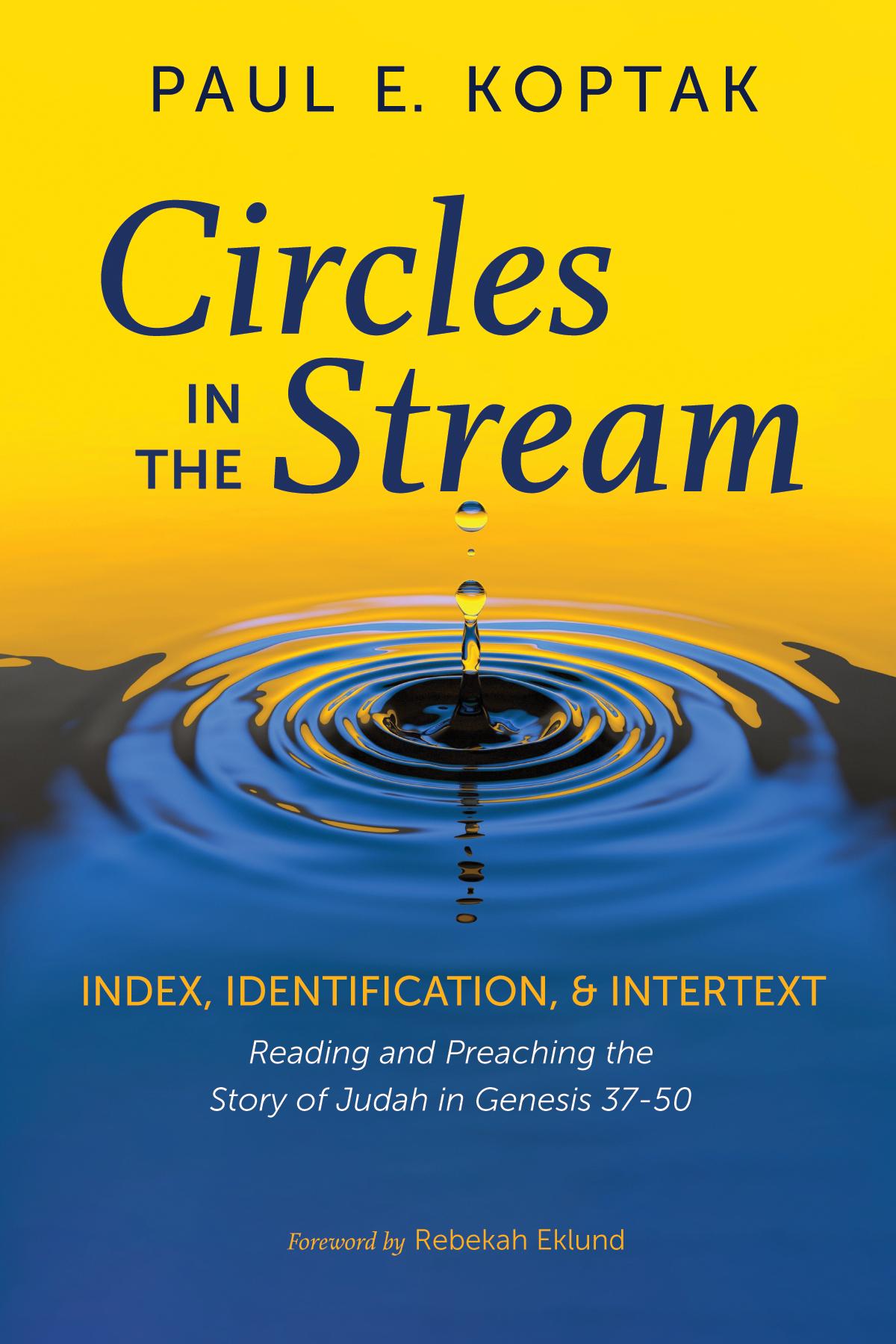
Maybe we should read Genesis 37-50 as the story of Joseph and Judah. Both kept their families alive and received major blessings from their father Jacob. Like his brother Joseph, Judah knew how to use words to lead and persuade, primarily by appealing to common experience. His speeches model Kenneth Burke's rhetoric of identification, "inducing cooperation" by showing his listeners how they are consubstantial--that is, where they stand together.
Preachers hope to do the same, making gospel connections between ancient texts and life today. Circles in the Stream shows that the connections are there in the Scripture text, freeing preachers from the pressure to find contemporary illustrations. Adapting Burke's literary-rhetorical approach to reading, Paul Koptak offers ever-widening circles of reading to that end. Indexing a passage and looking for identification there lead to the transformative purpose and life issue. Intertextual study, a combination of both, discovers these connections in the wider two-testament canon.
Circles in the Stream offers both a distinct perspective for reading Scripture and practical steps for in-depth study. Its method can make sermon preparation more efficient and effective. More importantly, it leads to the life-issues that listeners want their preachers to address.
Betal enkelt med kort, Klarna, Apple Pay eller Google Pay. Ikke fornøyd? Du har alltid 14 dagers angrerett. Les mer i våre vilkår. Har du spørsmål, send oss en e-post på hello@memmo.org.
Memmo gjør det enklere å studere – uansett hvor du er i verden. Hos oss samler du pensumbøker og smarte studieverktøy på ett og samme sted: sammendrag, quizer, podkaster og flashcards. Og så Ted, din studiekompis som svarer på alt du lurer på. Over 50 000 studenter studerer allerede her – bygget for at du skal lære raskere og stresse mindre.
Du vil kanskje også like
Kjøp boken0