
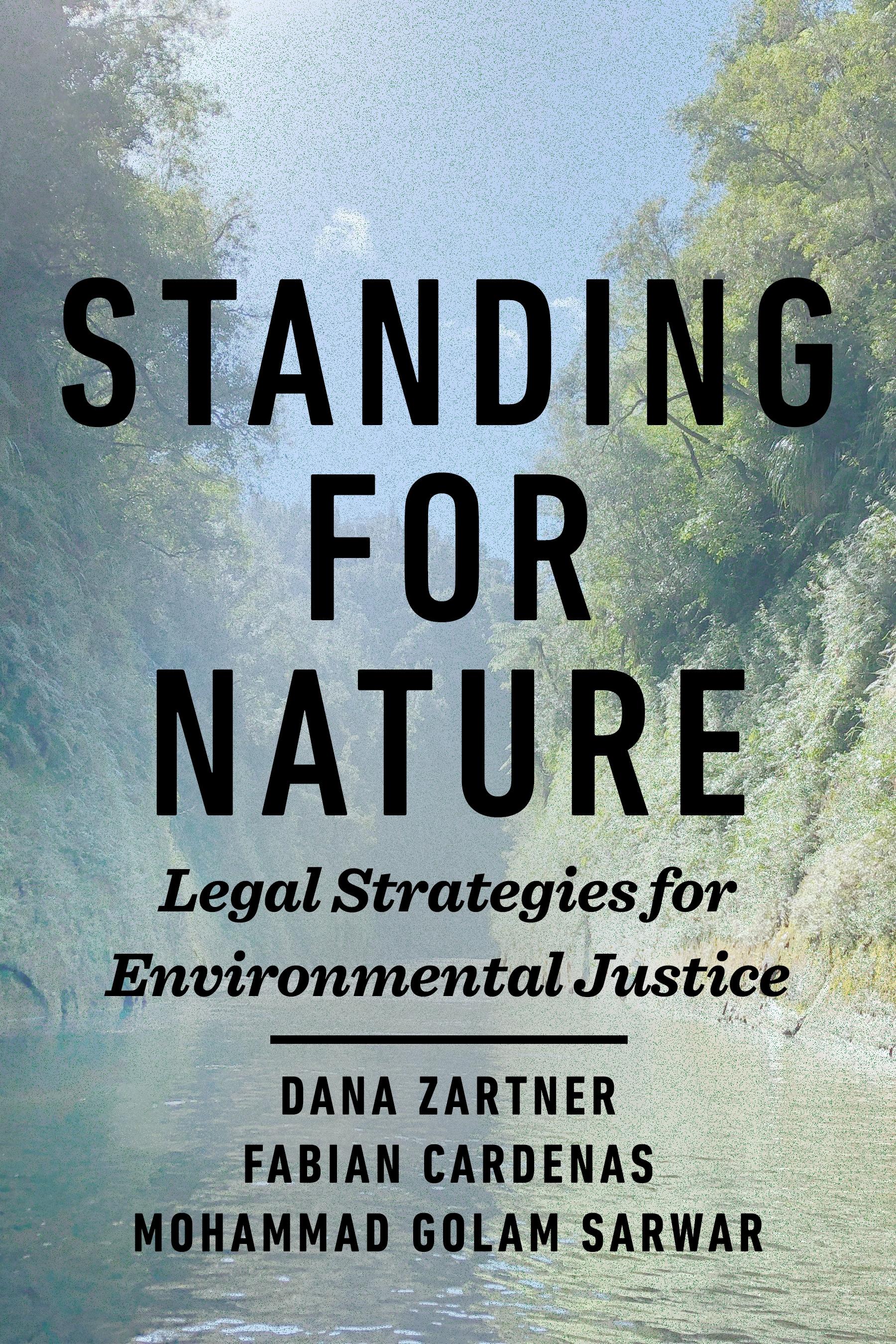
Rights of Nature laws are becoming a vital tool for addressing environmental injustice. From New Zealand and India to Ecuador and Bolivia, advocates have successfully secured legal rights for rivers, forests, and mountains. Granting rights to nature has the potential to expand environmental protections, strengthen indigenous rights, promote sustainable development, and alter how humans relate to nature. Despite these promises, rights of Nature laws have met with greater resistance in some countries than in others.
Standing for Nature offers advocates a blueprint for creating, implementing, and safeguarding rights of Nature laws. This book looks closely at four examples—New Zealand, Colombia, Bangladesh, and the United States—to explain why these laws have been successful in some places but not others. Through this comparative exploration, the authors highlight key strategies for advancing rights of Nature laws in the United States and around the world. These lessons include an examination of different legal traditions to better understand which is the best form of law—judicial, legislative, or regulatory—for advocates to target; how to ensure effective implementation once a law is passed; and how to shift communal perspectives on the human-Nature relationship for better implementation and enforcement.
This book is essential for environmental lawyers, policy makers, and advocates interested in gaining new knowledge and tools for championing rights of Nature laws in their own communities.
Betal enkelt med kort, Klarna, Apple Pay eller Google Pay. Ikke fornøyd? Du har alltid 14 dagers angrerett. Les mer i våre vilkår. Har du spørsmål, send oss en e-post på hello@memmo.org.
Memmo gjør det enklere å studere – uansett hvor du er i verden. Hos oss samler du pensumbøker og smarte studieverktøy på ett og samme sted: sammendrag, quizer, podkaster og flashcards. Og så Ted, din studiekompis som svarer på alt du lurer på. Over 50 000 studenter studerer allerede her – bygget for at du skal lære raskere og stresse mindre.