
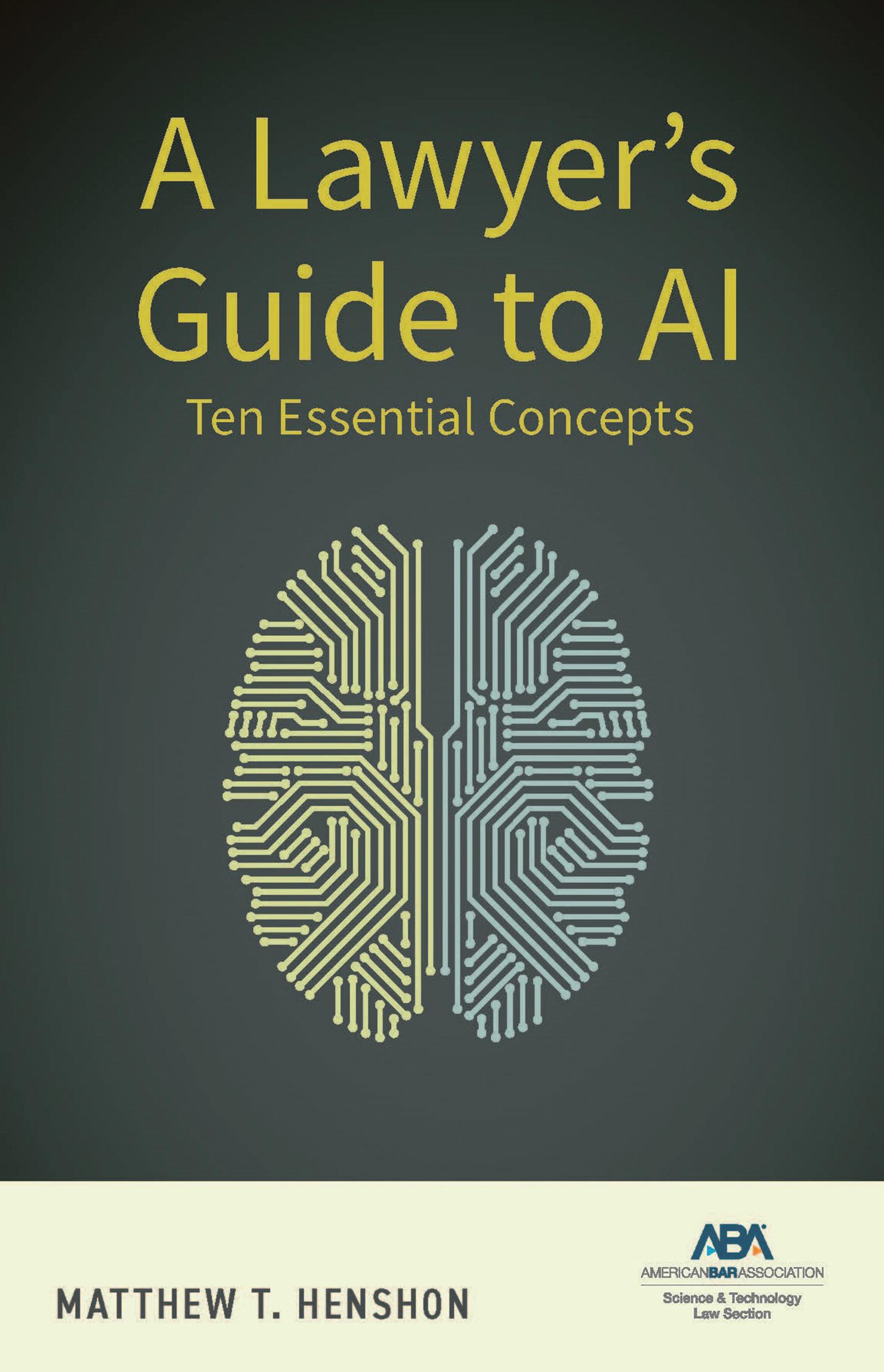
Since the launch of OpenAI’s GPT-3 in late 2022, artificial intelligence - particularly generative AI - has rapidly shifted from a niche topic to a central force in law, business, and society. But while the technology may feel new, its foundations stretch back centuries. AI has been evolving for a long time, from early predictive models based on shipwreck and mortality data to the emergence of machine learning and neural networks. At its core, AI is about pattern recognition and prediction; identifying relationships in data to inform decisions or generate new content. Today's generative AI models, like ChatGPT, build on these principles, trained on massive datasets to produce human-like outputs. But machine learning is not without challenges: bad data, ambiguous solutions, and the risk of overfitting all complicate the process. This book explores ten essential concepts behind the development and use of AI, offering readers a clear path through complex technical and legal territory. It also examines the legal implications of AI's rise, particularly in areas like copyright, privacy, and algorithmic accountability. Understanding the historical, technical, and legal dimensions of AI is essential for lawyers, policymakers, and anyone engaging with this rapidly evolving field. Whether you're new to the topic or seeking deeper insights, this guide offers the tools to understand where AI came from and where it may be heading.
Table of Contents:
- What is AI?
- Content Creation
- Fair Use
- Bias
- Privacy
- Ethics and Laws
- Employment
- AI That Moves (Drones and Self-Driving Cars)
- China
- The Dark Side
Betal enkelt med kort, Klarna, Apple Pay eller Google Pay. Ikke fornøyd? Du har alltid 14 dagers angrerett. Les mer i våre vilkår. Har du spørsmål, send oss en e-post på hello@memmo.org.
Memmo gjør det enklere å studere – uansett hvor du er i verden. Hos oss samler du pensumbøker og smarte studieverktøy på ett og samme sted: sammendrag, quizer, podkaster og flashcards. Og så Ted, din studiekompis som svarer på alt du lurer på. Over 50 000 studenter studerer allerede her – bygget for at du skal lære raskere og stresse mindre.