
"Dad’s eyes danced. His grin held happiness…hope. ‘We’re home!’ he announced. Mom stared out the pickup window. Silent. Lifeless…Tufts of skinny grass and small grayish green bushes surrounded us. The land lay flat in every direction as far as I could see."
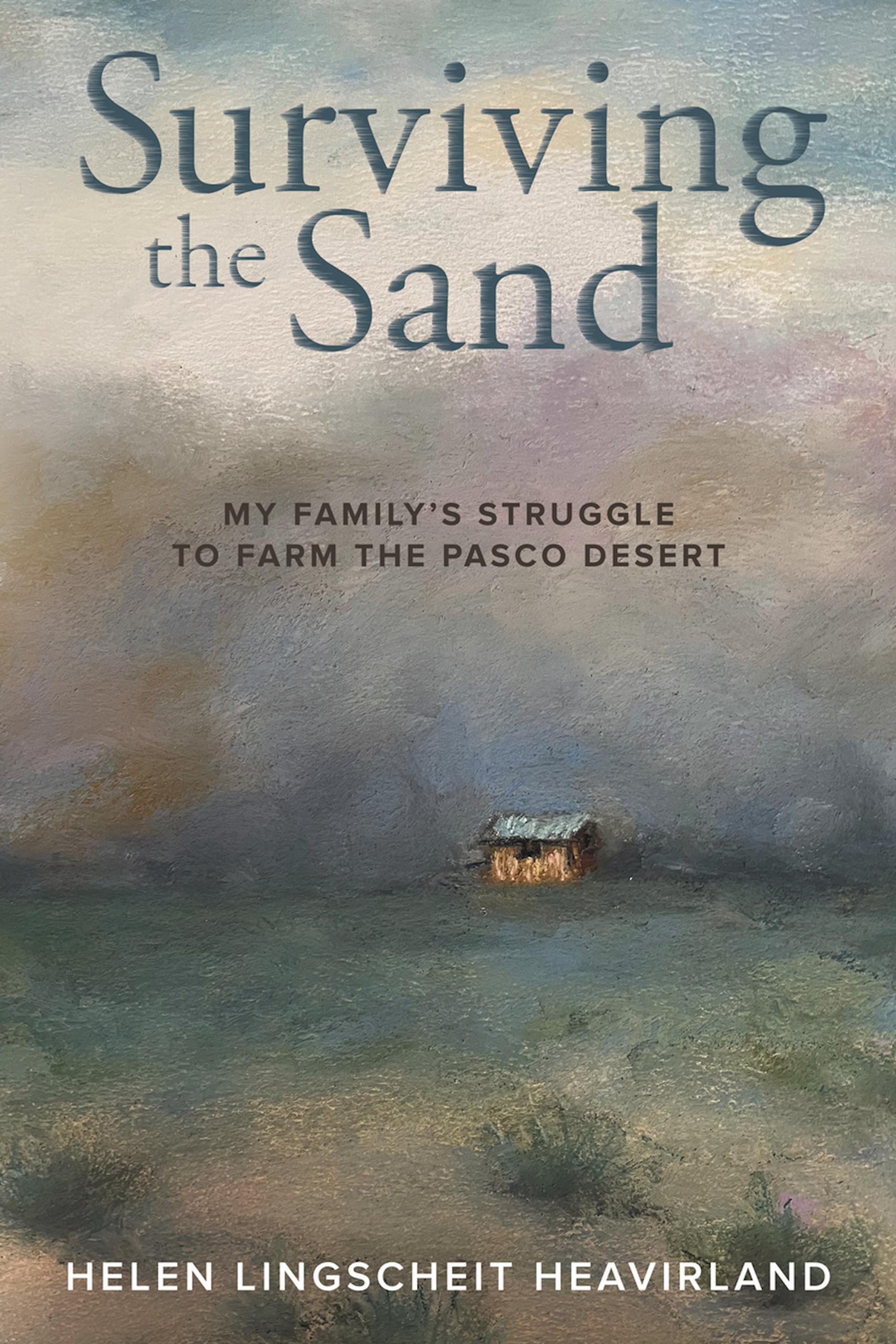
Helen Lingscheit Heavirland spent her early years in western Oregon’s beautiful woods, where her father Wayne Lingscheit’s work as a logger provided a comfortable home. But Wayne dreamed of farming, and Columbia Basin Project irrigation opened a new opportunity. In 1954 he and his wife Gladys moved their family--seven-year-old Helen, baby Hazel, twelve-year-old Frank, and fifteen-year-old Emma--to raw land in Pasco, Washington, that was mostly bunchgrass and sagebrush. The only structures were a roofless outhouse, an eight-foot by sixteen-foot wooden shack, and a pen for sheep and goats.
In Surviving the Sand, Helen shares her family’s hardscrabble yet heartwarming story, chronicling common hardships many faced in the Columbia Basin Project’s early settlement days. She describes breaking sod, plants destroyed by wind-whipped sand, and a harrowing first winter sleeping outside after a storm shredded their tent, but also simple joys like fresh apricots, Crokinole games, and letters from loved ones. Most of all, she relates how--despite the heartache, arduous work, and tough times--her family loves, laughs, and works together as they chase her father’s seemingly impossible dream.
Betal enkelt med kort, Klarna, Apple Pay eller Google Pay. Ikke fornøyd? Du har alltid 14 dagers angrerett. Les mer i våre vilkår. Har du spørsmål, send oss en e-post på hello@memmo.org.
Memmo gjør det enklere å studere – uansett hvor du er i verden. Hos oss samler du pensumbøker og smarte studieverktøy på ett og samme sted: sammendrag, quizer, podkaster og flashcards. Og så Ted, din studiekompis som svarer på alt du lurer på. Over 50 000 studenter studerer allerede her – bygget for at du skal lære raskere og stresse mindre.